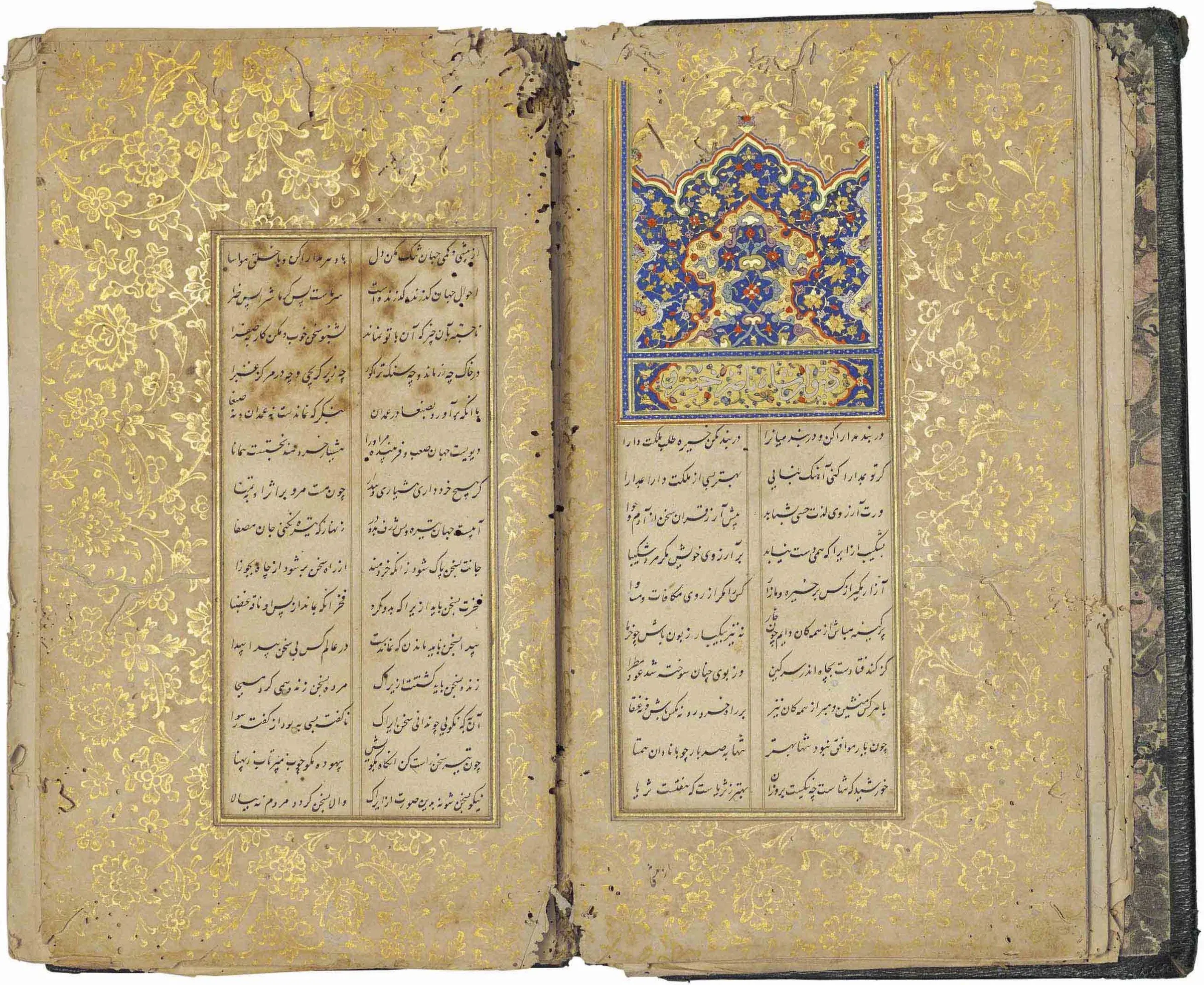
Abu Mu’in Nasir ibn Khusraw ibn Harith al-Qubadiyani, known as Nasir Khusraw (Persian Nasir-i Khusraw), was a Fatimid da’i, philosopher and traveller, and one of the greatest Persian poets. He visited Cairo in the reign of al-Mustansir, returned to Khurasan as a leader of the da’wa, and spent his last years in exile in Yumgan in Badakhshan, where the Ismailis still revere him as the founder of their communities.12
Sources for his life
Daftary stresses that large parts of Nasir’s life remain obscure. Numerous legends surround him, together with a spurious autobiography that has circulated for centuries among Ismailis and non-Ismailis.1 His surviving works, all in Persian, especially the travelogue Safar-nama and the Diwan of poems in which he praises al-Mustansir, al-Qadi al-Nu’man and al-Mu’ayyad, give valuable details, though many were evidently censored by hostile Sunni copyists to remove their Ismaili features.1
Early life
By his own statement he was born in 394/1004 in Qubadiyan, a district of Balkh then attached to Khurasan. He came from a family of officials and landowners, entered government service early as a scribe, and later became a financial administrator at Marw.1 In his youth he apparently led a life of pleasure, with access to the Ghaznavid court at Balkh, before Khurasan passed to the Seljuks in 431/1040.1
Conversion
At about the age of forty-one he underwent a spiritual upheaval that changed his life. He described it symbolically as a dream, and in a long confessional qasida addressed to al-Mu’ayyad.1 He renounced bodily pleasures and resigned his post at Marw, then ruled by the Seljuk Chaghri Beg, in whose vizier’s service his brother Abu’l-Fath held a prominent position.1
Daftary considers it almost certain, following Ivanow and Corbin, that Nasir had already converted to Ismailism, probably from Twelver Shi’ism, before he left for Egypt. On this view the pilgrimage to Mecca was a pretext, and the real purpose of the journey was to receive training as a da’i at the headquarters of the da’wa, as Hasan-i Sabbah would a few decades later.3
The journey of 1046–1052
He decided in Jumada II 437/December 1045 to set out, and in Sha’ban 437/March 1046 left with his brother Abu Sa’id and an Indian servant on a journey that lasted almost seven years.1 He travelled through Persia, where he stopped at the fortress of Shamiran, through Asia Minor, Syria and Palestine, and made the first of several pilgrimages to Mecca before entering Cairo in Safar 439/August 1047, the year al-Mu’ayyad also arrived.1
He stayed in Cairo for about three years, until Dhu’l-Hijja 441/May 1050. There he saw al-Mustansir, probably formed a close relationship with al-Mu’ayyad, and after receiving instruction was given a high rank in the da’wa.13 Klemm lists him among the da’is trained by al-Mu’ayyad.4 In the Safar-nama he described the splendour of the Fatimid capital, its palaces, gates, gardens and shops, and the wealth of Egypt.3
He returned through the Hijaz, Yamama, Bahrayn, southern Iraq and Persia, reaching Balkh in Jumada II 444/October 1052.3
Hujja of Khurasan
From Balkh he propagated Ismailism as a da’i or, in his own words, as the hujja of Khurasan, extending his activity to Nishapur and other cities.3 He also preached in Tabaristan (Mazandaran) on the Caspian; his contemporary Abu’l-Ma’ali, writing in 485/1092 and the earliest author to mention him, says he won many converts there.3
His success provoked the Sunni ‘ulama’, backed by the Seljuk rulers. He was denounced as irreligious, a heretic (mulhid), a Qarmati and a Rafidi; his house in Balkh was plundered and destroyed, and an attempt was made on his life.3
Exile in Yumgan
He took refuge in the valley of Yumgan in the upper Oxus, watered by the Kokcha, a tributary of the Amu Darya. Yumgan belonged to an autonomous Ismaili amir of Badakhshan, Abu’l-Ma’ali Ali ibn al-Asad, a close associate. The flight took place before 453/1061, the year he completed his philosophical treatise Zad al-musafirin in exile.3
In Yumgan, his home for more than fifteen years, he wrote most of his poetry and prose, including his last known work, the Jami’ al-hikmatayn (“Joining the Two Wisdoms”), completed in 462/1070 at Ali ibn al-Asad’s request. He continued to work for the da’wa and corresponded with al-Mu’ayyad and the headquarters in Cairo.32 In many odes he laments his exile, calling Yumgan his prison and recalling his earlier life in Khurasan.2
Death and legacy
He lived to at least seventy and died in Yumgan at an unknown date after 465/1072–1073; the latest year given in most sources is 481/1088–1089.2 His tomb stands on a hillock in the village of Hadrat-i Sayyid, near Faydabad in Afghan Badakhshan; an inscription records a renovation in 1109/1697. Its guardians, who claim descent from him, are Sunnis and discourage Ismaili visitors.2
The Ismailis of Badakhshan, now divided between Afghanistan and Tajikistan, call him Pir or Shah Sayyid Nasir and credit him with bringing Ismailism to the region, which became a stronghold of the Nizari Ismailis and a store of their literature. Their offshoot communities in Hunza and other northern areas of Pakistan also regard him as their founder.2 The Tayyibi Ismailis of India, by contrast, do not keep his works in their manuscript collections, perhaps because he wrote only in Persian.2
Footnotes
-
Farhad Daftary, The Isma’ilis: Their History and Doctrines, 2nd ed. (Cambridge University Press, 2007), p. 205. ↩ ↩2 ↩3 ↩4 ↩5 ↩6 ↩7 ↩8 ↩9 ↩10
-
Farhad Daftary, The Isma’ilis: Their History and Doctrines, 2nd ed. (Cambridge University Press, 2007), p. 207. ↩ ↩2 ↩3 ↩4 ↩5 ↩6 ↩7
-
Farhad Daftary, The Isma’ilis: Their History and Doctrines, 2nd ed. (Cambridge University Press, 2007), p. 206. ↩ ↩2 ↩3 ↩4 ↩5 ↩6 ↩7 ↩8 ↩9
-
Verena Klemm, “Mo’ayyad fi’l-Din Shirazi”, Encyclopaedia Iranica, online edition (2004), https://www.iranicaonline.org/articles/moayyad-fil-din-sirazi/. ↩