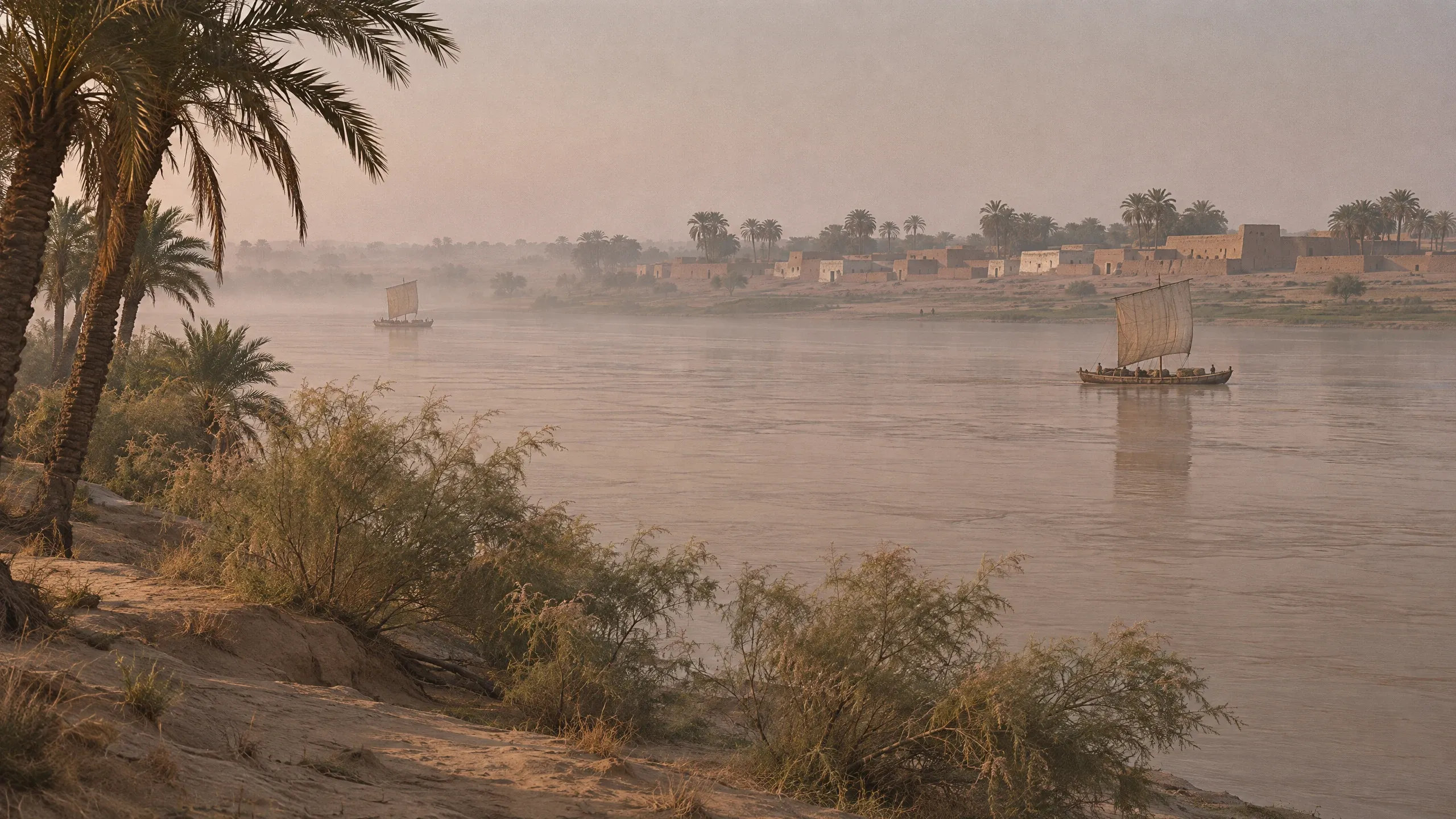
Between the twelfth and the sixteenth century, preachers sent by the Nizari Imams of Persia built a religious community in the lower Indus valley and western India. Its members called it Satpanth, the “true path”. It spread among merchant and farming castes of Sindh, Punjab and Gujarat. It expressed the doctrine of the Imamate in the languages of the people it reached and in the ideas of Vaishnava, Sufi, Sant and bhakti religion. The preachers were known as pirs. They and their followers left a large body of devotional poetry, the ginans. They also left an institution, the jamatkhana, and a community, the Khojas, which by the nineteenth century was the largest part of the Nizari Ismaili world. This chapter follows that history from the first traditions about the pirs to the Bombay courtroom of 1866, where a British judge tried to classify the community the pirs had created.12
The sources and their limits
The early history of the Nizaris in South Asia is, in Daftary’s words, “rather obscure owing to the absence of reliable sources”. For the first centuries the historian has to rely almost entirely on the community’s own traditions: the ginans and the hagiographies and lists of pirs built around them. Two later communities preserved these sources. The Nizari Khojas, who followed the Qasim-Shahi line of Imams, kept one set. The Imamshahis, who broke away in the sixteenth century, kept the other. Both shaped the material to their own claims. Daftary warns that the ginans are “often inaccurate on chronological details and on the sequence of events, frequently mixing legend with reality”.3
Kassam’s study of the ginans of Pir Shams shows how deep the problem goes. Dates inside the hymns conflict with one another and with the genealogy kept by his shrine’s custodians. The remembered Pir Shams combines several historical people. Kassam concludes that a ginan’s attribution to a pir records a tradition of composition and transmission. It is not proof of authorship. Asani makes the same point about the corpus as a whole. Hagiography presents the pirs as spiritually enlightened people whose authority came from the Imam in the “west”, Persia, and it tends to project later forms of the community back onto its founders.45
Outside sources are few but useful. Persian chronicles record the Ghurid campaigns against the “Karamita” of Multan and Uch. Mughal records and the reports of European travellers describe Pirana. From the nineteenth century, British courts, gazetteers and census officers wrote about the Khojas in great detail. Asani notes that these outside records brought their own distortions: categories of “Hindu” and “Muslim” with fixed boundaries that the communities themselves had not drawn. This chapter therefore separates three things: what the tradition says, what scholars have reconstructed, and what documentary evidence supports.678
Before the Nizaris: Multan, Mansura and Cambay
Ismailism was established in South Asia long before the Nizari pirs. The Arab conquest of 711 brought Islam to Sindh, which was governed as the caliphal province of al-Sind from al-Mansura until about 900. Fatimid da’is later won over the rulers of Multan, which became an Ismaili state recognising the Fatimid caliph-imams. Daftary records that around 401 AH a ruler of the Habbarid dynasty of Mansura also adopted Fatimid Ismailism. Mahmud of Ghazna destroyed both: the Ismaili state of Multan first, then Mansura in 416/1025. In 423/1032 the Ghaznavids executed Mahmud’s former vizier Hasanak on the charge of being a “Qarmati” because he had accepted a robe of honour from the Fatimid caliph al-Zahir.91011
Ismailism survived these defeats. According to Daftary, “Fatimid Isma’ilism survived in Sind and later became the creed of the Sumras”. The Sumras rose against the Ghaznavids in 443/1051 and ruled Lower Sindh from Thatta for almost three centuries. Daftary suggests that the later Sumras were probably influenced by the Nizari da’wa while keeping an independent Ismaili tradition of their own. Kassam goes further. She argues that the Nizari da’wa of Multan and Uch kept “connections or identification with the Sumrahs who were centred in the Thatta district”. In her view, these links gave it a friendly power in the south while it faced the Ghurids in the north.121314
A separate Ismaili community took root in Gujarat by sea. In 460/1067–1068 a da’i named ’Abd Allah, sent from Yemen by Lamak b. Malik with the approval of the caliph-imam al-Mustansir, arrived at Khambhat (Cambay). The mission was overseen by the Sulayhids, and later by Queen Arwa. Daftary connects it with Fatimid trade along the Red Sea route to the ports of western India. The converts, mostly of Hindu descent, became known as Bohras. In the succession crisis of 1094 they followed Yemen in supporting al-Musta’li, and later the Tayyibi cause. They became the Musta’li-Tayyibi Bohra community, centred in Cambay, Patan, Sidhpur and Ahmadabad. When the Nizari pirs arrived, Ismailism of another branch was already established in Gujarat.1516
Satgur Nur and the first traditions
The Nizari Khojas remember Pir Satgur Nur, also called Nur al-Din, as the first Nizari da’i sent from Daylam to Gujarat. Tradition says that at Patan he converted the Chaulukya king Siddharaja Jayasimha (r. 1094–1133), and that the city became known as Pirna Patan, “the pir’s city”. His shrine is at Navsari near Surat, and its tombstone bears the date 487/1094. The traditions disagree about who sent him. One version names al-Mustansir, preaching for his son Nizar. Another places him in the time of Hasan ’ala dhikrihi’l-salam. A third identifies him with the early Imam Muhammad b. Isma’il.1718
Daftary treats this story as foundation legend. The same king appears in Bohra tradition as a convert to Tayyibi Ismailism, yet he “actually died a devout Hindu”. There is “no concrete evidence attesting the success of the Nizari da’wa in Gujarat during the 7th/13th century, when Tayyibi Isma’ilism was already well-established in the region”. In Daftary’s view, Nizari influence took hold mainly after the fall of Alamut in 1256, and the first Nizari da’is probably arrived towards the end of the Alamut period. The ginans attributed to Satgur Nur, and the place he holds at the head of the lists of pirs, show how the community later imagined its origins. They are not a chronicle of the eleventh century.1918
Pir Shams in Multan and Uch
The pir who dominates the early tradition is Shams, or Shams al-Din. Daftary places his activity in Sindh, “particularly in Multan and Uchchh”. His mausoleum in Multan is known locally as that of Shams-i Tabriz. The Shamsis, Nizari goldsmiths of Multan and other parts of Punjab who now acknowledge the Aga Khan, say he converted their ancestors. His work is said to have been continued in secret by his son Nasir al-Din and grandson Shihab al-Din. Almost nothing is known about either.2021
Kassam shows that the remembered Pir Shams combines three historical figures. The first is an Ismaili pir active around Multan. The second is Shams-i Tabriz, the wandering mystic who met Jalal al-Din Rumi in Konya around 1244. The third is the Nizari Imam Shams al-Din Muhammad, who survived the Mongol conquest and died around 1310. Pilgrims at Multan still call the shrine “Shah Shams” and say it holds Rumi’s mentor. An official plaque names the Ismaili saint Pir Shams, and another gives his death as 1356. Kassam doubts both larger identifications. The Imam would have been a child of about seven to twelve when Shams-i Tabriz died, and Kassam suggests the identification with him may have been fostered later to strengthen the claims of Nur Muhammad Shah. She follows Ivanow in taking the Multan shrine to hold the Ismaili pir.22
The dates are still disputed. Some ginans name Qasim Shah as the Imam of Pir Shams’s time. On that basis Daftary places him in the middle of the fourteenth century. Kassam argues for an earlier setting. The ginans give dates of 1118, 1143 and 1150 CE, and the shrine genealogy gives 1165–1276. Kassam takes the genealogy seriously. The narrative ginans describe forts, battles, alliances with Hindu chiefs and a promised victory near Multan. Persian chronicles record that the Ghurid sultan Mu’izz al-Din captured Multan “from the Karamitah” in 1175 and then besieged Uch, held by a raja of the Bhati tribe. Kassam reads the ginans as remembering those wars. She concludes that the Ismaili Pir Shams was most likely active from the mid-twelfth into the thirteenth century, when Alamut still promised support.20623
The ginans of Pir Shams are full of conversion stories. Kassam’s anthology of 106 works includes a sequence of twenty-eight garbis, songs for the circle dance. The first garbi opens during Navaratri: “everyone was dancing the garbi”, and “to such a place Guru Shams went”. Kassam notes that an earlier translator added to the verse the information that the dancers were Hindus. Other ginans tell how the pir defeated rival holy men through miracles. In one, he curses Baha al-Din Zakariyya, whom Kassam calls the famous saint of Multan, with a pair of horns. Kassam treats such episodes as evidence of how the community remembered its origins, not as reports of events.2425
Pir Sadr al-Din and the making of the Khojas
The community took its lasting shape under Pir Sadr al-Din, son of Shihab al-Din. By his time, Daftary notes, the chief Nizari pirs in India “had acquired a certain degree of autonomy and had also established a hereditary dynasty”. More ginans are attributed to Sadr al-Din than to any other pir. He is said to have died some time between 770/1369 and 819/1416, which would make him a contemporary of Imam Islam Shah. He is reported to have visited the Imam in Persia to deliver the dasond, the tithes collected from the Indian community.26
Tradition credits Sadr al-Din with three lasting institutions. The first was the community’s name. He converted large numbers of the Lohana trading caste and gave them the title khwaja, Persian for “lord” or “master”. It matched thakur, the Hindu title by which Lohanas, considered Kshatriyas, were addressed, and it became “Khoja”. The second was the jamatkhana. He is said to have built the first one at Kotri in Sindh and then founded centres in Punjab and Kashmir. The third was the office of mukhi, from Sanskrit mukhya, “chief”, the leader appointed for each local congregation. Daftary concludes that Sadr al-Din “laid the foundation of the communal organization of the Indian Nizaris who henceforth became known mainly as Khojas”. He also extended the da’wa to Gujarat, among the Lohanas and other trading castes there. His own base remained at Uch.27
The political setting had changed. Around 752/1351 the Sammas replaced the Sumras at Thatta, and the Sammas soon became Sunnis. The da’wa now depended on caste networks and hereditary pirs instead of dynastic sympathy. Sadr al-Din’s shrine stands near Jetpur, close to Uch and south of Multan. Its present custodians consider themselves Twelver Shi’is and call him Hajji Sadr Shah. This pattern, an early Satpanth shrine kept by later custodians of another persuasion, recurs across the region.28
Uch, the Sufis and the Bujh Niranjan
Satpanth grew up alongside the Sufi orders. Multan and Uch were centres of the Satpanth da’wa and also headquarters of the Suhrawardi and Qadiri orders. The Suhrawardiyya was the leading order of Sindh in the thirteenth and fourteenth centuries, and the Qadiriyya rose in the fifteenth. Daftary argues that the doctrinal affinities between Persian Ismailism and Sufism were also found between Satpanth and Indian Sufism. The Khojas adopted Sufi terms such as murshid and murid, and the ginans share poetic forms with Sufi poetry in Punjabi and Sindhi. As a result, the Khojas could appear as one of the many mystically oriented communities of Sindh. This drew less attention from Sunni rulers. Daftary adds that, unlike their co-religionists in Persia, the pirs may not have cultivated these Sufi links mainly for taqiyya. The Hindu elements of Satpanth already gave the community cover.29
One text shows how porous the boundary was. The Bujh Niranjan, a long didactic poem in medieval Hindustani on the stages of the mystical path, is attributed by the Khojas to Pir Sadr al-Din. Asani has shown that it originated in Qadiri Sufi circles in Sindh and entered the ginan corpus later. It contains no specifically Ismaili elements, but its themes lent themselves to Ismaili interpretation. Moir and Khan connect it with Muhammad Shahi Dula, a Sayyidkhani leader of the Imamshahis at Burhanpur who joined the Qadiri order.3031
Pir Hasan Kabir al-Din
Sadr al-Din’s eldest son, Pir Hasan Kabir al-Din, succeeded him. Daftary, citing the Mughal-era hagiographer ’Abd al-Haqq Dihlawi (d. 1052/1642), writes that he travelled widely before settling at Uch, “which served as the seat of the Satpanth da’wa in India”. He is said to have visited the Imam in Persia and converted many Hindus. His death is dated anywhere from 853/1449 to 896/1490–1491. Daftary prefers about 875/1470, the date given in the Manazil al-aqtab, an Imamshahi history compiled in Gujarat around 1237/1821. His shrine outside Uch is known as Hasan Darya. His name also appears in the lists of Suhrawardi shaykhs.32
Virani discusses a colloquy between Hasan Kabir al-Din and the yogi Kanipa among the ginans that set out the tradition’s idea of knowledge. In this group of ginans the Imam is the “Man of Gnosis” (ginan purush) and the guide is the murshid kamil, the perfect master.33
The crisis of succession
After Hasan Kabir al-Din the community split. Tradition gives him eighteen sons. Even so, the Imam appointed his brother, Pir Taj al-Din, as the next pir, which Daftary suggests may have been a deliberate step to weaken the hereditary authority of the pirs. Some of Hasan Kabir al-Din’s sons, who were also quarrelling among themselves, opposed the appointment. When Taj al-Din returned from Persia, where he had delivered the Khojas’ tithes, his nephews accused him of keeping part of the dues. He is said to have died of grief, or by his own hand, towards the end of the fifteenth century. His grave is at Jhun in Sindh. The Imamshahis do not count him among their pirs.34
Taj al-Din also appears in Rajasthani tradition. Khoja sources give him the Hindu name Prahlad, after the devotee whom Vishnu saves in the Narasimha myth. Nanjiani records that he married a Sodhi Rajput princess of Tharparkar and that their descendants, the “Prahladpautras”, acted as local pirs. Building on this, Khan has proposed a link between Taj al-Din’s line and the Bishnoi Panth of Rajasthan, whose followers were once called Prahladpanthis. She notes that Bishnoi devotional collections include poems signed “Tajdin” alongside “Samas” and “Sadar din”. Khan presents this as a hypothesis awaiting further evidence. Her wider fieldwork found Rajasthani communities devoted to Ramdev Pir, among them Meghvals and Kamads, whose informants gave the secret name of their path as Nizar Panth.3536
Imam Shah and Pirana
Imam Shah, Imam al-Din ’Abd al-Rahim b. Hasan, was one of Hasan Kabir al-Din’s sons. After Taj al-Din he tried without success to take over the leadership of the Khojas of Sindh. He visited the Imam in Persia, a journey described in his ginan Janatpuri, but was not appointed pir. He then settled in Gujarat under Sultan Mahmud Begra (r. 1459–1511). In the tradition Moir and Khan summarise, the sultan became his patron and gave him land at Pirana near Ahmadabad. There he converted members of the Kanbi farming caste, preaching that the living Imam would come to India as Nikalank. He organised them into gaddis under kakas. Legendary accounts claim he converted the sultan, who gave a daughter in marriage to his son. Daftary treats these as unreliable.3738
Imam Shah died at Pirana in 919/1513. Daftary concludes he had stayed loyal to the Imams in Persia. The break came with his son Nur Muhammad Shah. Soon after 1513, Nur Muhammad demanded that the tithes be delivered to him in Gujarat instead of being sent through Sindh to Persia. He claimed the imamate for himself and, retrospectively, for his father. Kheta, the mukhi of some 18,000 converts, refused. Most of Nur Muhammad’s followers sided with him, but the bulk of the Gujarati Nizaris stayed loyal to the Imams. Nur Muhammad died in 940/1533–1534. The Imamshahis later acknowledged the Ismaili Imams only up to Islam Shah. They held that the early pirs had been Twelvers and regarded Nur Muhammad as their last imam.39
Moir and Khan question parts of this account. Nizari writers later accused Nur Muhammad of composing heterodox verse and being excommunicated. They find that the manuscript ginans of father and son show no clear rift, and that passages giving Nur Muhammad special status are missing from the manuscripts. They argue that for more than a century Imamshahi sayyids went on acknowledging the Nizari Imams and sending dues through Nizari agents. The decisive separation, in their account, came in the late seventeenth and eighteenth centuries, not in the 1510s.4041
The end of the pirs
After Taj al-Din the Imams appointed no hereditary pir. Instead they sent a book. The Pandiyat-i javanmardi, the admonitions of Imam Mustansir bi’llah II, holds the twenty-sixth place in the traditional list of pirs. It reached Sindh around the middle of the sixteenth century and was translated into Sindhi and Gujarati in Khojki script. This was the period in which the Imams at Anjudan were asserting direct authority over their scattered communities. Khayrkhwah-i Harati records that Indian da’is made pilgrimages to the Imam at Anjudan and that the Khojas by then far outnumbered the Persian Nizaris.42
One more pir was appointed. Pir Dadu was sent to Sindh in the second half of the sixteenth century to stop Khojas from returning to Hinduism or turning to Sunnism. Around 992/1584 he had to leave Sindh with his followers for Navanagar (Jamnagar). He died at Bhuj in Kutch in 1001/1593. Daftary credits him with reorganising the community. His name was later left out of the lists of pirs. From then on the Imams were represented by wakils and bawas, and the descendants of Hasan Kabir al-Din kept local influence as sayyids.43
The most important of these sayyids were the Kadiwalas. Their ancestor Sayyid Fadil Shah, descended through Hasan Kabir al-Din’s son Rahmat Allah, was active at Kadi in Kutch in the mid-seventeenth century, collecting the tithes of the Momnas and sending them to Persia. His son Pir Mashayikh became head of the jamat of northern Gujarat and tried to suppress the Khojas’ Hindu practices. He then settled in Ahmadabad, kept the tithes and renounced his allegiance to the Imam. He died in 1108/1697. His brother Hasan Pir, active in Kathiawar, stayed loyal and became the saint of the Nizari Momnas. His mausoleum is at Thanapipli near Junagadh, and in 1129/1717 a second shrine was built for him at Ganod. The Kadiwala family moved to Sindh and settled at Tando Muhammad Khan around 1194/1780.4445
The teaching of Satpanth
Satpanth put inner meaning above outward form. According to the ginans, attachment, anger, greed and envy keep the soul bound to the cycle of rebirth. It is freed through allegiance to the Imam, the Satguru or murshid, and to his pir, who gives the disciple a sacred word (shabd, nam or bol) for meditation. The goal is the vision (didar, darshan) of the divine light. The community regarded the ginans as the true, inner meaning (batin) of the Qur’an.46
Asani identifies four religious vocabularies in which the pirs expressed this teaching. The first is Vaishnava. Ali, and through him the line of Imams, is the tenth avatar of Vishnu, renamed Nikalank, “the stainless one”. The Qur’an is the last of the Vedas, and Satpanth fulfils Vaishnavism as Islam fulfils Judaism and Christianity. The best-known example is the Dasa Avatara, in versions attributed to Pir Shams, Pir Sadr al-Din and Imam Shah. The second is Sufi, with its guide and disciple, remembrance and vision. The third comes from the Sants, poet-saints who rejected ritual and caste and taught remembrance (sumiran) of the divine name. The fourth is bhakti, in which the soul is a virahini, a woman longing for her absent beloved. That is why many ginans written by men speak in a woman’s voice. Moir and Khan add that in Indic texts nishkalanki is an epithet of the formless God. Its use for an avatar was the preachers’ equivalent of the Arabic ma’sum, “immaculate”, an attribute of the Imam.4748
Daftary calls this “a complex form of dissimulation and acculturation”. In his reading it was a creative use of taqiyya by indigenisation: converts kept their caste customs in marriage and burial, and a Hindu exterior protected the community. Others describe it differently. Christopher Shackle and Zawahir Moir called the Satpanth worldview “remarkably coherent”. Asani argues that “syncretism”, and the idea of a halfway stage between two religions, assume boundaries that did not exist in premodern South Asia. Those boundaries were drawn later, largely by colonial classification.4950
Ginans and the jamatkhana
The word ginan comes from the Sanskrit jnana, “knowledge”. Virani shows that in Ismaili usage it means both gnosis and the body of esoteric literature that conveys it. He reconstructs a self-definition of the tradition from the ginans themselves. The soul receives gnosis in the womb and makes a covenant (kol, Arabic qawl) with the Lord of the Resurrection (kayam, Arabic qa’im), echoing the primordial covenant of Qur’an 7:172. The world is the “wine of Satan” that makes the soul forget. The ginan recalls the soul to its covenant.5152
The ginans were sung in the vernaculars of the region: Punjabi, Sindhi, Multani or Saraiki, Hindi, Kutchi and Gujarati. They were written in Khojki, a refined form of the Lohana merchants’ script. Khoja tradition credits Pir Sadr al-Din with inventing it. Composition continued long after the great pirs. Sayyids descended from Hasan Kabir al-Din kept writing ginans, and the last author recognised by the community, Sayyida Imam Begum, died in Karachi in 1866.5354
The ginans were recited in the jamatkhana, the house of the jamat. In the early nineteenth century Khoja religious life in Bombay still included ginans such as the Dasa Avatara. The community said its own prayers three times a day in Gujarati, with Arabic and Persian phrases, and said the Arabic namaz only at the two Ids. The central rite was the ghat-pat, in which participants sipped water consecrated with clay from Karbala. The mukhi and his assistant, the kamadia, led each jamat, received its dues and kept its accounts.5556
Tithes and pilgrims
The tie that bound Satpanth to Persia was the dasond, the tenth, collected in the jamatkhanas and carried to the Imam. Daftary found tombstones inscribed in Khojki at the mausoleum of Imam Nizar II at Kahak. They record Khojas who made the long and dangerous journey to see the Imam. The historian Ahmad Ali Khan Vaziri wrote that after the fall of the Safavids, Khoja pilgrims travelling to the Imams near Anjudan and Mahallat were often robbed and killed between Na’in and Yazd. Daftary concludes that concern for pilgrims and tithes was the main reason Imam Hasan Ali moved to Shahr-i Babak in Kirman in the 1740s, nearer the ports of the Persian Gulf. By the nineteenth century the Khojas had for centuries been the most important part of the Nizari community, yet few of them had ever seen the Imam.5758
The Imamshahis after Nur Muhammad
The Imamshahi community at Pirana broke into rival lines of sayyids descended from Nur Muhammad Shah: Sayyidkhanis, Jalalshahis and Nurshahis. Moir and Khan argue that the Mughals at first treated the dargah as another Sufi shrine. That changed under Aurangzeb. Shahji Miran Shah, leader of the Aththiya branch from 1067/1657, was summoned to have his beliefs examined by Sunni jurists. He died on the way. Around 1100/1688–1689 his followers, especially Matiya Kanbis, seized the fort of Broach and proclaimed his son king. Aurangzeb put down the revolt. By the end of the century many Satpanthis had become Sunnis under their sayyids, and others joined Sufi orders. Outwardly Hindu followers went on performing the ghat-pat, reciting the names of the Ismaili Imams and waiting for Nikalank.5960
In the eighteenth century the Jalalshahi sayyids secured control of the shrine. Around 1750 they obtained Mughal confirmation, and in the late eighteenth century they cut most of their remaining ties with the Nizaris. Bara Mian turned Pirana into a Sufi-style dargah with an annual urs, a free kitchen and guest houses for pilgrims. Lines were added to some ginans proclaiming that the Imam would be revealed among Imam Shah’s descendants. Daftary notes that the Imamshahi branches “have tended to revert towards Hinduism”. Their followers, mostly in rural Gujarat, Khandesh and western Madhya Pradesh, count themselves Twelvers or Sunnis instead of Ismailis. The later history of Pirana is told on its own page.6162
The land of the jamats
By the eighteenth century the Nizari Khojas lived across a coherent region bound together by trade. Sindh, the lower Indus valley, held the old centres of Kotri and Tando Muhammad Khan. To the south-east, Kutch is almost an island, cut off by the salt marshes of the Great Rann, about 18,000 km², and the Little Rann, about 5,100 km², which flood in the rainy season. Beyond it lies the peninsula of Kathiawar, between the Gulfs of Kachchh and Khambhat, a land of many small princely states that accepted British paramountcy after 1820. Further east were the plains of mainland Gujarat, with Ahmadabad, Pirana and the ports of Surat and Cambay.6364
Caste remained the frame of community life across this region. Asani draws on the Gazetteer of the Bombay Presidency to show that in north-east Kathiawar Khojas were still addressed by the Lohana title thakkur and wore their waistcoats in the Lohana fashion. The Khojas married within the community. A crier called adult men to meetings where disputes were settled and excommunications voted on. They kept caste-owned cooking pots for communal dinners and followed Hindu customary law in inheritance and widow remarriage. This was the community, at once a caste and a religious congregation, that Aga Khan I met when he reached India.65
The Imam comes to India
The age of distance ended with Aga Khan I. After his conflict with the Qajar state he came to Sindh in the autumn of 1842 and stayed at Jerruck. He put his cavalry at the service of the British. He also passed on the Talpur amir’s battle plans to Major James Outram. After the battle of Miyani in February 1843 and the annexation of Sindh, General Sir Charles Napier granted him a pension of £2,000 a year. In October 1844 he left Sindh by way of Karachi. He spent a year in Kathiawar visiting Khoja communities, “as he had done all along his route”, and reached Bombay in February 1846. He settled there in 1848.6667
Bombay had the largest Khoja population and became the seat of the Imamate. The Khojas now paid their dues at the Imam’s residence. He held a public audience on Saturdays, attended the Bombay jamatkhana on great occasions and appointed the mukhis and kamadias of the larger jamats himself. His claims over communal property were resisted. In 1829 a group of Bombay Khojas had refused to pay the dasond. They were expelled and became known as the Barbhai, “twelve brothers”. In 1847 Sir Erskine Perry ruled that Khoja custom, not Islamic law, governed inheritance. In 1850 four members of the Barbhai party were murdered in the Mahim jamatkhana. In 1861 the Imam asked every Khoja family to sign a document affirming Nizari Ismaili practice in marriage, ablution and funerals. Most did. The dissidents, who held that the Khojas had always been Sunnis, were expelled again in 1862.6869
The judgement of 1866
In 1866 the dissidents sued the Aga Khan in the Bombay High Court over communal property and the election of mukhis. They argued that the Khojas had been Sunnis since Pir Sadr al-Din converted them. In November 1866 Justice Joseph Arnould ruled for the Aga Khan on every point. He defined the Khojas as “a sect of people whose ancestors were Hindu in origin, which was converted to and has throughout abided in the faith of the Shia Imami Ismailis”. He confirmed the Imam’s right to the community’s dues and property. The Aga Khan Case settled the legal position of the Imamate in British India.70
Asani shows what the judgement cost. Arnould and the Khoja witnesses did not share a world-view. The witnesses could not define their faith in the categories the judge recognised, and some of their answers pointed to several affiliations at once. Arnould set their testimony aside and sorted the evidence into “Hindu”, “Sunni”, “Shia” and “Ismaili”, categories taken from Western historians of Islam. The conversion story of the pirs, who had won Hindus by adapting Hindu ideas, became official, legally sanctioned history. A second suit, brought by Hajji Bibi against Aga Khan III, ended in 1908 with Justice Russell’s ruling that the Nizari Khojas were distinct from the Ithna’ashari Shi’is.7172
After the pirs
The twentieth century turned the Satpanthi Khojas into Ismaili Muslims. Aga Khan III issued written constitutions from 1905 and farmans printed in Gujarati, Sindhi, Hindustani and English. The ginans were collected and printed. Lalji Devraj’s press in Bombay, later the Ismaili Printing Press, published about 700 of them, and his catalogue of 1915 became the basis of the official corpus. His team is said to have buried some 3,500 manuscripts. Asani estimates that perhaps 300 texts were left out. After 1947, rites with Indic features were reformed. In the 1950s the old daily prayer, which invoked the Imam as Nikalank and traced a chain from the ten avatars, was replaced by a prayer in six parts, each opening with Qur’anic verses.7374
Meanwhile the Khojas of Kutch, Kathiawar, Surat and Bombay had carried the jamatkhana overseas. They were settled in Zanzibar by 1820, and famine in Gujarat sent many more to East Africa in the second half of the nineteenth century. The Imamshahis went the other way. Under pressure from the Arya Samaj and later Hindutva movements, Pirana was redefined between the 1920s and 2004 as a Hindu sect, and its shrine now looks like a Hindu temple. Satpanth produced several communities: the Nizari Ismailis who still recite the ginans in their jamatkhanas worldwide, the Sunni, Twelver and Hindu descendants of the Imamshahis, and the Shamsis, Momnas and Rajasthani panths whose histories are still being reconstructed. Asani quotes Aga Khan III’s remark that the community had survived “because it has always been fluid”.757677
Footnotes
-
Farhad Daftary, The Isma’ilis: Their History and Doctrines, 2nd ed. (Cambridge: Cambridge University Press, 2007), pp. 442–443, 473–474. ↩
-
Ali S. Asani, “From Satpanthi to Ismaili Muslim: The Articulation of Ismaili Khoja Identity in South Asia,” in Farhad Daftary (ed.), A Modern History of the Ismailis (London: I.B. Tauris, in association with the Institute of Ismaili Studies, 2011), introduction. ↩
-
Daftary, The Isma’ilis, p. 442. ↩
-
Tazim R. Kassam, Songs of Wisdom and Circles of Dance: An Anthology of Hymns by the Satpanth Isma’ili Saint, Pir Shams (PhD dissertation, McGill University, 1992), ch. 5, “Pir Shams: Problems of Historical Identity,” https://archive.org/details/bk038. ↩
-
Ali S. Asani, “Isma’ilism xiv. Isma’ilism in Ginan Literature,” Encyclopaedia Iranica, vol. XIV, fasc. 2 (2007), p. 204, https://iranicaonline.org/articles/ismailism-xiv-ismailism-in-ginan-literature/. ↩
-
Kassam, Songs of Wisdom and Circles of Dance, ch. 4, section on the Ghurids, citing Juzjani, Tabaqat-i Nasiri (tr. Raverty) and Ferishta. ↩ ↩2
-
Zawahir Moir and Dominique-Sila Khan, “New Light on the Satpanthi Imamshahis of Pirana,” South Asia: Journal of South Asian Studies n.s. 33, no. 2 (2010), pp. 212–213, https://doi.org/10.1080/00856401.2010.494824. ↩
-
Asani, “From Satpanthi to Ismaili Muslim,” section on the colonial courts. ↩
-
“Sindh,” Encyclopaedia Britannica, history section, https://www.britannica.com/place/Sindh-province-Pakistan. ↩
-
Daftary, The Isma’ilis, pp. 166–167. ↩
-
Daftary, The Isma’ilis, p. 200. ↩
-
Daftary, The Isma’ilis, p. 167. ↩
-
Daftary, The Isma’ilis, p. 443. ↩
-
Kassam, Songs of Wisdom and Circles of Dance, ch. 4, section on the Ghurids. ↩
-
Daftary, The Isma’ilis, pp. 200–201. ↩
-
Daftary, The Isma’ilis, pp. 276–278. ↩
-
Daftary, The Isma’ilis, p. 385. ↩
-
Daftary, The Isma’ilis, pp. 385–386. ↩
-
Daftary, The Isma’ilis, p. 443. ↩
-
Kassam, Songs of Wisdom and Circles of Dance, ch. 5. ↩
-
Kassam, Songs of Wisdom and Circles of Dance, ch. 5, conclusion. ↩
-
Kassam, Songs of Wisdom and Circles of Dance, ch. 1, on the Anthology and the Garbis. ↩
-
Kassam, Songs of Wisdom and Circles of Dance, ch. 5, on the narrative ginans and the opponents of Pir Shams. ↩
-
Daftary, The Isma’ilis, p. 443. ↩
-
Daftary, The Isma’ilis, p. 443. ↩
-
Daftary, The Isma’ilis, p. 443. ↩
-
Daftary, The Isma’ilis, p. 444. ↩
-
Daftary, The Isma’ilis, pp. 444–445. ↩
-
Moir and Khan, “New Light on the Satpanthi Imamshahis,” p. 221. ↩
-
Daftary, The Isma’ilis, pp. 443–444. ↩
-
Shafique N. Virani, “Symphony of Gnosis: A Self-Definition of the Ismaili Ginan Tradition,” in Todd Lawson (ed.), Reason and Inspiration in Islam (London: I.B. Tauris, in association with the Institute of Ismaili Studies, 2005), pp. 508–509. ↩
-
Daftary, The Isma’ilis, p. 445. ↩
-
Dominique-Sila Khan, Conversions and Shifting Identities: Ramdev Pir and the Ismailis in Rajasthan (New Delhi: Manohar, 1997), ch. 7, “Jambha Pir, the Prahladvanshis and the Bishnoi Panth,” pp. 188–189, https://archive.org/details/bk902. ↩
-
Khan, Conversions and Shifting Identities, pp. 19, 67–68. ↩
-
Daftary, The Isma’ilis, p. 445. ↩
-
Moir and Khan, “New Light on the Satpanthi Imamshahis,” p. 215. ↩
-
Daftary, The Isma’ilis, p. 446. ↩
-
Moir and Khan, “New Light on the Satpanthi Imamshahis,” p. 217. ↩
-
Moir and Khan, “New Light on the Satpanthi Imamshahis,” pp. 218–219. ↩
-
Daftary, The Isma’ilis, p. 446. ↩
-
Daftary, The Isma’ilis, p. 447. ↩
-
Daftary, The Isma’ilis, pp. 447–448. ↩
-
Daftary, The Isma’ilis, p. 448. ↩
-
Asani, “Isma’ilism xiv,” pp. 204–205. ↩
-
Asani, “Isma’ilism xiv,” pp. 204–205; Asani, “From Satpanthi to Ismaili Muslim,” section “Locating Khoja Identity within Changing Contexts.” ↩
-
Moir and Khan, “New Light on the Satpanthi Imamshahis,” p. 214 and n. 12. ↩
-
Daftary, The Isma’ilis, pp. 449–450. ↩
-
Asani, “From Satpanthi to Ismaili Muslim,” section “Locating Khoja Identity within Changing Contexts.” ↩
-
Virani, “Symphony of Gnosis,” pp. 503–505. ↩
-
Virani, “Symphony of Gnosis,” pp. 505–507. ↩
-
Kassam, Songs of Wisdom and Circles of Dance, ch. 1 and ch. 6, on Khojki and the languages of the ginans. ↩
-
Asani, “Isma’ilism xiv,” p. 204; Asani, “From Satpanthi to Ismaili Muslim,” section on the standardisation of the ginans. ↩
-
Asani, “From Satpanthi to Ismaili Muslim,” section “Reorienting understanding and practice of faith.” ↩
-
Ali S. Asani, “Khoja,” Encyclopaedia Iranica, vol. XVI, fasc. 5 (2020), pp. 539–540, https://iranicaonline.org/articles/khoja/. ↩
-
Daftary, The Isma’ilis, p. 457. ↩
-
Daftary, The Isma’ilis, pp. 458–460. ↩
-
Daftary, The Isma’ilis, pp. 446–447. ↩
-
Moir and Khan, “New Light on the Satpanthi Imamshahis,” pp. 221–222. ↩
-
Moir and Khan, “New Light on the Satpanthi Imamshahis,” pp. 223–225. ↩
-
Daftary, The Isma’ilis, p. 447. ↩
-
“Rann of Kachchh,” Encyclopaedia Britannica, https://www.britannica.com/place/Rann-of-Kachchh. ↩
-
“Kathiawar Peninsula,” Encyclopaedia Britannica, https://www.britannica.com/place/Kathiawar-Peninsula. ↩
-
Asani, “From Satpanthi to Ismaili Muslim,” section “Locating Khoja Identity within Changing Contexts,” citing the Gazetteer of the Bombay Presidency. ↩
-
Daftary, The Isma’ilis, pp. 470–471. ↩
-
Daftary, The Isma’ilis, p. 472. ↩
-
Daftary, The Isma’ilis, pp. 472–474. ↩
-
Daftary, The Isma’ilis, pp. 474–475. ↩
-
Daftary, The Isma’ilis, pp. 475–476. ↩
-
Asani, “From Satpanthi to Ismaili Muslim,” section on the colonial courts. ↩
-
Daftary, The Isma’ilis, p. 481. ↩
-
Asani, “From Satpanthi to Ismaili Muslim,” section “Reorienting understanding and practice of faith.” ↩
-
Asani, “From Satpanthi to Ismaili Muslim,” section on the standardisation of the ginans. ↩
-
Daftary, The Isma’ilis, p. 485. ↩
-
Moir and Khan, “New Light on the Satpanthi Imamshahis,” pp. 228–233. ↩
-
Asani, “From Satpanthi to Ismaili Muslim,” introduction. ↩