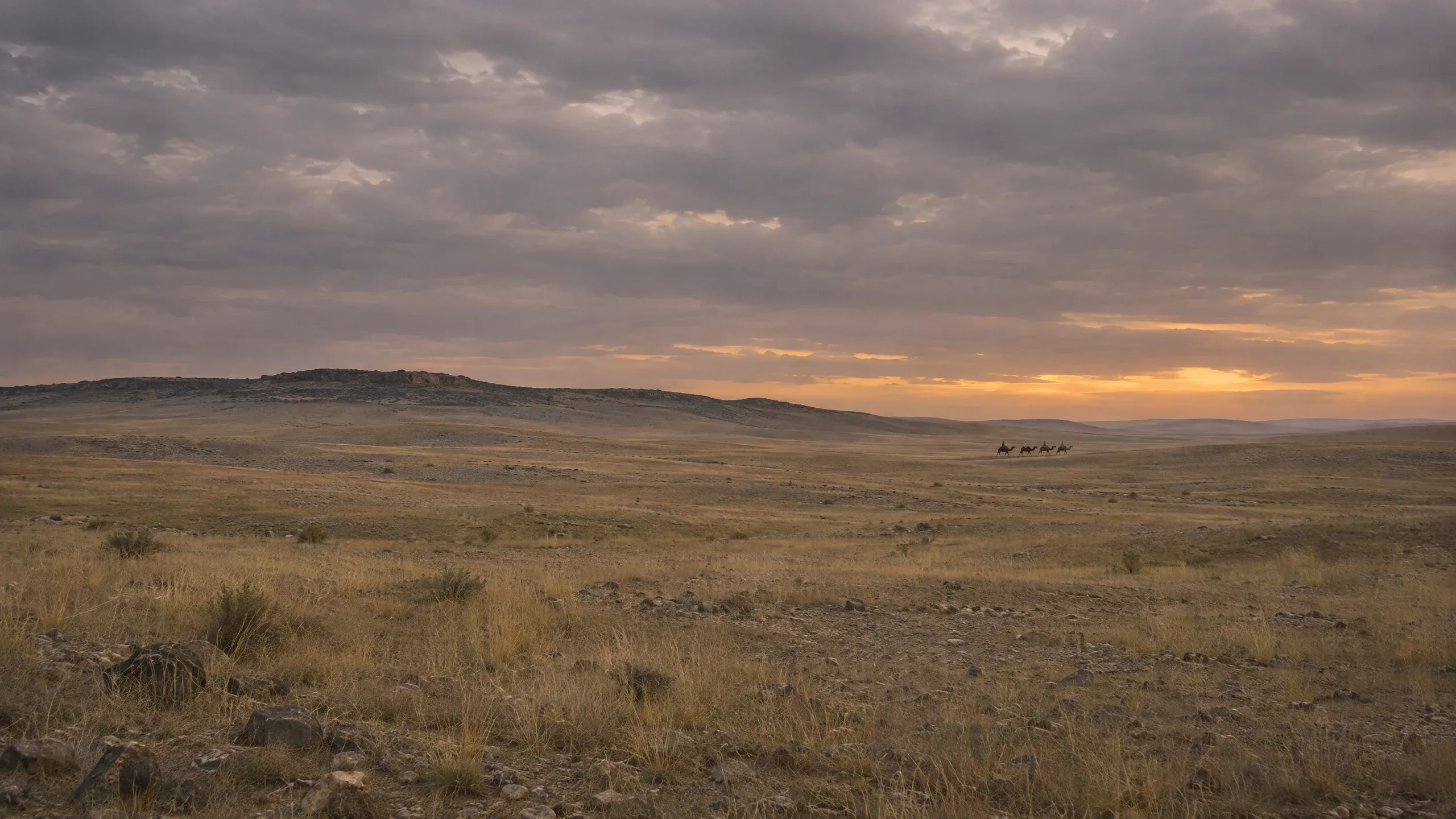
A century and a half in the dark
The period from the death of Ja’far al-Sadiq in 148/765 to the proclamation of the first Fatimid caliph in 297/909 is, in Daftary’s words, among the most obscure phases of Ismaili history. Genuine Ismaili sources are few. The doctrine was passed on mainly by word of mouth, and the handful of treatises in circulation were shown only to trusted members. The earliest accounts come from two Imami heresiographers, al-Nawbakhti and al-Qummi, who evidently wrote before 286/899. Later Ismailis called this period dawr al-satr, the “period of concealment” (see dawr al-satr). In their view it began when Muhammad b. Isma’il left Medina and ended with the founding of the Fatimid caliphate.1
Three bodies of evidence survive. One is the official Fatimid version, best preserved in volume four of Idris ’Imad al-Din’s ’Uyun al-akhbar. Another is the hostile “black legend” that goes back to the polemicist Ibn Rizam, a Kufan writing in the early fourth/tenth century. The third is al-Tabari’s narrative. It rests on the interrogation of a relative of the da’i Zikrawayh b. Mihrawayh, conducted around 291/903–904 by the official Muhammad b. Da’ud al-Jarrah (d. 296/908). Daftary describes the history of this period as a reconstruction pieced together from these sources.2
Muhammad b. Isma’il
Little is known of Muhammad b. Isma’il. He never led an open revolt, and the Ismaili accounts of his life are anachronistic. Idris ’Imad al-Din gives the most detailed one. Muhammad was the eldest son of Isma’il, who had at least one other son, ’Ali, and so the eldest grandson of Ja’far al-Sadiq. According to Ismaili tradition he was twenty-six when Ja’far died and about eight years older than his uncle Musa. That places his birth around 120/738. The Dastur al-munajjimin gives Dhu’l-Hijja 121/November 739.3
After the death of ’Abd Allah al-Aftah, Muhammad was the eldest male of his family and Imam of the Mubarakiyya. Daftary writes that his position in the Hijaz soon became untenable. Not long after Ja’far’s death he left Medina for the east and went into hiding. He spent the latter part of his life in Khuzistan, in south-western Persia, and sent da’is from there into the surrounding regions. He died almost certainly in the caliphate of Harun al-Rashid (170–193/786–809), perhaps soon after 179/795–796, the year Musa al-Kazim was arrested. Twelver sources accuse him of betraying his uncle Musa to the caliph; another story reports their reconciliation.4
He had two sons, Isma’il and Ja’far, in Medina, and four more after his emigration. One of the later four, ’Abd Allah, was in the later Ismaili view his rightful successor.5
The Mubarakiyya divided
Muhammad’s death split the Mubarakiyya. A small group traced the Imamate in his descendants, though their existence is not recorded until ’Abd Allah’s claim of 286/899. Most refused to accept that he had died. For them he was the seventh and last Imam, the awaited Mahdi or Qa’im (“riser”). Al-Nawbakhti and al-Qummi describe this belief before the schism. Because they limited the Imams to seven, these early Ismailis were later called the Sab’iyya, the “Seveners”.6
Their list ran from Ali, regarded as both Imam and messenger, through al-Hasan, al-Husayn, ’Ali b. al-Husayn, Muhammad al-Baqir and Ja’far al-Sadiq, to Muhammad b. Isma’il as the Qa’im. Isma’il was sometimes omitted and sometimes included. For the Qarmatis, Muhammad b. Isma’il was the last of the messenger-prophets and would bring a new law abrogating that of Muhammad. Daftary notes that the Mahdism of Muhammad b. Isma’il was preached by most early Ismailis. Its evidence includes the first Fatimid caliph’s letter to the Ismailis of Yemen, the Kitab al-rushd and the Kitab al-kashf, compiled by Ja’far b. Mansur al-Yaman.7
The later Ismaili enumerations differ from the early ones. Later Ismailis made Ali the “foundation of the Imamate” (asas al-imama). The Musta’lis count al-Hasan as the first Imam, Isma’il as the sixth and Muhammad b. Isma’il as the seventh. The Nizaris count Ali as the first Imam and al-Husayn as the second. They exclude al-Hasan as a trustee (mustawda’) Imam, distinct from the permanent (mustaqarr) Imams. This site follows the Nizari numbering, in which Muhammad b. Isma’il is the seventh Imam.8
The hidden Imams
In the official Fatimid account, the leaders of the movement after Muhammad b. Isma’il were his descendants, the hidden Imams (al-a’imma al-masturin). At first, the Fatimid sources say, they presented themselves only as lieutenants or representatives of the Qa’im. Only ’Abd Allah al-Mahdi’s reform of 286/899 openly claimed the Imamate for them. The epithets attached to them differ between traditions. The Nizari tradition, which this site follows, counts ’Abd Allah al-Wafi, Ahmad al-Taqi and al-Husayn al-Radi as the eighth to tenth Imams.9
According to the Fatimid account, Muhammad’s son ’Abd Allah sought refuge in Persia. He settled at ’Askar Mukram near Ahwaz in Khuzistan, fled to Basra and finally moved to Salamiyya in central Syria. There he lived as an ordinary Hashimid and merchant. Salamiyya lay on the edge of the Syrian desert, about 35 km south-east of Hama. At the time it was being resettled by the Abbasid Muhammad b. ’Abd Allah b. Salih, and the da’is bought a plot of land there for ’Abd Allah.10
‘Abd Allah died around 212/827–828 and designated his son Ahmad. Ismaili tradition later credited Ahmad with the Rasa’il Ikhwan al-Safa’ (see Ikhwan al-Safa). Ahmad was followed by his son al-Husayn. Al-Husayn’s son ’Abd Allah, also called ’Ali and Sa’id, was born in 259 or 260/873–874 and became the future al-Mahdi. He was about eight when his father died around 268/881–882. He was raised by his uncle Muhammad b. Ahmad, who later became his father-in-law and is reported to have tried, without success, to secure the leadership for his own sons.11
Khuzistan and the road to Salamiyya
Khuzistan was the first refuge of the hidden Imams in the official account. To escape Abbasid persecution, ’Abd Allah revealed his identity and residence only to a few trusted associates. Daftary’s Historical Dictionary says that he seems to have spent a good part of his life at ’Askar Mukram. The da’i al-Husayn al-Ahwazi, a native of Ahwaz, accompanied him when he left for Basra, and al-Husayn later converted Hamdan Qarmat in southern Iraq. Madelung describes Ahwaz as “then the seat of the leadership of the Isma’ili movement”. He suggests that ’Abdan may have been sent from there or trained there.12
The main Ismaili narrative of the settlement in Salamiyya is the Istitar al-imam of the da’i Ahmad b. Ibrahim al-Nisaburi, who wrote towards the end of the 4th/10th century. The same work describes al-Mahdi’s later journey from Syria to North Africa. A number of Abbasids had settled in Salamiyya in the second/eighth century. Daftary’s two works place the town about 35 and about 40 kilometres from Hama respectively.13
The genealogy problem
The Fatimids never published an official genealogy. In his letter to the Yemeni community, as Ja’far b. Mansur al-Yaman later reproduced it from memory, al-Mahdi gave his descent as ’Ali b. al-Husayn b. Ahmad b. ’Abd Allah b. ’Abd Allah b. Ja’far al-Sadiq. This traced him not through Isma’il but through Ja’far’s son ’Abd Allah al-Aftah, whom the letter calls the true holder of the right (sahib al-haqq). Each later Imam, the letter explains, had used the name Muhammad as a cover. Al-Mahdi’s successors never adopted this version.14
The anti-Ismaili tradition went further. Ibn Rizam’s lost work, known from excerpts in Ibn al-Nadim’s Fihrist, was taken up by Akhu Muhsin around 372/982 and passed on by al-Nuwayri, Ibn al-Dawadari and al-Maqrizi. These writers made the movement the creation of one ’Abd Allah b. Maymun al-Qaddah. They cast him as a Daysani, a follower of Bardesanes, who had devised a seven-stage initiation leading to libertinism. In their story he moved from Ahwaz to ’Askar Mukram, Basra and Salamiyya, and his descendants became the Fatimids. The Abbasid caliph al-Qadir endorsed the charge in the Baghdad manifesto of 402/1011, and nineteenth-century orientalists repeated it.15
Daftary dismisses the Kitab al-siyasa, the supposed manual of this libertine system, as a malicious forgery. He calls the charges of libertinism and atheism totally unfounded. Ivanow showed that the Qaddahid story was a myth. Al-Nawbakhti, al-Qummi, al-Tabari, ’Arib b. Sa’d and even the Baghdad manifesto do not mention Ibn al-Qaddah. The historical Maymun al-Qaddah was a Meccan client of the Banu Makhzum and a disciple of al-Baqir. His son ’Abd Allah was a companion and transmitter of al-Sadiq who died in the later second/eighth century.16
Daftary traces the legend to a misunderstanding. Al-Mahdi’s letter says the true Imams after al-Sadiq used the names Mubarak, Maymun and Sa’id. Maymun, “auspicious”, was a sobriquet of Muhammad b. Isma’il, so that Maymuniyya was another early name of the movement. The Fatimid Imam al-Mu’izz, in an epistle of 354/965 to the chief da’i of Sind, called ’Abd Allah b. Muhammad b. Isma’il the “son of Maymun al-Qaddah” in a symbolic sense. Dissident circles in the east took up the Qaddahid idea, and the Fatimid da’i al-Kirmani refuted the Zaydi al-Mu’ayyad bi’llah al-Haruni on the question.17
Modern scholars still disagree. Bernard Lewis proposed parallel lines of Qaddahid trustee and ’Alid permanent Imams. Daftary notes that this view has not been widely accepted. Abbas Hamdani and François de Blois argue that the official genealogy combined two lines of Ja’far’s descendants, through ’Abd Allah and through Isma’il, and that al-Mahdi descended from ’Abd Allah b. Ja’far. Daftary concludes that the evidence proves neither a Qaddahid origin nor the claim, made by Ibn Rizam, that the second caliph al-Qa’im was not al-Mahdi’s son. What is certain is that after Muhammad b. Isma’il, ’Abd Allah and his descendants led the da’wa from Khuzistan and then from Salamiyya.18
Guardians and trustees
Musta’li authors of the sixth/twelfth century tried to reconcile the official line with the Maymun traditions. In his Ghayat al-mawalid, the Yemeni da’i al-Khattab b. al-Hasan al-Hamdani (d. 533/1138) says that Isma’il entrusted his infant son Muhammad to Maymun al-Qaddah as his hujja. When Muhammad came of age, he took up his responsibilities. Ibrahim b. al-Husayn al-Hamidi (d. 557/1162) likewise called ’Abd Allah b. Maymun the tutor of Muhammad b. Isma’il. Three centuries later, Idris ’Imad al-Din named Maymun and his son as the guardians and hujjas of the Imams Isma’il, Muhammad, ’Abd Allah and Ahmad. Idris followed the official version in his historical ’Uyun al-akhbar. In his esoteric Zahr al-ma’ani he tried to reconcile it with al-Khattab’s account. Daftary notes that these statements first appear in Musta’li literature and cannot be checked historically.19
The hostile legend kept the same sequence of names but gave it a different ancestry. In the version of Ibn Rizam and Akhu Muhsin, ’Abd Allah b. Maymun was succeeded by “his son Ahmad”. Ahmad’s descendants then spread the da’wa to Iraq, Yemen, Bahrayn, Rayy, Tabaristan, Khurasan and Fars. Finally Sa’id b. al-Husayn went to North Africa, falsely claimed descent from Muhammad b. Isma’il and founded the Fatimid dynasty. Daftary concludes that the evidence does not support a Qaddahid origin for the Fatimids.20
The hujja
Before 286/899 the central leaders apparently styled themselves the hujja (“proof”) of the hidden Muhammad b. Isma’il. The word had several meanings. Among the Twelvers it meant the Imam himself as God’s proof on earth. In Ismaili usage it was also a rank in the hierarchy, the person through whom the hidden Mahdi could be reached. Al-Shahrastani records the Ismaili principle that when the Imam is visible his hujja may be hidden, and when the Imam is hidden his hujja must be visible. The Kitab al-kashf speaks of al-hujja al-kubra, “the supreme proof”. Later theory assigned twelve hujjas to twelve jaza’ir, the regions into which the da’wa divided the world. Daftary adds that most early Ismailis had already recognised ’Abd Allah as the hujja of the expected Qa’im, which helps explain why his later claim met limited resistance.21
The revolutionary da’wa
After about a century underground, Daftary writes, the movement emerged shortly after the middle of the third/ninth century. It was now a revolutionary organisation with a network of da’is and a secret central leadership. Samuel Stern doubted that the earlier Mubarakiyya and this later mission were strictly continuous. By the early 280s/890s, a single da’wa directed from Salamiyya had replaced the earlier splinter groups of Kufa. Al-Nawbakhti and al-Qummi already speak of some 100,000 followers in the Sawad of Kufa, Yemen and Yamama. The mission went on to reach Bahrayn, Syria, the Jibal, Khurasan, Transoxania, Sind and North Africa. Its members called it simply al-da’wa, “the mission”, or al-da’wa al-hadiya, “the rightly guiding mission” (see the da’wa).22
The message
Daftary dates the core teachings of the unified movement to between about 261/874 and 286/899. Their foundation was a distinction between the outer (zahir) and the inner (batin) meaning of scripture and law. The religious laws (shari’as) changed from prophet to prophet. The inner truths (haqa’iq) did not, and they could be reached only through ta’wil, esoteric interpretation, taught to initiates who had sworn an oath of allegiance. Sacred history ran through seven eras, each opened by a speaker-prophet (natiq). The seventh Imam of the era of Muhammad was Muhammad b. Isma’il, who would return as the seventh natiq and the Qa’im. He would bring no new law, but would reveal the inner truths of all earlier revelations. Daftary finds no evidence for the fixed seven-stage initiation that polemicists described. The surviving oath texts show that initiates were bound by the shari’a.23
Early Ismaili cosmology described creation through the letters of the divine command kun (“Be!”). Daftary calls it an Islamic gnostic system and rejects the polemicists’ claim that it was borrowed from Iranian dualism. In the fourth/tenth century, as the Fatimid state rose, the eastern da’is al-Nasafi and Abu Hatim al-Razi replaced it with a cosmology of Neoplatonic origin.24
Iraq: Hamdan and ’Abdan
According to Ibn Rizam, the da’wa in Iraq was organised in 261/874–875. Akhu Muhsin dates the conversion of its leader to 264/877–878. The da’i al-Husayn al-Ahwazi, sent from the central leadership, converted Hamdan Qarmat, described by Madelung as a carter from the Sawad of Kufa. Hamdan directed the Iraqi mission from Kalwadha near Baghdad and corresponded with the hidden leaders. His followers paid dues, including a fifth (khums) set aside for the Qa’im. In 277/890–891 he built a fortified dar al-hijra (“abode of emigration”) near Kufa. His brother-in-law ’Abdan acted with considerable independence. ’Abdan trained and appointed da’is, among them Zikrawayh b. Mihrawayh and Abu Sa’id al-Jannabi, and his brother al-Ma’mun led the mission in Fars.25
Daftary links the mission’s success to two events. The Zanj revolt in southern Iraq (255–270/869–883) occupied the Abbasid authorities, and in 267/880 Hamdan offered its leader an alliance, which was declined. More importantly, the eleventh Twelver Imam died in 260/874 with no apparent successor. Many Imamis were left without a living Imam and were drawn to a movement that promised the imminent return of the Mahdi. The Imami scholar al-Fadl b. Shadhan, who died in 260/873–874, had already written a refutation of the Qarmatis. According to al-Tabari, Baghdad first took notice in 278/891–892. The caliph al-Mu’tadid put down three Qarmati revolts in Iraq between 287/900 and 289/902.26
Yemen
In 266/879–880 the leadership sent two men to Yemen. ’Ali b. al-Fadl was a Yemeni Shi’i who had been converted at the tomb of al-Husayn at Karbala. Abu’l-Qasim al-Hasan b. Faraj b. Hawshab, known as Ibn Hawshab and later as Mansur al-Yaman, came from a prominent Imami family of Kufa. Qadi al-Nu’man tells their story in the Iftitah al-da’wa. They reached Yemen in 268/881 and were preaching publicly by 270/883. Ibn Hawshab set up a dar al-hijra at ’Adan La’a near Jabal Maswar, and Ibn al-Fadl based himself in the south. By 293/905–906, when Ibn al-Fadl occupied San’a, almost all of Yemen was in Ismaili hands. Much of it was later lost to the Zaydi imams, who had founded a state in the north in 280/893. In 270/883 Ibn Hawshab sent his nephew al-Haytham to Sind.27
Mountain strongholds
In the Jabal Maswar, Ibn Hawshab captured several towns, among them Bayt Fa’is. It became his dar al-hijra, where converts gathered and from which the da’wa expanded by force of arms. Ibn al-Fadl set up his own refuge at Janad. Daftary observes that the Yemeni Ismailis spread out from these mountain strongholds into the surrounding country, a strategy the later Nizaris of Persia and Syria would use to the full. The Ya’furid amirs of San’a could not contain the da’is. In Ibn Hawshab’s lifetime the Ismailis took Shibam and the mountain of Kawkaban several times, and San’a itself no fewer than five times.28
Yemen also became a base for further missions. Besides al-Haytham’s mission to Sind, Ibn Hawshab may have sent a da’i named Abu Zakariyya al-Tamami (or al-Zamami) to Bahrayn. Bahrayn had a large Persian community with close ties to the Ismailis of southern Iraq, Khuzistan and Fars. Abu Zakariyya arrived before Abu Sa’id al-Jannabi, who later eliminated him. Halm calls Abu ’Abd Allah al-Shi’i’s journey from Yemen to the Kutama “the beginning of the Isma’ili da’wa in North Africa”.29
Bahrayn
Abu Sa’id al-Hasan b. Bahram al-Jannabi came from Jannaba on the coast of Fars. Trained by ’Abdan and sent by Hamdan, he began work in eastern Arabia, then called Bahrayn, in 281/894 or, by another account, 273/886. He married a daughter of the local notable al-Hasan b. Sanbar. By 286/899 he held Qatif. In 287/900 he defeated an Abbasid army of 2,000 men, and around 290/903 he took Hajar. The state he founded was ruled with the help of a council, the ’Iqdaniyya. Its capital moved to al-Ahsa in 314/926, and it lasted until 470/1077–1078 (see the Qarmatians). After the concealment had ended in the west, Abu Sa’id’s son Abu Tahir made the state notorious. In Dhu’l-Hijja 317/January 930 he attacked Mecca during the pilgrimage, massacred pilgrims and inhabitants, and carried the Black Stone of the Ka’ba off to al-Ahsa. Daftary writes that this was presumably meant to symbolise the end of the era of Islam. Most sources report that al-Mahdi condemned the act and asked for the Stone’s return, which Abu Tahir refused. The Qarmatis returned it voluntarily in 339/950–951, in exchange for a large Abbasid payment.30
The Jibal and Khurasan
Nizam al-Mulk’s Siyasat-nama gives the fullest account of the mission in the Jibal, which began shortly after 260/874. Its first da’i, Khalaf al-Hallaj, worked from the village of Kulayn in the Pashapuya district south of Rayy, preaching in the name of the Qa’im Muhammad b. Isma’il. He was followed by his son Ahmad and then by Ghiyath, author of a Kitab al-bayan. Ghiyath won disciples in Qumm and Kashan. He then fled to Khurasan, where at Marw al-Rudh he converted the amir al-Husayn al-Marwazi. Abu Hatim al-Razi, a native of Pashapuya, became Ghiyath’s deputy and later the fifth chief da’i of Rayy. He sent da’is to Isfahan, Azarbaijan, Tabaristan and Gurgan.31
In Khurasan and Transoxania the da’is aimed at the ruling classes. Under al-Marwazi and then al-Nasafi they won over many dignitaries, including, briefly, the Samanid court at Bukhara, but no lasting political success. Sind was the one eastern region where the da’wa held power for long. There the Ismailis ruled from Multan, under Fatimid suzerainty in the later period, until Mahmud of Ghazna ended their state in 401/1010–1011.32
The Maghrib
The most consequential mission began from Yemen. In 279/892–893 (279/893 in Halm) Ibn Hawshab’s disciple Abu ’Abd Allah al-Shi’i met Kutama Berber pilgrims in Mecca and went home with them. From 280/893 he worked among the Kutama of Lesser Kabylia, in what is now eastern Algeria. Daftary notes that two earlier da’is, al-Hulwani and Abu Sufyan, had reportedly been sent there in the time of Ja’far al-Sadiq. Abu ’Abd Allah worked first from Ikjan, north of Satif, and then from Tazrut, a few kilometres south-west of Mila, which served as his dar al-hijra for about ten years. He enforced the shari’a strictly. His teaching sessions became the model for the Fatimid majalis al-hikma (“sessions of wisdom”).33
Discipline among the Kutama
Shi’ism had never taken deep root in the Maghrib. Most Berbers followed Khariji schools, and Qayrawan was a stronghold of Maliki Sunnism. Daftary notes that the converts’ understanding of Ismailism must have been fairly superficial, since the movement did not yet have its own school of law. Abu ’Abd Allah had full authority over his followers. He lived simply and treated the often unruly Kutama with great strictness. With some difficulty, he replaced their customary law with the shari’a and its Qur’anic punishments (hudud). His subordinate da’is held their own teaching sessions, including separate sessions for women.34
The social base
Daftary describes the early da’wa as a protest movement. It had its greatest success in less urbanised areas, among peasants and bedouin far from the cities. Its followers included the villagers of the Sawad of Kufa, the bedouin of Bahrayn and the Syrian desert, mountain tribesmen in Yemen and the Kutama Berbers of North Africa. In Persia the da’is began among villagers near Rayy and then changed their policy to target the elite. Daftary considers Louis Massignon’s theory that the movement grew out of artisan guilds unsubstantiated.35
The reform of 286/899
Al-Husayn died around 268/881–882. His son ’Abd Allah came of age under his uncle’s guardianship and took over the central leadership in 286/899. Hamdan soon noticed a change of tone in the letters from Salamiyya and sent ’Abdan to investigate. ’Abdan learned that the new leader claimed the Imamate for himself and his ancestors, instead of preaching the Mahdism of Muhammad b. Isma’il. Hamdan renounced his allegiance, ordered his da’is to suspend the da’wa, and disappeared. ’Abdan was murdered at the instigation of Zikrawayh b. Mihrawayh, who stayed loyal to the leadership. Daftary dates all of this to 286/899.36
The reform raised ’Abd Allah and his ancestors from the rank of hujja to that of Imam. That implied that Muhammad b. Isma’il would not return as the Mahdi. The letter to Yemen gave his Mahdism a collective meaning: the name now applied to every true Imam in the line of ’Abd Allah b. Ja’far until the coming of the Mahdi, the “lord of the age” (sahib al-zaman). It cited a tradition attributed to al-Sadiq that the Prophet’s family would produce more than one Mahdi. The Mahdi’s role was also redefined, from abrogating the shari’a to defending it by the sword. ’Abd Allah designated his son Abu’l-Qasim Muhammad, the future al-Qa’im, as the awaited Imam. Daftary adds that part of the community may have traced the Imamate in Muhammad b. Isma’il’s line from the start. For them the reform only ended a phase of taqiyya.37
The schism
The reform split the movement. The loyal faction, which became the Fatimid Ismailis, held that there was always a visible Imam among Ja’far’s descendants. The dissidents had no common leadership. They continued to await Muhammad b. Isma’il as the seventh natiq who would end the era of Islam. From then on the name Qarmati was applied to those who did not recognise the Fatimids. The Iraqi Qarmatis followed ’Abdan’s nephew ’Isa b. Musa in the name of Muhammad b. Isma’il, and in Mosul two of their da’is ascribed their writings to ’Abdan. According to Ibn Hawqal, Abu Sa’id in Bahrayn sided with Hamdan and ’Abdan, killed the loyal da’i Abu Zakariyya and acted independently in the name of the awaited Mahdi. Both factions were strong in north-eastern Persia and Transoxania, and the Rayy community repudiated ’Abd Allah’s claims.38
In Yemen, Ibn Hawshab stayed loyal until his death in 302/914. Ibn al-Fadl, already disloyal by 291/903–904, renounced his allegiance in Muharram 299/August 911 after reoccupying San’a and claimed to be the Mahdi himself. He died in 303/915. The da’is of the Maghrib, linked to Ibn Hawshab, remained loyal. Hamdan’s own fate is disputed. Ibn Malik al-Hammadi says he was killed in Baghdad. Madelung, drawing on Ibn Hawqal, argues that he survived and served as the Fatimid da’i Abu ’Ali in Egypt.39
Rayy and the east after the schism
The eastern missions went their own way after 286/899. Abu Hatim al-Razi became chief da’i of Rayy in the first decade of the fourth century AH (912–923). He converted the governor of Rayy, Ahmad b. ’Ali, who held office from 307/919 to 311/924. After the Samanids took Rayy around 313/925, he moved to Tabaristan and Daylam. There he sided with the Daylamite chief Asfar b. Shirawayh against the Zaydi al-Hasan b. al-Qasim, and he won over Asfar’s rival Mardawij b. Ziyar. According to al-Kirmani, he debated the physician Abu Bakr al-Razi in Mardawij’s presence. Daftary suggests that Mardawij may have turned against the Ismailis when a date Abu Hatim had predicted for the Mahdi’s appearance passed without event. Abu Hatim fled to Azarbaijan and died in 322/934.40
In Khurasan and Transoxania, al-Nasafi’s Kitab al-mahsul gave the dissident da’is a common doctrine. It introduced a Neoplatonic cosmology and kept the expectation of Muhammad b. Isma’il as the Mahdi. Abu Hatim criticised it in his Kitab al-islah, and Abu Ya’qub al-Sijistani defended it in his Kitab al-nusra. Al-Sijistani later recognised the Fatimid Imams. Daftary writes that Fatimid influence in the east remained weak until al-Mu’izz in the middle of the fourth/tenth century, decades after the concealment had ended in the west.41
Zikrawayh and the fall of Salamiyya
Heinz Halm argues that Zikrawayh and his sons at first remained loyal. In his reading, they set out to found a state for al-Mahdi without his authorisation, and in doing so revealed who he was. In 289/902 ’Abd Allah left Salamiyya secretly for Ramla in Palestine. With him went his son, the future al-Qa’im, his chief da’i Firuz and his chamberlain Ja’far b. ’Ali. Zikrawayh’s sons raised a bedouin army that called itself the Fatimiyyun. By 290/903 they had taken Salamiyya, Hims and the towns of the Orontes valley, and for the first time the sermon was preached and coins struck in the name of the Ismaili Imam.42
An Abbasid army routed them in 291/903. One of Zikrawayh’s sons, Yahya, known as sahib al-naqa (“the man of the she-camel”), had already been killed in 290/903. His brother al-Husayn, called sahib al-shama (“the man with the mole”), now turned against al-Mahdi. He destroyed al-Mahdi’s residence at Salamiyya and killed the relatives and servants who had stayed behind. Al-Husayn was captured in 291/904, interrogated in Baghdad and executed. Zikrawayh himself reappeared near Qadisiyya in Dhu’l-Hijja 293/October 906 and massacred pilgrims. He was defeated in 294/907 and died in captivity.43
The journey west
Al-Mahdi reached Egypt early in 291/904, where he was received by the local chief da’i Abu ’Ali, whom Madelung identifies with Hamdan. He spent a year in Fustat as a Hashimid merchant. In 292/905 an Abbasid army arrived in Egypt, and al-Mahdi set out for the Maghrib instead of Yemen. Firuz deserted and joined Ibn al-Fadl. In Qayrawan, the Aghlabid rulers of Ifriqiya arrested Abu ’Abd Allah’s brother Abu’l-‘Abbas Muhammad. Al-Mahdi went on to Sijilmasa, in what is now south-eastern Morocco, capital of the Kharijite Midrarid state under Alisa’ b. Midrar. He arrived in Shawwal 292/August 905 and lived there for four years.44
The conquest of Ifriqiya
Meanwhile Abu ’Abd Allah had begun the conquest of Ifriqiya by 290/903, taking Mila, Tubna and Billizma. In 296/909 he took Qafsa, Qastiliya and al-Urbus. The last Aghlabid, Ziyadat Allah III, fled Raqqada, and on 1 Rajab 296/25 March 909 Abu ’Abd Allah entered it. He introduced the Shi’i call to prayer and struck coins with the legend hujjat Allah (“proof of God”). His brother Abu’l-’Abbas held disputations with the Maliki jurists of Qayrawan, which Ibn al-Haytham recorded in his memoirs. In Ramadan 296/June 909 Abu ’Abd Allah set out for Sijilmasa. On the way he ended the Rustamid imamate of Tahart, which had ruled since 160/777. At Sijilmasa he freed al-Mahdi, who had been held under house arrest.45
The end of concealment
Al-Mahdi was acclaimed caliph at Sijilmasa in Dhu’l-Hijja 296/August 909. He entered Raqqada on 20 Rabi’ II 297/4 January 910. The next day, Friday 21 Rabi’ II 297/5 January 910, the sermon was read in his name as al-imam al-mahdi bi’llah and commander of the faithful (amir al-mu’minin). Daftary writes that with this the period of concealment came to an end and the period of manifestation (dawr al-kashf) began. The Imam was now openly at the head of a state. The man who had prepared the state did not long survive it. According to the Historical Dictionary, Abu ’Abd Allah and his brother Abu’l-’Abbas later conspired against al-Mahdi, and both were executed on his orders in 298/911.46 The story continues with al-Mahdi and the Fatimid caliphate.47
Salamiyya after the Imams
Salamiyya did not remain an Ismaili centre after al-Mahdi left it, but the community remembered it as such. According to the Historical Dictionary, the town was entirely deserted and in ruins by the early thirteenth/nineteenth century. In 1843 the Nizari amir of Qadmus, Isma’il b. Muhammad, petitioned the Ottoman authorities to let the Syrian Nizaris restore Salamiyya. Daftary quotes the petition’s description of it as “the town that had served as the central headquarters of the early Isma’ili da’wa”. The Ottomans agreed, and Nizaris settled in the town and the villages east of Hama. The Historical Dictionary dates the permission for permanent settlement to 1265/1849. In 1850 the Ottomans exempted the Nizaris of Salamiyya from military service (see Salamiyya).48
What the concealment left behind
By 286/899 the Ismailis had developed distinctive intellectual traditions that would shape their later history. These included the method of ta’wil, the hierarchy of the da’wa, the cyclical sacred history and a gnostic cosmology. The schism also left two lasting traditions: the Fatimid, which recognised a continuing line of visible Imams, and the Qarmati, which still awaited Muhammad b. Isma’il. Even the Fatimids later reworked the cyclical scheme. Because the Imamate now continued, the era of Islam could contain more than one cycle of seven Imams, and the final age was postponed indefinitely.49
Footnotes
-
Farhad Daftary, The Isma’ilis: Their History and Doctrines, 2nd ed. (Cambridge University Press, 2007), pp. 87, 96, 99. ↩
-
Daftary, The Isma’ilis, 2nd ed. (Cambridge University Press, 2007), pp. 87, 99. ↩
-
Daftary, The Isma’ilis, 2nd ed. (Cambridge University Press, 2007), p. 95. ↩
-
Daftary, The Isma’ilis, 2nd ed. (Cambridge University Press, 2007), pp. 95–96. ↩
-
Daftary, The Isma’ilis, 2nd ed. (Cambridge University Press, 2007), p. 96. ↩
-
Daftary, The Isma’ilis, 2nd ed. (Cambridge University Press, 2007), pp. 96–97. ↩
-
Daftary, The Isma’ilis, 2nd ed. (Cambridge University Press, 2007), pp. 97–98. ↩
-
Daftary, The Isma’ilis, 2nd ed. (Cambridge University Press, 2007), p. 97. ↩
-
Daftary, The Isma’ilis, 2nd ed. (Cambridge University Press, 2007), pp. 99–100. ↩
-
Daftary, The Isma’ilis, 2nd ed. (Cambridge University Press, 2007), p. 100. ↩
-
Daftary, The Isma’ilis, 2nd ed. (Cambridge University Press, 2007), p. 100. ↩
-
Daftary, The Isma’ilis, 2nd ed. (Cambridge University Press, 2007), p. 100; Daftary, Historical Dictionary of the Ismailis (Scarecrow Press, 2012), s.vv. “’Abd Allah al-Akbar”, “al-Husayn al-Ahwazi”; Wilferd Madelung, “’Abdan b. al-Rabit,” Encyclopaedia Iranica, vol. I, fasc. 2 (1982), p. 207, https://www.iranicaonline.org/articles/abdan/. ↩
-
Daftary, Historical Dictionary of the Ismailis (Scarecrow Press, 2012), s.vv. “al-Nisaburi, Ahmad b. Ibrahim”, “Salamiyya”; Daftary, The Isma’ilis, 2nd ed. (Cambridge University Press, 2007), p. 100. ↩
-
Daftary, The Isma’ilis, 2nd ed. (Cambridge University Press, 2007), p. 101. ↩
-
Daftary, The Isma’ilis, 2nd ed. (Cambridge University Press, 2007), pp. 101–102. ↩
-
Daftary, The Isma’ilis, 2nd ed. (Cambridge University Press, 2007), pp. 102–103. ↩
-
Daftary, The Isma’ilis, 2nd ed. (Cambridge University Press, 2007), pp. 104–105. ↩
-
Daftary, The Isma’ilis, 2nd ed. (Cambridge University Press, 2007), pp. 105–107. ↩
-
Daftary, The Isma’ilis, 2nd ed. (Cambridge University Press, 2007), pp. 105–106. ↩
-
Daftary, The Isma’ilis, 2nd ed. (Cambridge University Press, 2007), pp. 102, 106. ↩
-
Daftary, The Isma’ilis, 2nd ed. (Cambridge University Press, 2007), pp. 117–118. ↩
-
Daftary, The Isma’ilis, 2nd ed. (Cambridge University Press, 2007), pp. 98–99, 116. ↩
-
Daftary, The Isma’ilis, 2nd ed. (Cambridge University Press, 2007), pp. 129–132. ↩
-
Daftary, The Isma’ilis, 2nd ed. (Cambridge University Press, 2007), pp. 133–136. ↩
-
Daftary, The Isma’ilis, 2nd ed. (Cambridge University Press, 2007), pp. 107–109; Wilferd Madelung, “Hamdan Qarmat,” Encyclopaedia Iranica, vol. XI, fasc. 6 (2003), pp. 634–635, https://www.iranicaonline.org/articles/hamdan-qarmat/. ↩
-
Daftary, The Isma’ilis, 2nd ed. (Cambridge University Press, 2007), pp. 108–109. ↩
-
Daftary, The Isma’ilis, 2nd ed. (Cambridge University Press, 2007), pp. 109–110; Heinz Halm, “Ebn Hawsab,” Encyclopaedia Iranica, vol. VIII, fasc. 1 (1997), pp. 28–29, https://www.iranicaonline.org/articles/ebn-hawsab/. ↩
-
Heinz Halm, “Ebn Hawsab,” Encyclopaedia Iranica, vol. VIII, fasc. 1 (1997), pp. 28–29, https://www.iranicaonline.org/articles/ebn-hawsab/; Daftary, The Isma’ilis, 2nd ed. (Cambridge University Press, 2007), p. 109. ↩
-
Daftary, The Isma’ilis, 2nd ed. (Cambridge University Press, 2007), p. 110; Heinz Halm, “Ebn Hawsab,” Encyclopaedia Iranica, vol. VIII, fasc. 1 (1997), pp. 28–29, https://www.iranicaonline.org/articles/ebn-hawsab/. ↩
-
Daftary, The Isma’ilis, 2nd ed. (Cambridge University Press, 2007), pp. 109–111, 121, 149, 151. ↩
-
Daftary, The Isma’ilis, 2nd ed. (Cambridge University Press, 2007), pp. 111–112. ↩
-
Daftary, The Isma’ilis, 2nd ed. (Cambridge University Press, 2007), pp. 112–116. ↩
-
Daftary, The Isma’ilis, 2nd ed. (Cambridge University Press, 2007), p. 126; Heinz Halm, “Ebn Hawsab,” Encyclopaedia Iranica, vol. VIII, fasc. 1 (1997), pp. 28–29, https://www.iranicaonline.org/articles/ebn-hawsab/. ↩
-
Daftary, The Isma’ilis, 2nd ed. (Cambridge University Press, 2007), pp. 126–127. ↩
-
Daftary, The Isma’ilis, 2nd ed. (Cambridge University Press, 2007), pp. 114–115. ↩
-
Daftary, The Isma’ilis, 2nd ed. (Cambridge University Press, 2007), pp. 100, 116–117. ↩
-
Daftary, The Isma’ilis, 2nd ed. (Cambridge University Press, 2007), pp. 117–119. ↩
-
Daftary, The Isma’ilis, 2nd ed. (Cambridge University Press, 2007), pp. 120–122. ↩
-
Daftary, The Isma’ilis, 2nd ed. (Cambridge University Press, 2007), pp. 120, 122; Wilferd Madelung, “Hamdan Qarmat,” Encyclopaedia Iranica, vol. XI, fasc. 6 (2003), pp. 634–635, https://www.iranicaonline.org/articles/hamdan-qarmat/. ↩
-
Daftary, The Isma’ilis, 2nd ed. (Cambridge University Press, 2007), p. 112. ↩
-
Daftary, The Isma’ilis, 2nd ed. (Cambridge University Press, 2007), pp. 122, 133, 154, 225–228. ↩
-
Daftary, The Isma’ilis, 2nd ed. (Cambridge University Press, 2007), pp. 122–123. ↩
-
Daftary, The Isma’ilis, 2nd ed. (Cambridge University Press, 2007), pp. 123–124. ↩
-
Daftary, The Isma’ilis, 2nd ed. (Cambridge University Press, 2007), p. 125; Wilferd Madelung, “Hamdan Qarmat,” Encyclopaedia Iranica, vol. XI, fasc. 6 (2003), pp. 634–635, https://www.iranicaonline.org/articles/hamdan-qarmat/. ↩
-
Daftary, The Isma’ilis, 2nd ed. (Cambridge University Press, 2007), p. 127. ↩
-
Daftary, Historical Dictionary of the Ismailis (Scarecrow Press, 2012), s.v. “Abu ’Abd Allah al-Shi’i”. ↩
-
Daftary, The Isma’ilis, 2nd ed. (Cambridge University Press, 2007), p. 128. ↩
-
Daftary, Historical Dictionary of the Ismailis (Scarecrow Press, 2012), s.v. “Salamiyya”; Daftary, The Isma’ilis, 2nd ed. (Cambridge University Press, 2007), p. 489. ↩
-
Daftary, The Isma’ilis, 2nd ed. (Cambridge University Press, 2007), pp. 128, 133. ↩