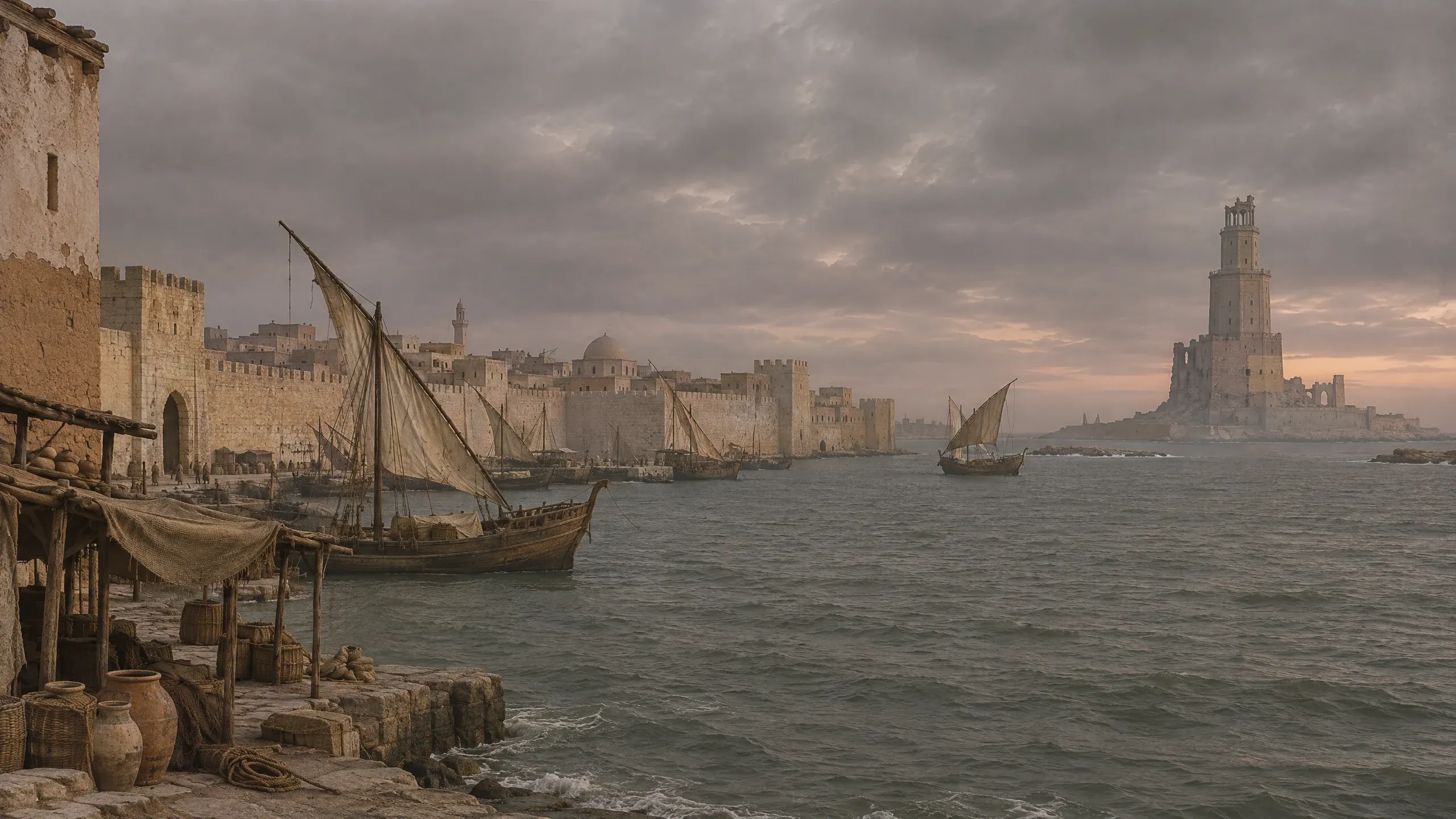
In Dhu’l-Hijja 487 / December 1094 the Fatimid caliph-Imam al-Mustansir died in Cairo after a reign of almost sixty years. Within a year the Ismaili movement, which had been directed from Cairo for more than a century, had split in two. The vizier al-Afdal placed al-Mustansir’s younger son Ahmad on the throne as al-Musta’li. The eldest son, Nizar, rose in revolt at Alexandria and died in prison. The Ismailis of Egypt, Yemen and western India followed al-Musta’li; those of Persia and Iraq, led by Hasan-i Sabbah, followed Nizar.1
The two branches never reunited. A second crisis in 1130–32 divided the Musta’lians in turn. The Hafizis followed the later Fatimid caliphs and disappeared with the dynasty after 1171. The Tayyibis, led by the Sulayhid Queen Arwa of Yemen, held that the Imamate had passed into concealment with the infant al-Tayyib. They created an independent da’wa under a da’i mutlaq, which moved in the sixteenth century to Gujarat and survives in the Bohra communities.2 This chapter follows both lines from 1094. The Nizari state that grew out of the split is the subject of the next chapter, Alamut.
The Ismaili world in 1094
By the 1090s the Fatimid state was no longer the empire it had been under al-Mu’izz and al-’Aziz. After a decade of famine, unrest and military disorder, al-Mustansir had invited the Armenian general Badr al-Jamali to Egypt. Badr took control of the army and the administration as vizier and “commander of the armies” (amir al-juyush), and from 470/1078 he also acted as chief da’i. From then on the viziers were the real masters of the Fatimid state.3
The Ismaili da’wa beyond Egypt was organised regionally. In Persia, under Saljuq rule, the Ismailis were led by a single chief da’i based at Isfahan, ’Abd al-Malik b. ’Attash, whose authority by the 1070s ran from Kirman to Azerbaijan. Among his recruits was Hasan-i Sabbah, who visited Cairo in 471/1078 and returned to Persia in 473/1081.4 In Yemen the Sulayhid dynasty, vassals of the Fatimids since ’Ali b. Muhammad al-Sulayhi conquered the country in the 1060s, ruled from Dhu Jibla under Queen Arwa. Al-Mustansir had appointed her hujja of Yemen, and she oversaw the da’wa in western India, where da’is from Yemen had worked in Gujarat since about 460/1067.5
These regional organisations depended on Cairo in different ways. Yemen and India were bound to the Fatimid court through the Sulayhids. The Persian da’wa, an underground movement in Saljuq lands, was already acting largely on its own. In 483/1090 Hasan-i Sabbah seized the castle of Alamut in the Alborz mountains and began an open revolt against the Saljuqs, four years before al-Mustansir’s death.6
The succession
Ismaili doctrine held that each Imam designated his successor by an explicit act of designation (nass). Nizar, born in 437/1045, was al-Mustansir’s eldest son and about fifty years old in 1094. Daftary states that he had received the nass, and the later Musta’lian refutation conceded that he had originally been designated, claiming only that the designation was revoked.7
A few months before al-Mustansir’s death, Badr al-Jamali died and his son al-Afdal succeeded him as vizier and commander of the armies. Al-Afdal, in Daftary’s words “aiming to retain the reins of power in his own hands”, favoured Nizar’s much younger half-brother Abu’l-Qasim Ahmad. Ahmad, born in 467/1074, was about twenty and married to al-Afdal’s sister. He would depend entirely on the vizier.8
The day after al-Mustansir died, al-Afdal placed Ahmad on the throne with the title al-Musta’li bi’llah. He quickly secured the allegiance of the court and of the leaders of the da’wa in Cairo. The sources give conflicting accounts of what happened at the palace, and versions favourable to al-Musta’li were circulated later. Daftary nevertheless concludes that al-Mustansir never revoked Nizar’s rights, and that al-Musta’li was installed “in a palace coup d’état”.9
Nizar’s revolt
Nizar refused to accept the coup. He fled to Alexandria with his half-brother ’Abd Allah and a few supporters. Alexandria had been the centre of the military factions that Badr al-Jamali had suppressed, and Nizar found allies there: the city’s Turkish governor, Nasir al-Dawla Aftakin, who hoped to replace al-Afdal, and the Ismaili qadi Ibn ’Ammar. The local Arab population also supported him.10
Early in 488/1095 Nizar was proclaimed Imam and caliph with the title al-Mustafa li-Din Allah. A gold dinar struck in his name at Alexandria in 488 AH was found in 1994 and is now in the library of the Institute of Ismaili Studies in London. It is the only physical trace of his caliphate.10
At first the revolt went well. Nizar’s forces drove back al-Afdal and advanced almost to Cairo. Towards the end of 488/1095, however, al-Afdal besieged Alexandria. Nizar’s coalition broke up, and he surrendered. He was taken to Cairo, imprisoned and immured, and he died there before the year ended.11 Nizari tradition later held that a son or grandson of Nizar had escaped to Persia. Nizar did have male descendants, and several of them led revolts against the later Fatimids; the last, by a grandson, came in 556/1161.12
The division of the da’wa
The communities chose sides largely according to their political ties. Al-Musta’li was recognised by the da’wa in Cairo, by most Ismailis in Egypt, by many in Syria, and by the whole community of Yemen and its dependants in western India. These Ismailis, who traced the Imamate through al-Musta’li’s descendants, became known as the Musta’liyya or Musta’lawiyya.13
The Ismailis of the Saljuq lands, in Persia and Iraq, recognised Nizar. By then Hasan-i Sabbah had succeeded ’Abd al-Malik b. ’Attash as leader of the da’wa there. He broke off relations with Cairo and founded the independent Nizari da’wa. The Persian Ismailis were unanimous; the communities of Central Asia, including the region of Nasir Khusraw on the upper Oxus, stayed outside the dispute for some time.14
Syria was divided. Ridwan, the Saljuq ruler of Aleppo, briefly recognised al-Musta’li in 490/1097, but the Ismaili mission in his city was soon led by Persians sent from Alamut. The rivalry lasted decades. By 524/1130 most Syrian Ismailis were Nizaris.15 In Egypt the Nizaris were suppressed.14
The result was a reversal of the movement’s geography. For more than a century the Ismaili Imams had ruled an empire from Cairo. Now the line that most Persian and Syrian Ismailis accepted had no Imam they could see, and the line that the Fatimid state accepted was controlled by its vizier. Both branches count al-Mustansir as their eighteenth Imam; the numbering diverges from the nineteenth.13 The detailed arguments of each side are set out under the Nizari–Musta’li split.
Al-Musta’li, al-Afdal and the Crusades
Al-Musta’li reigned as a figurehead from 487/1094 to his death in Safar 495 / December 1101. Real power remained with al-Afdal, whom Daftary calls “the unchallenged ruler of Fatimid Egypt for some twenty-seven years”.16 His rule coincided with the arrival of the First Crusade in Syria in 490/1097. Al-Afdal recovered Tyre in 490/1097 and took Jerusalem from the Artuqid Turks the following year. In 492/1099 the Crusaders defeated a Fatimid army near Ascalon, and Jerusalem fell to them.17
When al-Musta’li died, al-Afdal placed his five-year-old son on the throne as al-Amir bi-Ahkam Allah. Over the next two decades the Fatimids lost Acre in 497/1103, Tripoli, Sidon, and in 518/1124 Tyre, until only Ascalon remained. In 511/1117 King Baldwin I of Jerusalem invaded Egypt itself.18 Al-Afdal had also closed the Dar al-’Ilm, the Fatimid academy in Cairo that had served as a centre of da’wa teaching.19
Al-Afdal was assassinated in Cairo in 515/1121. Daftary considers it likely that al-Amir, who wanted to rule in his own right, was behind the killing, though some sources, and the Nizaris themselves, attributed it to Nizari agents. Nizari tradition names three fida’is from Aleppo and says Hasan-i Sabbah ordered seven days of celebration at Alamut.20
The Hidaya and the polemic
The new vizier, al-Ma’mun al-Bata’ihi, reopened the Dar al-’Ilm and built the al-Aqmar mosque in Cairo. He also took strict precautions against Nizari agents from Alamut.21 In Shawwal 516 / December 1122 he held an assembly in the palace to restate the Musta’lian case. According to Ibn Muyassar, Nizar’s full sister, speaking from behind a screen, testified that al-Mustansir had designated al-Musta’li on his deathbed.22
The outcome was a decree, al-Hidaya al-Amiriyya, drafted by the chancery secretary Ibn al-Sayrafi in al-Amir’s name. It was the earliest Musta’lian refutation of the Nizari claims, written some twenty-eight years after the schism. It admitted that Nizar had been designated but argued that the designation had been revoked, and it ridiculed the Nizari belief that a son of Nizar had been smuggled to Persia.22 Ibn Muyassar also reports a letter by Ibn al-Sayrafi urging Hasan-i Sabbah to renounce Nizar.23
The Hidaya was read in Syria and caused uproar among the Nizaris of Damascus. A Nizari leader wrote a refutation, and al-Amir answered with a further epistle, Iqa’ sawa’iq al-irgham.22 In this polemic the Syrian Nizaris were for the first time called hashishiyya, without explanation. The word was a term of abuse meaning “rabble”. It later passed into Crusader usage and became the European word “assassin” (see the Assassins legend).24
The second split: al-Tayyib and al-Hafiz
In Dhu’l-Qa’da 524 / October 1130 al-Amir was killed by Nizari fida’is. He was the tenth Fatimid caliph and the twentieth Imam of the Musta’lians.25 His death opened a new crisis. According to Ibn Muyassar and the Tayyibi sources, a son, al-Tayyib, had been born to al-Amir in Rabi’ II 524 / March 1130 and designated as heir. Al-Amir announced the birth in an epistle to Queen Arwa.26 Al-Tayyib’s existence is also attested by Ibn Muyassar, probably on the authority of the lost chronicle of al-Muhannak (d. 549/1154). His designation as heir was celebrated with a fortnight of public festivities in Cairo and Fustat. Idris ’Imad al-Din, following Tayyibi tradition, gives 526 rather than 524 as the year of al-Amir’s death.27
Power passed instead to al-Amir’s cousin ’Abd al-Majid, a grandson of al-Mustansir, who became regent. Al-Tayyib disappeared. His fate is unknown: he may have died in infancy or have been disposed of at ’Abd al-Majid’s instigation, and one anonymous Syrian chronicler implies that he was killed.28
Daftary’s account of the first weeks shows how the court managed the vacuum. ’Abd al-Majid, the eldest member of the Fatimid family, ruled at first as regent, officially pending the delivery of a child by al-Amir’s pregnant wife. Two of al-Amir’s favourites, Hazarmard and Barghash, held the real power, and the Armenian general Yanis became commander of the army. An epistle issued by the Fatimid chancery in Dhu’l-Qa’da 524 to the monastery of St Catherine on Mount Sinai confirms this temporary arrangement. ’Abd al-Majid had somehow concealed the existence of al-Tayyib, and nothing more is known of the child.29
Within two weeks the army made Kutayfat, al-Afdal’s son, vizier. He set the Fatimid dynasty aside and recognised the hidden Imam of the Twelver Shi’is, striking coins in his name in 525–526 AH. Kutayfat was killed on 16 Muharram 526 / 8 December 1131. In Rabi’ II 526 / February 1132 ’Abd al-Majid was proclaimed caliph and Imam as al-Hafiz li-Din Allah. A decree asserted that al-Amir had designated him, as the Prophet had designated ’Ali at Ghadir Khumm.30
Kutayfat’s coins name “al-Imam Muhammad Abu’l-Qasim al-Muntazar li-Amr Allah” and in some cases describe Kutayfat himself as the hidden Imam’s deputy. For about a year Twelver Shi’ism, not Ismailism, was the religion of the Fatimid state. Kutayfat was overthrown by Ismaili elements and the Kutama faction of the army, led by Yanis. The day of his death was celebrated every year until the end of the dynasty as the “feast of victory” (’id al-nasr). Al-Hafiz was the first Fatimid caliph-Imam whose father had not reigned before him, and his irregular succession required the new doctrinal justification that the Ghadir Khumm comparison supplied.31
The Musta’lians now divided. Those who accepted al-Hafiz, the official da’wa of the Fatimid state and the majority in Egypt and Syria, became the Hafiziyya or Majidiyya. Those who held to al-Tayyib were first called the Amiriyya and later the Tayyibiyya. By 526/1132 the unified Ismaili movement of the Fatimid period had become three: Nizaris, Hafizis and Tayyibis.32
The end of the Fatimids
Hafizi Ismailism was bound to the dynasty. Al-Hafiz, the only one of the later Fatimids to accede as a grown man, tried to restore the caliph’s authority, but the viziers remained dominant.33 His successors were boys in the hands of their viziers. Al-Hafiz’s seventeen-year-old son al-Zafir (r. 544–549/1149–1154) was the last caliph to appoint a vizier himself. The governor of Alexandria, Ibn al-Salar, killed that vizier in 544/1150 and took his place, and was murdered in turn in Muharram 548 / April 1153 by his step-son ’Abbas and ’Abbas’s son Nasr. Ascalon, the last Fatimid foothold in Syria, fell to the Franks in Jumada I 548 / August 1153. In Muharram 549 / April 1154 Nasr murdered al-Zafir himself.34
‘Abbas placed al-Zafir’s five-year-old son on the throne as al-Fa’iz. The Fatimid family appealed to Tala’i’ b. Ruzzik, the Armenian governor of Asyut, who drove ’Abbas out and ruled Egypt as vizier. Al-Fa’iz died in Rajab 555 / July 1160 at the age of eleven. Ibn Ruzzik then enthroned al-Hafiz’s nine-year-old grandson as al-’Adid, the last Fatimid caliph, and was himself assassinated in Ramadan 556 / September 1161.34 Rival viziers, Shawar and Dirgham, then fought for Cairo, drawing in the Zangid ruler Nur al-Din of Syria and the Frankish king Amalric I of Jerusalem, each of whom hoped to control Egypt.34
In 564/1168 Nur al-Din’s third expedition to Egypt, under Shirkuh and his nephew Saladin, forced the Franks to withdraw. Saladin had Shawar killed in Rabi’ II 564 / January 1169, and when Shirkuh died two months later Saladin became the last Fatimid vizier. He rebuilt the army around his own troops, ended the Shi’i form of the call to prayer, closed the Ismaili lectures at al-Azhar and elsewhere in Cairo, and appointed a Sunni chief qadi, who replaced the Ismaili jurists of Egypt with Sunnis.35 Outside Egypt the Hafizis found support among the Zuray’ids of Aden (473–569/1080–1173) and the Hamdanids of San’a in Yemen, who had both broken away from Sulayhid rule. The Zuray’id Muhammad b. Saba’ was the first of his house to be designated a Hafizi da’i.36
In Muharram 567 / September 1171 Saladin had the Friday sermon in Cairo read in the name of the Abbasid caliph al-Mustadi. The last Fatimid caliph, al-’Adid, the fourteenth of his line and the twenty-fourth Hafizi Imam, died a few days later at about twenty-one. The Fatimid caliphate had lasted 262 years.37 The sermon of 1171 was delivered by the Shafi’i theologian Najm al-Din al-Khabushani, who also recited the misdeeds of the Fatimids. Daftary notes that Egypt returned to Sunnism “amidst the complete apathy of the populace”. The members of the Fatimid family were kept in honourable captivity in the palace and elsewhere.35
The Ayyubids dispersed the Fatimid libraries, including that of the Dar al-’Ilm, and persecuted the Ismailis of Egypt. The Syrian Nizaris twice tried to kill Saladin, in 570/1175 and 571/1176.38 In 569/1173 Saladin’s brother Turanshah conquered Yemen, ending the Hafizi dynasties there. Hafizi Ismailism had disappeared from Egypt by the end of the thirteenth century, and it never took root in India.36 Under the last four caliphs the Hafizi da’wa had kept the old institutions, with chief da’is as its administrative heads, beginning with Siraj al-Din Najm b. Ja’far, appointed in 526/1132. Hafizi scholars presumably wrote books, but because the community disappeared, no Hafizi texts comparable to those preserved by the Tayyibis and Nizaris have survived.39
Queen Arwa and the Tayyibi da’wa
Arwa bint Ahmad (1048–1138) had ruled Sulayhid Yemen since the 1070s. Her husband, Ahmad al-Mukarram, withdrew from public life with facial paralysis and died in 477/1084; she moved the capital from San’a to Dhu Jibla and governed alone.40 Under the Sulayhids the offices of ruler and chief da’i had separated: the qadi Lamak b. Malik al-Hammadi, who had studied in Cairo with al-Mu’ayyad fi’l-Din al-Shirazi, returned as chief da’i of Yemen, while al-Mustansir made Arwa hujja. Daftary calls this the first time any high rank of the Ismaili hierarchy was given to a woman.41
In 1094 Arwa and Lamak recognised al-Musta’li, and all of Yemen with them. Lamak’s son Yahya succeeded him in 491/1098, and on Yahya’s death in 520/1126 the office passed to al-Dhu’ayb b. Musa al-Wadi’i.42 Relations with Cairo had already cooled. Al-Afdal’s agent Ibn Najib al-Dawla, sent to Yemen in 513/1119, was recalled in 519/1125 amid rumours that he had spread pro-Nizari propaganda, and drowned on the voyage back.43
When al-Hafiz claimed the Imamate, Arwa rejected him; the Tayyibi sources say she was astonished that he called himself “commander of the faithful”. She recognised al-Tayyib as Imam.44 Soon after 526/1132 she declared al-Dhu’ayb al-da’i al-mutlaq, the “da’i with absolute authority”, who would lead the da’wa on behalf of the hidden Imam. Daftary treats this as the foundation of the independent Tayyibi da’wa, separate from Cairo and from the Sulayhid state. She died in Sha’ban 532 / April 1138, leaving her jewellery to the Imam al-Tayyib.45
Tayyibi tradition, transmitted through the second da’i mutlaq, holds that al-Tayyib was hidden by trusted followers after a group of da’is led by Ibn Madyan was executed by Kutayfat. Tayyibis believe that he survived and that the Imamate has continued in his descendants, all of whom have remained hidden. Al-Tayyib is the twenty-first and last Imam whom they know by name.46
Daftary compares Arwa’s role with that of Hasan-i Sabbah: each built an independent da’wa while the Imam they recognised could not be reached, and in his view the Tayyibi community owes its survival largely to her.47
The da’is of Yemen
Al-Dhu’ayb was assisted by al-Khattab b. al-Hasan, a chief of the Banu Hajur and a poet, who defended Arwa’s rank as hujja in his Ghayat al-mawalid. Al-Khattab was killed in 533/1138. On al-Dhu’ayb’s death in 546/1151 his deputy, Ibrahim b. al-Husayn al-Hamidi, became the second da’i mutlaq.48
Ibrahim al-Hamidi, working from San’a, gave Tayyibi thought its distinctive form. He introduced the Rasa’il Ikhwan al-Safa’ and al-Kirmani’s cosmology of ten intellects into Tayyibi teaching, and in his Kanz al-walad added a “drama in heaven” in which the third intellect fell to the tenth rank and became the spiritual Adam.49 His son Hatim succeeded him in 557/1162 and led the da’wa for thirty-seven years. Hatim fought the Hafizi Hamdanids, moved the da’wa to the Haraz mountains and in 569/1173 seized the fortresses of Zahra and Hutayb. The Hamidi family held the office until 605/1209.50
The Banu’l-Walid family then led the da’wa for more than three centuries. In 829/1426 the eighteenth da’i lost the fortress of Dhu Marmar to the Zaydis. His successor, Idris ’Imad al-Din (d. 872/1468), was the community’s great historian. His ’Uyun al-akhbar and Nuzhat al-afkar are the main Tayyibi sources for the Fatimids and for medieval Yemen, and his Zahr al-ma’ani, completed in 838/1435, is the fullest statement of Tayyibi doctrine.51
Tayyibi doctrine set the history of the world in a vast cosmic frame. Successive cycles of manifestation (kashf) and concealment (satr) followed one another, each made up of seven eras and opened by a partial Adam; the present cycle of concealment began with the Adam of the Qur’an. At the end of the grand cycle the final Qa’im would proclaim the “resurrection of resurrections” (qiyamat al-qiyamat). By some Tayyibi calculations the grand cycle would last 360,000 times 360,000 years.52 Each believer, at initiation, was joined by a point of light that grew with knowledge and virtue and after death joined the “temple of light” (haykal nurani) of the Imam of the age.53
The organisation of the da’wa was simplified to fit the Imam’s concealment. Hatim b. Ibrahim al-Hamidi’s Tuhfat al-qulub described a hierarchy with fewer ranks than under the Fatimids. With the Imam, his bab and his hujjas all hidden, the head of the da’wa from al-Dhu’ayb onward was simply the da’i, or more precisely al-da’i al-mutlaq. Daftary notes that, following al-Kirmani’s argument that the holder of each rank potentially held the authority of the next, the da’i mutlaq came to exercise the authority once reserved for the higher ranks.53
From Yemen to Gujarat
The da’is sent from Yemen to India began at Khambhat (Cambay). Their converts in Gujarat, mostly of Hindu origin and many of them artisans and traders, became known as Bohras, a name generally derived from the Gujarati vohorvu, “to trade”. In the split of 1094 the Indian Ismailis followed the Sulayhids to al-Musta’li, and in 1130–32 they followed them to al-Tayyib.54
Under the Gujarat sultanate (810–991/1407–1583) the community spread to Patan, Sidhpur and Ahmadabad, which became the headquarters of the Indian da’wa. The Tayyibis lived under strict taqiyya. In 946/1539 the twenty-third da’i mutlaq, Muhammad b. al-Hasan, the last Yemeni to hold the office, was succeeded by Yusuf b. Sulayman of Sidhpur. From then on the da’i mutlaq resided in India and kept a deputy in Yemen.55
Da’udis, Sulaymanis and Alawis
The death of the twenty-sixth da’i, Da’ud b. ’Ajabshah, in 999/1591 (997/1589 in Sulaymani reckoning) produced the lasting division of the Tayyibis. Most Indian Bohras followed Da’ud Burhan al-Din b. Qutbshah and became the Da’udis. Most Yemeni Tayyibis followed Sulayman b. Hasan al-Hindi, grandson of the twenty-fourth da’i and deputy in Yemen, and became the Sulaymanis. The case was heard before the Mughal emperor Akbar at Lahore in 1005/1597. The Da’udi headquarters remained in India, the Sulaymani in Yemen.56 Da’ud Burhan al-Din was succeeded by his chief lieutenant, Shaykh Adam Safi al-Din, who died in 1030/1621. The next da’i, ’Abd al-Tayyib Zaki al-Din, a son of the twenty-seventh da’i, was the one whose authority the emperor Jahangir later upheld at Lahore. Ties with Yemen did not end with the schism: the thirty-first Da’udi da’i, ’Ali Shams al-Din (1041–1042/1631–1632), a descendant of Idris ’Imad al-Din and son of the Da’udi deputy in Yemen, was the first Yemeni to lead the Da’udi da’wa.57
The Da’udis divided further. ’Ali b. Ibrahim, grandson of the twenty-eighth da’i, challenged the twenty-ninth, ’Abd al-Tayyib Zaki al-Din, and took his case to the emperor Jahangir, who decided for the incumbent and reconciled the two at Lahore. Back in Ahmadabad ’Ali again refused to recognise the da’i, and in 1034/1624–25 he seceded and founded the Alawi Bohras, whose headquarters has been at Baroda (Vadodara) since the early eighteenth century. The Alawis, about 8,000 people living mostly in Baroda, do not intermarry with the Da’udis; their forty-fourth da’i succeeded in 1394/1974, and they keep an important collection of Ismaili manuscripts at Baroda. A small dissident group, the vegetarian Nagoshias, broke away from them in 1204/1789 and is now practically extinct.58 The Mughal rulers generally allowed the Bohras religious freedom; Awrangzib was the exception. On his arrival in Ahmadabad as governor in 1055/1645 he had the thirty-second Da’udi da’i, Qutbkhan Qutb al-Din, arrested and imprisoned, placed Bohra mosques under Sunni administrators and pressed the community to adopt Sunnism. Many Da’udis converted or fled, and the rest returned to taqiyya.59 Their headquarters moved from Ahmadabad to Jamnagar and then Surat, where ’Abd ’Ali Sayf al-Din (1213–1232/1798–1817) founded the seminary later known as al-Jami’a al-Sayfiyya.60
The eighteenth and nineteenth centuries brought further disputes. In 1175/1761 the scholar Hibat Allah, son of Isma’il al-Majdu’, author of the Ismaili bibliography Fihrist al-kutub, claimed to be in direct contact with the hidden Tayyibi Imam. His followers, the Hiptias, are now almost extinct. The fortieth da’i, Hibat Allah al-Mu’ayyad fi’l-Din (1168–1193/1754–1779), who resisted the claim from Ujjain, kept good relations with the Mughal emperor Shah ’Alam II, who made him qadi of Ujjain, and with the British, who then controlled parts of Gujarat. The forty-second da’i, Yusuf Najm al-Din (1200–1213/1785–1798), moved the headquarters to British-held Surat. By 2002 the Surat seminary had about 100 teachers and 750 students, 300 of them women.61
In 1256/1840 the forty-sixth da’i, Muhammad Badr al-Din, died without publicly pronouncing the designation of his successor (nass al-jali). The community’s scholars agreed that ’Abd al-Qadir Najm al-Din should administer the da’wa, but some doubted his spiritual standing. Some of them, troubled by this “interruption of the nass”, expected the hidden Tayyibi Imam to appear. In 1293/1876 five Da’udi scholars travelled to Arabia in search of him. In 1295/1878 the leading scholars set up a consultative council at Surat. Daftary notes that the controversy over the succession of 1840 “has continued down to the present”.62
’Abd al-Qadir Najm al-Din led the Da’udis for nearly forty-five years, until his death in 1302/1885. Members of his family collected the religious dues of many communities, including the prosperous Bohras of Bombay, and the grievances of this period later surfaced in two civil suits in British India, the Chandabhai Gulla case of 1917 and the Burhanpur Durgah case of 1925.63 In 1315/1897 a Bombay merchant, ‘Abd al-Husayn Jiwaji, claimed at Nagpur to be in contact with the hidden Imam and to be his hujja. His followers, the Mahdibaghwalas, named after their settlement in Nagpur, remained a small group; a faction of them, the Atba’-i Malak Vakil, held that the era of manifestation had begun and gave up the ritual obligations of the shari’a.63
The fiftieth da’i, ’Abd Allah Badr al-Din (1323–1333/1906–1915), reorganised the regional da’wa but opposed Western secular education, then the main demand of reform-minded Da’udis. His successor, Tahir Sayf al-Din, led the community for fifty years, longer than any earlier da’i. Daftary describes the Da’udis of his time as strongly polarised between the da’i and his traditionalist supporters on one side and several reformist groups on the other.64
The fifty-first Da’udi da’i, Tahir Sayf al-Din (1915–1965), moved the headquarters to Bombay, by then the main commercial centre of India, built the Sayfi Masjid there and compiled a vast anthology, al-Risala al-Ramadaniyya. After the partition of India, Karachi became the community’s second centre in South Asia. He was succeeded in 1385/1965 by his eldest son, Muhammad Burhan al-Din, who led the community until his death in 2014. In the 1970s Burhan al-Din obtained permission from the Egyptian government to restore Fatimid monuments in Cairo, and the Bohras restored the mosques of al-Hakim and al-Aqmar, though, Daftary notes, without much regard for modern conservation principles He paid particular attention to education and to the participation of women in community affairs, and in 1983 opened a branch of the Jami’a Sayfiyya in Karachi; Daftary counts the Da’udis among the most highly educated communities of South Asia.65 Akkerman notes that a new Da’udi schism followed his death and, “as in Mughal times”, was taken to the Indian courts.66 Daftary estimated the Da’udi population at around 900,000 by the end of the twentieth century, four-fifths of them in India, with about 30,000 in Pakistan, perhaps 5,000 in the Haraz region of Yemen and some 20,000 in East Africa; communities have also settled in Europe and North America since the 1970s.67 Later estimates give about a million Da’udis, and about 8,000 each of Alawis and Sulaymanis in India. The Bohras were among the first Asian communities to settle in East Africa, and Daftary notes that the Da’udi da’i mutlaq “has become practically a substitute for the hidden Tayyibi imam”.68 The full history is told under Musta’lians, Tayyibis and Bohras.
The Nizaris after 1094
For the Nizaris the split posed a different problem. Their Imam had died in prison, and no successor appeared in public. For some seventy years the coins struck at Alamut, under the mint name Kursi al-Daylam, bore Nizar’s name and his title al-Mustafa li-Din Allah, and blessed his descendants without naming them. Hasan-i Sabbah and his first two successors led the Nizaris as the hujja of a hidden Imam, in a period of concealment (dawr al-satr).69
The split also shaped Nizari doctrine. Hasan-i Sabbah had spent about three years in Egypt (471–473/1078–1081) without meeting al-Mustansir, and was expelled after a conflict with Badr al-Jamali. Later Nizari sources say the quarrel concerned Nizar’s rights. Daftary treats as anachronistic the story, reported by Ibn al-Athir, that al-Mustansir told Hasan in person that Nizar would succeed him.70 In Persia Hasan restated the old Shi’i doctrine of ta’lim, “authoritative teaching”, in a treatise known as the Four Chapters (Fusul-i arba’a), preserved only in an Arabic summary by al-Shahrastani. Reason alone, he argued, could not lead to the truth; mankind needed a single authoritative teacher in every age, and that teacher was the Imam. The doctrine allowed the Nizaris to remain loyal to an Imam they could not see, and it was answered by al-Ghazali in a refutation commissioned by the Abbasid caliph al-Mustazhir.71
The concealment ended in 559/1164, when Hasan II proclaimed the Qiyama at Alamut. His son Nur al-Din Muhammad declared that Hasan II had been an Imam descended from Nizar. Nizari tradition fills the gap with three hidden Imams: Ali al-Hadi, Muhammad al-Muhtadi and Hasan al-Qahir. One version says that the qadi Abu’l-Hasan Sa’idi brought a grandson of Nizar to Alamut in 488/1095, and that the secret was known to Hasan-i Sabbah.72 The history of that state, from 1090 to 1256, continues in Alamut.
Sources and interpretation
Almost every account of the split was written to support one side. The Musta’lian case is preserved in al-Hidaya al-Amiriyya and in the Tayyibi histories of Yemen, above all Idris ’Imad al-Din’s ’Uyun al-akhbar. The Tayyibis kept their manuscripts, called al-khizana al-maknuna (“the guarded treasure”), and moved them from Yemen to India, especially after the sixteenth century; they are held at Surat, Bombay and Baroda, with strictly controlled access.73
The Fatimid chronicles, by Ismaili and non-Ismaili authors alike, have survived only in fragments and later extracts, since the Ayyubids destroyed the libraries of Cairo.74 The Nizari side survives mainly through the Persian historians Juvayni and Rashid al-Din, who after 1256 quoted the Nizari chronicles of Alamut, notably the Sargudhasht-i Sayyidna, Hasan-i Sabbah’s biography.75 Modern scholarship, beginning with the publication of Ismaili manuscripts from Yemen, India, Syria and Central Asia in the twentieth century, has made it possible to read both traditions side by side.76
Footnotes
-
Farhad Daftary, The Isma’ilis: Their History and Doctrines, 2nd ed. (Cambridge University Press, 2007), pp. 241–243; Farhad Daftary, Historical Dictionary of the Ismailis (Scarecrow Press, 2012), s.v. “Musta’lians, Musta’liyya”. ↩
-
Daftary, The Isma’ilis, pp. 246–248, 264, 276–280; Daftary, Historical Dictionary, s.v. “Bohras”. ↩
-
Daftary, The Isma’ilis, pp. 241, 247, 311. ↩
-
Daftary, The Isma’ilis, pp. 311–312. ↩
-
Farhad Daftary, “Sayyida Hurra: The Ismaili Queen of Yaman”, in Ismailis in Medieval Muslim Societies (I.B. Tauris / Institute of Ismaili Studies, 2005), pp. 91–95. ↩
-
Daftary, The Isma’ilis, pp. 314, 316. ↩
-
Daftary, The Isma’ilis, pp. 241, 245. ↩
-
Daftary, The Isma’ilis, p. 241. ↩
-
Daftary, The Isma’ilis, pp. 241–242. ↩
-
Daftary, The Isma’ilis, p. 242; Daftary, Historical Dictionary, s.v. “Nizar b. al-Mustansir”. ↩
-
Daftary, The Isma’ilis, pp. 325–326. ↩
-
Daftary, The Isma’ilis, pp. 242–243; Daftary, Historical Dictionary, s.v. “Musta’lians, Musta’liyya”. ↩ ↩2
-
Daftary, The Isma’ilis, pp. 325, 332. ↩
-
Daftary, The Isma’ilis, pp. 243–244. ↩
-
Daftary, The Isma’ilis, p. 243. ↩
-
Daftary, The Isma’ilis, p. 244. ↩
-
Daftary, The Isma’ilis, p. 244. ↩
-
Daftary, The Isma’ilis, pp. 244, 342. ↩
-
Daftary, The Isma’ilis, pp. 244–245. ↩
-
Daftary, The Isma’ilis, p. 342. ↩
-
Daftary, The Isma’ilis, pp. 10–11; Bernard Lewis, The Assassins: A Radical Sect in Islam (Weidenfeld and Nicolson, 1967), pp. 10–12. ↩
-
Daftary, The Isma’ilis, p. 244; Daftary, Historical Dictionary, s.v. “al-Amir”. ↩
-
Daftary, The Isma’ilis, pp. 246, 262. ↩
-
Daftary, The Isma’ilis, p. 246. ↩
-
Daftary, The Isma’ilis, pp. 246, 261; Daftary, Historical Dictionary, s.v. “al-Tayyib”. ↩
-
Daftary, The Isma’ilis, p. 246. ↩
-
Daftary, The Isma’ilis, p. 246. ↩
-
Daftary, The Isma’ilis, pp. 246–247. ↩
-
Daftary, The Isma’ilis, p. 248. ↩
-
Daftary, The Isma’ilis, p. 247. ↩
-
Daftary, The Isma’ilis, pp. 252–253. ↩
-
Daftary, The Isma’ilis, pp. 253–254. ↩
-
Daftary, The Isma’ilis, p. 253. ↩
-
Daftary, “Sayyida Hurra”, pp. 92–93. ↩
-
Daftary, “Sayyida Hurra”, pp. 93–94; Daftary, The Isma’ilis, p. 263. ↩
-
Daftary, The Isma’ilis, pp. 243, 263–264. ↩
-
Daftary, The Isma’ilis, p. 263. ↩
-
Daftary, The Isma’ilis, p. 262. ↩
-
Daftary, The Isma’ilis, p. 264; Daftary, “Sayyida Hurra”, pp. 98–99. ↩
-
Daftary, The Isma’ilis, pp. 261–262; Daftary, Historical Dictionary, s.v. “al-Tayyib”. ↩
-
Daftary, “Sayyida Hurra”, pp. 99–100. ↩
-
Daftary, The Isma’ilis, p. 264. ↩
-
Daftary, The Isma’ilis, pp. 265, 269–270. ↩
-
Daftary, The Isma’ilis, p. 265. ↩
-
Daftary, The Isma’ilis, pp. 240, 268, 270–271. ↩
-
Daftary, The Isma’ilis, pp. 272–273. ↩
-
Daftary, Historical Dictionary, s.v. “Bohras”; Daftary, The Isma’ilis, p. 276. ↩
-
Daftary, The Isma’ilis, pp. 268, 276–278. ↩
-
Daftary, The Isma’ilis, pp. 278–280. ↩
-
Daftary, The Isma’ilis, pp. 282–283. ↩
-
Daftary, The Isma’ilis, p. 282. ↩
-
Daftary, The Isma’ilis, pp. 282–283. ↩
-
Daftary, The Isma’ilis, pp. 282–286. ↩
-
Daftary, The Isma’ilis, pp. 284–286. ↩
-
Daftary, The Isma’ilis, pp. 286–287. ↩
-
Daftary, The Isma’ilis, p. 289. ↩
-
Daftary, The Isma’ilis, pp. 289–290. ↩
-
Daftary, The Isma’ilis, pp. 288–290; Olly Akkerman, A Neo-Fatimid Treasury of Books: Arabic Manuscripts among the Alawi Bohras of South Asia (Edinburgh University Press, 2022), ch. 1. ↩
-
Daftary, The Isma’ilis, pp. 290–291. ↩
-
Daftary, Historical Dictionary, s.v. “Bohras”; Akkerman, Neo-Fatimid Treasury, ch. 1. ↩
-
Daftary, The Isma’ilis, pp. 325–326. ↩
-
Daftary, The Isma’ilis, p. 312. ↩
-
Daftary, The Isma’ilis, pp. 340–342. ↩
-
Daftary, The Isma’ilis, pp. 363–364. ↩
-
Daftary, The Isma’ilis, pp. 240–241. ↩
-
Daftary, The Isma’ilis, p. 6. ↩
-
Daftary, The Isma’ilis, pp. 304–306. ↩
-
Lewis, The Assassins, pp. 17–18; Daftary, The Isma’ilis, p. 310. ↩