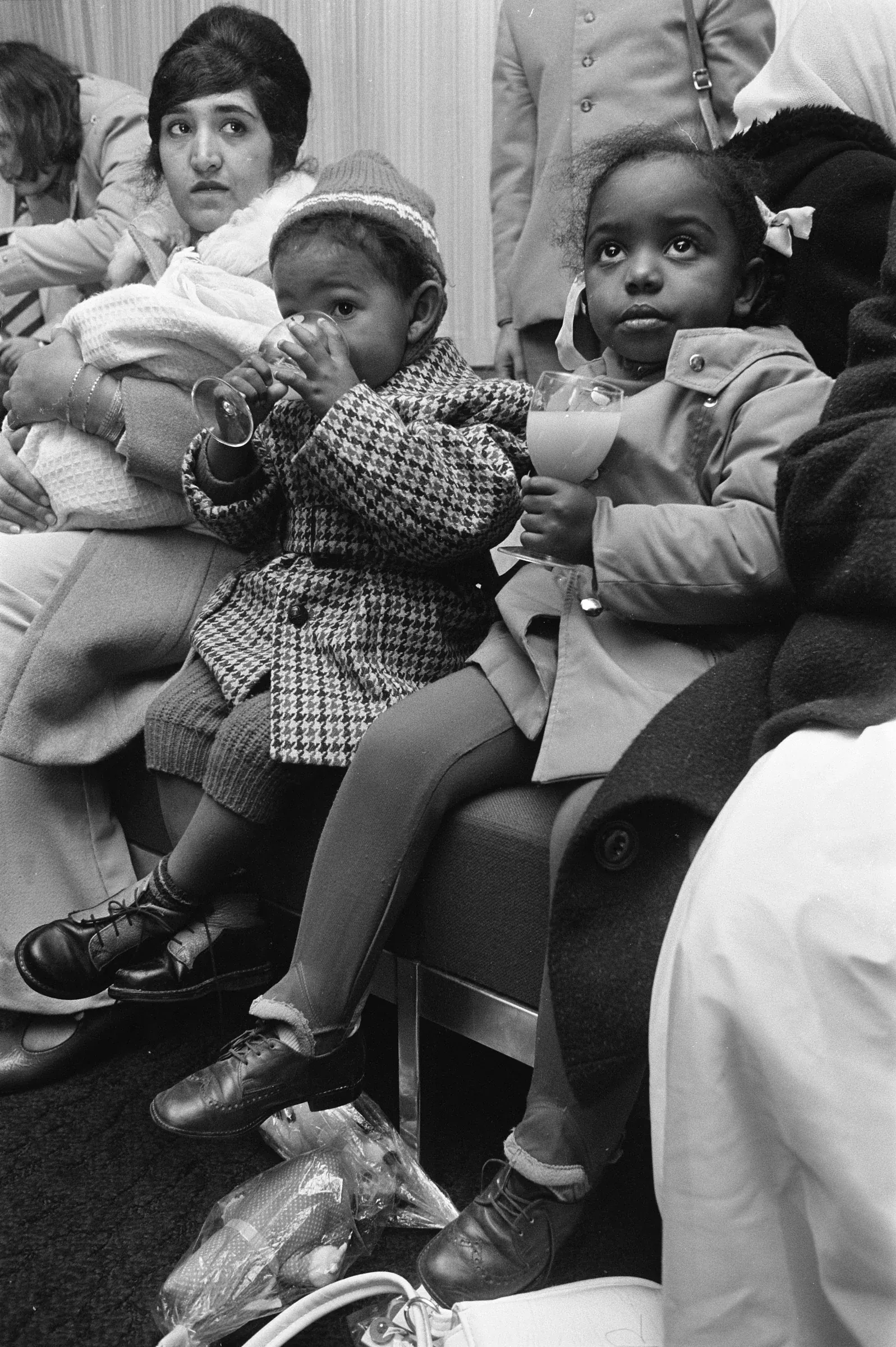
In early August 1972 the President of Uganda, General Idi Amin, ordered almost the entire Asian community of the country to leave within ninety days. About 44,000 people were affected. The deadline for non-citizens was 8 November 1972. Britain absorbed just over 25,000, and India, Pakistan, Bangladesh, Canada and other countries took several thousand more. Several thousand stateless people were placed in temporary camps in Europe. Uganda’s Ismailis, whose institutions had been centred on Kampala since the time of Aga Khan III, were part of this expulsion. Their resettlement, above all in Canada and Britain, contributed to the growth of the Western Ismaili communities described in The Ismaili Diaspora.1
The main sources used here are four assessments by the United States Central Intelligence Agency, written between 1968 and 1972 and declassified later, together with Daftary’s account of the Ismaili communities of East Africa. The CIA documents were written for American policymakers and contain judgements of Asians and Africans that reflect their authors. They are cited here for figures and chronology, not for their characterisations of either community.2
Asians in East Africa before independence
Indian merchants had traded on the East African coast for centuries. The large Asian population of the interior, however, was a creation of the colonial period. In the CIA’s 1968 summary, most of the community descended from labourers brought by the British to build the railway from the Kenyan coast to Lake Victoria, from Indian soldiers who served in East Africa during the First World War, and from later immigrants. Between 1921 and the early 1960s the Asian population of Kenya, Tanganyika and Uganda grew from about 50,000 to more than 375,000.3
Colonial law barred Asians from owning farmland, except in Tanganyika, so they moved into commerce, skilled trades and clerical work in government. The rural Asian shopkeeper, the dukawalla, bought African-grown produce and sold imported goods. By 1967 about three-quarters of the community lived in towns. The CIA estimated that the Asians formed slightly more than 1 per cent of the population but earned about one-fifth of the wages. In Kenya in 1966 the average annual wage was 5,430 dollars for Europeans, 1,900 dollars for Asians and 370 dollars for Africans.4
The Ismailis were one of the most organised of these communities. Aga Khan III had encouraged settlement inland from Zanzibar, and in the early 1950s he put his Ugandan followers at about 6,000. Under the 1962 constitution the community in Uganda had its own Territorial Council, with headquarters at Kampala, and its own Education and Health Administrations. Daftary describes the Ismaili Khojas as “the best organized and the most progressive of the Asian Muslim communities of East Africa”.5
Citizenship and Africanization
At independence in the early 1960s, Asians who could prove that they and at least one parent had been born in East Africa received local citizenship automatically. Others could apply, but had to give up their status as British protected persons. Relatively few applied. Many who became citizens kept their British passports, and some whose applications became caught in the bureaucracy ended up stateless. The CIA noted in 1972 that most no longer had ties to India or Pakistan.6
Each of the three governments adopted Africanization programmes to replace Asians in the civil service and commerce. Kenya moved first in the private sector, with an immigration act and a trade licensing act passed in December 1967. Fearing exclusion, about 12,000 Kenyan Asians left for Britain before London imposed controls on 1 March 1968. A quota then allowed only 1,500 British-passport holders a year, with their families, raised to 3,000 in 1971.7
In Tanzania, the nationalisations that followed President Nyerere’s socialist programme of 1967 placed most import, export and wholesale trade under state agencies. In 1971 the government nationalised all rental property worth more than 14,000 dollars, and within months the Asian population fell from about 70,000 to about 50,000. On Zanzibar, after the revolution of 1964, the CIA described the Revolutionary Council as purging Asians from the civil service and confiscating their businesses.8
Uganda before the expulsion
Uganda had put less pressure on its Asians than its neighbours until January 1970, when the government of Milton Obote passed licensing and immigration laws similar to Kenya’s. On 1 May 1970 Obote announced that the state would take 60 per cent ownership of the banks and of the main firms in manufacturing, mining, plantations and transport, and that foreign trade would be nationalised. Of the 84 enterprises named, 24 were foreign-owned. The CIA noted that the other 60, mostly owned by local Asians, had “no real choice but to accede”.9
Amin overthrew Obote on 25 January 1971, and the CIA reported that the Asian community at first welcomed the change. Within months Amin was accusing Asians of sabotaging the economy and refusing to integrate, and he cancelled about 12,000 pending citizenship applications. In December 1971 he called a conference at which Asians were invited to present their grievances, and which became a long recitation of their alleged faults. By August 1972 the Asian population had fallen by at least 30,000 from an estimated 80,000 three years earlier.10
The order and the ninety days
The expulsion order of August 1972 applied to Asians who were not Ugandan citizens, but in practice its effects went further. The CIA’s October memorandum observed that some Asians who believed themselves citizens found themselves treated as non-citizens when officials tore up their papers. It also reported a later declaration that certain technicians and skilled workers would not be allowed to leave, which, in the memorandum’s words, was “worse than expulsion” for those affected. The memorandum estimated about 25,000 British-passport holders and some 10,000 stateless people, and expected that the British would evacuate nearly all the passport holders before 8 November.11
Britain organised an airlift, joined by Canada and other Commonwealth countries. The CIA recorded that the first arrivals in Britain were dispersed quietly to towns where they would attract little attention. Later, as the airlift grew, thousands were housed in disused Second World War barracks while homes and jobs were found. Switzerland, Sweden and other European countries each took a few hundred stateless people. The British government was unwilling to accept stateless Asians even temporarily.12
Destinations
The CIA’s special report of 24 November 1972 gave the following outcome. Of the 44,000 people expelled, Britain had absorbed just over 25,000. India, Pakistan, Bangladesh, Canada and other Commonwealth countries had taken several thousand, and about 1,000 had gone to the United States. Some 4,000 stateless Asians were in relocation centres in Europe. Up to 8,000 Asians were still in Uganda, some as citizens and some exempted for their skills.13
Iranica’s survey of modern Ismaili communities names East Africa first among the crises in which “humanitarian concerns for refugee rehabilitation and resettlement took priority”, and notes the resulting emigration of Ismailis to Britain, Canada, Europe and the United States. Daftary links the extension of the Ismaili council system to Europe, Canada and the United States to this emigration from East Africa and South Asia from the 1970s. He names Toronto, Vancouver, London and Atlanta as the largest centres. The sources consulted here do not give a reliable count of the Ismailis among the expellees.14
Economic consequences in Uganda
The CIA expected serious disruption, and its November report described it. At least 40,000 Africans had lost their jobs, trade had fallen sharply, basic goods were scarce and tourism had stopped. In Kampala most shops, garages and restaurants were closed and for sale, and some smaller towns were reported to be almost empty. The report concluded that the expulsion had “gutted the small modern portions of the economy”. It also noted that the expulsion was immensely popular in Uganda, and quoted The Economist as saying it had increased Amin’s popularity across East Africa.15
The report put the decline of East Africa’s Asian population in the decade to 1972 at almost half of about 375,000, with more than 100,000 departures in the previous five years alone and more than 60,000 emigrants to Britain since 1968. Most had left the continent, and smaller numbers had moved to Zambia, Malawi and possibly Mozambique.16
Regional effects
Kenya and Tanzania did not follow Uganda’s example. The CIA judged that the Kenyatta government had moved its “Kenyanization” programme at an almost “glacial” pace after the economic shock of 1968. President Nyerere was the only African leader to condemn the expulsion publicly. The memoranda nonetheless expected continued pressure on Asians in both countries and further departures, especially of the young and the qualified.17
For the Ismailis, these years ended the period of East African settlement that had begun in Zanzibar in the nineteenth century. Jamats remained in Kenya and Tanzania, and Uganda kept a National Council under the 1986 constitution. The larger share of the community’s East African families, however, now lived in Britain and North America. Their later history is told in The Ismailis of East Africa and in the pages on Vancouver, Toronto and London.18
Footnotes
-
CIA Directorate of Intelligence, Weekly Summary Special Report: Asian Exodus from East Africa, 24 November 1972, introduction and section “Amin’s Folly”, https://www.cia.gov/readingroom/document/cia-rdp85t00875r001500040040-4; CIA Office of National Estimates, “Wider Implications of Uganda’s Expulsion of its Asians”, memorandum, 25 October 1972, para. 6, https://www.cia.gov/readingroom/document/cia-rdp79r00967a000500030017-9. ↩
-
CIA Office of Economic Research, The Asian Economic Presence in East Africa, ER IM 68-93, July 1968, https://www.cia.gov/readingroom/document/cia-rdp85t00875r001600010042-4; CIA Office of Economic Research, Nationalization in Uganda: Progress and Effects, ER IM 71-24, February 1971, https://www.cia.gov/readingroom/document/cia-rdp85t00875r001600040025-0; Farhad Daftary, The Isma’ilis: Their History and Doctrines, 2nd ed. (Cambridge University Press, 2007), pp. 486-488, 497-499, https://archive.org/details/bk692. ↩
-
CIA, The Asian Economic Presence in East Africa, para. 1; CIA, Asian Exodus from East Africa, introduction. ↩
-
CIA, Asian Exodus from East Africa, introduction; CIA, The Asian Economic Presence in East Africa, summary and paras. 2-3. ↩
-
Aga Khan III, The Memoirs of Aga Khan: World Enough and Time (London: Cassell, 1954), p. 166, https://archive.org/details/memoirsofagakhan00agak; Daftary, The Isma’ilis, pp. 486-488, 497-499. ↩
-
CIA, Asian Exodus from East Africa, introduction; CIA, “Wider Implications”, para. 4. ↩
-
CIA, Asian Exodus from East Africa, section “Kenyan Pragmatism”; CIA, The Asian Economic Presence in East Africa, summary. ↩
-
CIA, Asian Exodus from East Africa, section “Tanzania: Socialism with a Racial Tinge”. ↩
-
CIA, Asian Exodus from East Africa, section “Amin’s Folly”; CIA, Nationalization in Uganda, introduction and paras. 1, 4. ↩
-
CIA, Asian Exodus from East Africa, section “Amin’s Folly”. ↩
-
CIA, “Wider Implications”, paras. 6-8. ↩
-
CIA, “Wider Implications”, paras. 16-17. ↩
-
CIA, Asian Exodus from East Africa, section “Amin’s Folly”. ↩
-
“Ismailism xvi. Modern Ismaili Communities”, Encyclopaedia Iranica, https://www.iranicaonline.org/articles/ismailism-xvi-modern-ismaili-communities/; Daftary, The Isma’ilis, p. 497. ↩
-
CIA, Asian Exodus from East Africa, epigraph and section “Amin’s Folly”. ↩
-
CIA, Asian Exodus from East Africa, section “Amin’s Folly”. ↩
-
CIA, Asian Exodus from East Africa, sections “Kenyan Pragmatism” and “Tanzania: Socialism with a Racial Tinge”; CIA, “Wider Implications”, paras. 9-14. ↩
-
Daftary, The Isma’ilis, pp. 497, 500-501. ↩