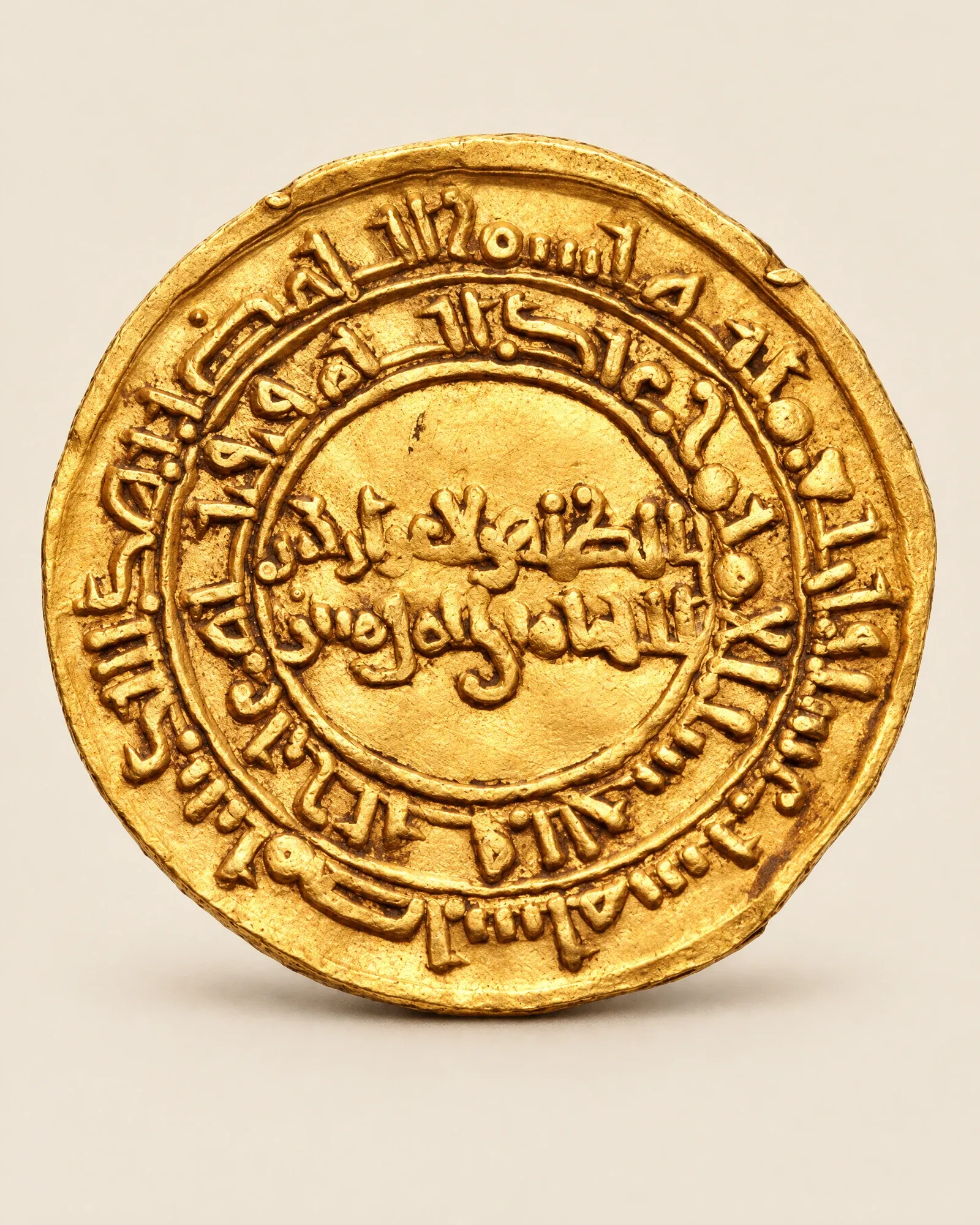
Abu’l-Hasan Ali al-Zahir li-I’zaz Din Allah was the seventh Fatimid caliph and the seventeenth Ismaili Imam. He came to the throne as a youth through the actions of his aunt Sitt al-Mulk, and for most of his fifteen-year reign political authority lay with her and then with the vizier al-Jarjara’i. The reign saw famine in Egypt, a serious threat to Fatimid rule in Syria, and the suppression of the movement that became the Druze.12
Accession
Ali was born in 395/1005, the son of al-Hakim.1 In 404/1013 al-Hakim had named Abd al-Rahim ibn Ilyas, a great-grandson of al-Mahdi, as heir instead of his son, and made him governor of Damascus.3 Sitt al-Mulk, al-Hakim’s half-sister, had protected Ali and his mother in her own palace and raised him.4
After al-Hakim disappeared on 27 Shawwal 411/13 February 1021, Sitt al-Mulk had Abd al-Rahim lured to Cairo and imprisoned; he died in obscure circumstances. She also had the Kutama chief Ibn Dawwas, whom she implicated in al-Hakim’s death, executed.4 About forty days after the disappearance she proclaimed the sixteen-year-old Ali caliph and Imam with the title al-Zahir li-I’zaz Din Allah.42 Canard notes that there was no rule on the age of an Imam: al-Hakim had succeeded at eleven, and from al-Zahir onward the throne often passed to minors, so that regents, generals and viziers frequently held real power.52
The regency of Sitt al-Mulk
Sitt al-Mulk governed as regent with the title al-sayyida al-’amma. She restored order after the upheavals of al-Hakim’s last years, addressed grievances and reopened negotiations with Byzantium.2 Daftary dates her death to 413/1023, about two years into the reign; O’Leary gives 416/1025–1026.26 The negotiations she began in 414/1023 did not succeed.7
Al-Jarjara’i
After Sitt al-Mulk, political authority rested with Ali ibn Ahmad al-Jarjara’i, whose hands had been cut off on al-Hakim’s orders. He served first as wasita and then as vizier, and he remained in office into the next reign, serving as vizier for the first nine years of al-Mustansir’s caliphate until his death in 436/1044.218 Canard notes that the general Anushtigin al-Duzbari later fell victim to his intrigues.9
Famine and religious policy
A famine began in 415/1024 and lasted several years, accompanied by riots.2 Canard records that the people were forced to eat their domestic animals, so that the caliph forbade the slaughter of plough-oxen, and that black troops looted the dishes laid out for the banquet of the Feast of Sacrifices in 415/February 1025.10 In 416/1025–1026 al-Zahir expelled the Maliki jurists from Egypt; Canard contrasts this with the more variable policy of al-Hakim.112
The suppression of the Druze
The followers of the cult of al-Hakim’s divinity were persecuted under al-Zahir. Hamza ibn Ali went into hiding after al-Hakim’s disappearance, and leadership passed to al-Muqtana Baha’ al-Din, who resumed the Druze call in 418/1027. It found its greatest success in Syria and by 425/1034 had converts as far away as Multan.12 Al-Muqtana withdrew after 429/1037 and the call ended in 435/1043; since then the Druze have formed a closed community.13
Syria
Fatimid rule in Syria was threatened by an alliance renewed in 415/1024–1025 between three Arab tribal leaders: Hassan ibn Mufarrij of the Jarrahids of Palestine, Sinan ibn Sulayman of the Kalbis of central Syria, and Salih ibn Mirdas of the Kilabis of northern Syria.21 Salih had already taken Aleppo from the Fatimid governor the previous year, 414/1023–1024.2 When the Kalbis changed sides, the Fatimid general Anushtigin al-Duzbari defeated the others at al-Uqhuwana in Palestine in 420/1029; Salih was killed. Anushtigin reoccupied Damascus and in 429/1038, under al-Zahir’s successor, took Aleppo, extending Fatimid authority to Harran, Saruj and Raqqa.29
Byzantium and Sicily
Negotiations with Byzantium resumed in 423/1032. Agreement was reached on the rebuilding of the Church of the Holy Sepulchre, but talks broke down over al-Zahir’s refusal to allow the return of Hassan ibn Mufarrij to Palestine. A thirty-year peace was signed only in 429/1038, at the beginning of the next reign.72 The Kalbid amirs of Sicily still named the Fatimid caliph on their coins; in the talks of 1032 the emperor Romanus III Argyrus asked that Cairo give no help to the amir of Sicily in his campaigns against Byzantium.9
The Maghrib and the scholars of the da’wa
In the west the Fatimids’ position continued to erode. The Zirid al-Mu’izz ibn Badis, under whom the Ismailis of Ifriqiya had been massacred in 407/1016–1017, still acknowledged the Fatimid caliph, but his rival kinsman Hammad ibn Buluggin had founded a separate state, ruled by the Hammadids from Qal’at Bani Hammad.1415 The Zirids renounced the Fatimids for the Abbasids around 440/1048, under al-Zahir’s successor.16 The most learned Fatimid theologian of the age, Hamid al-Din al-Kirmani, completed his Rahat al-’aql in 411/1020–1021 and died soon afterwards, at the very beginning of al-Zahir’s reign.17
The da’wa in the east
Al-Zahir continued to seek recognition in the east. Like al-Hakim before him, he failed to win over Mahmud of Ghazna in 415/1024; the robes of honour he sent were dispatched to Baghdad and burned.7 Mahmud’s vizier Hasanak was executed in 423/1032 as a Qarmati, the charge resting on a robe he had received from al-Zahir.18 In 425/1034 al-Zahir sent da’is to Baghdad, who took advantage of the disorders caused by Turkish troops under the Buyid Jalal al-Dawla to preach vigorously.72
Death
In 421/1030 al-Zahir designated as his heir his son Ma’add, then eight months old. The child’s mother, Rasad, a Sudanese former slave, would act as regent in the following reign.8
Al-Zahir died of plague in Sha’ban 427/June 1036, in his early thirties, after a reign of fifteen years.21 He was succeeded by Ma’add, aged seven, as al-Mustansir bi’llah, whose reign of almost sixty years was the longest of any Muslim ruler.8
Footnotes
-
Farhad Daftary, Historical Dictionary of the Ismailis (Scarecrow Press, 2012), s.v. “al-Zahir”. ↩ ↩2 ↩3 ↩4 ↩5
-
Farhad Daftary, The Isma’ilis: Their History and Doctrines, 2nd ed. (Cambridge University Press, 2007), p. 192. ↩ ↩2 ↩3 ↩4 ↩5 ↩6 ↩7 ↩8 ↩9 ↩10 ↩11 ↩12 ↩13 ↩14
-
Farhad Daftary, The Isma’ilis: Their History and Doctrines, 2nd ed. (Cambridge University Press, 2007), p. 186. ↩
-
Farhad Daftary, The Isma’ilis: Their History and Doctrines, 2nd ed. (Cambridge University Press, 2007), p. 191. ↩ ↩2 ↩3
-
Marius Canard, “Fatimids”, Encyclopaedia of Islam, 2nd ed., vol. II (Brill, 1965), p. 857. ↩
-
De Lacy O’Leary, A Short History of the Fatimid Khalifate (Kegan Paul, 1923), p. 190. ↩
-
Marius Canard, “Fatimids”, Encyclopaedia of Islam, 2nd ed., vol. II (Brill, 1965), p. 855. ↩ ↩2 ↩3 ↩4
-
Farhad Daftary, The Isma’ilis: Their History and Doctrines, 2nd ed. (Cambridge University Press, 2007), p. 193. ↩ ↩2 ↩3
-
Marius Canard, “Fatimids”, Encyclopaedia of Islam, 2nd ed., vol. II (Brill, 1965), p. 854. ↩ ↩2 ↩3
-
Marius Canard, “Fatimids”, Encyclopaedia of Islam, 2nd ed., vol. II (Brill, 1965), p. 858. ↩
-
Marius Canard, “Fatimids”, Encyclopaedia of Islam, 2nd ed., vol. II (Brill, 1965), p. 859. ↩
-
Farhad Daftary, The Isma’ilis: Their History and Doctrines, 2nd ed. (Cambridge University Press, 2007), p. 188. ↩
-
Farhad Daftary, The Isma’ilis: Their History and Doctrines, 2nd ed. (Cambridge University Press, 2007), p. 189. ↩
-
Farhad Daftary, The Isma’ilis: Their History and Doctrines, 2nd ed. (Cambridge University Press, 2007), p. 180. ↩
-
Farhad Daftary, The Isma’ilis: Their History and Doctrines, 2nd ed. (Cambridge University Press, 2007), p. 183. ↩
-
Farhad Daftary, The Isma’ilis: Their History and Doctrines, 2nd ed. (Cambridge University Press, 2007), p. 201. ↩
-
Farhad Daftary, The Isma’ilis: Their History and Doctrines, 2nd ed. (Cambridge University Press, 2007), p. 184. ↩
-
Farhad Daftary, The Isma’ilis: Their History and Doctrines, 2nd ed. (Cambridge University Press, 2007), p. 200. ↩