Birth and upbringing
Most reports place the birth of al-Husayn b. Ali in Medina on 5 Sha’ban 4/10 January 626; another gives mid-Jumada I 6/early October 627. He was the younger son of Ali ibn Abi Talib and the Prophet’s daughter Fatima, and was brought up with his brother al-Hasan in the household of Muhammad. Many reports of the Prophet’s love for his grandsons treat them together and sometimes confuse them. Al-Husayn is described as resembling the Prophet, though less than al-Hasan did.1
Madelung contrasts the two brothers. Al-Hasan was conciliatory and critical of some of their father’s policies; al-Husayn modelled himself on Ali and inherited his fighting spirit and intense family pride, though not his military experience. Al-Hasan named two sons Muhammad and none Ali; al-Husayn named two of his four sons Ali and none Muhammad.2
Under ’Uthman and Ali
When rebels from Egypt besieged the caliph ’Uthman in Medina in 35/656, al-Hasan joined the sons of other leading Companions in defending him, and Ali sent al-Husayn. ’Uthman asked al-Husayn whether he thought he could defend himself, al-Husayn demurred, and ’Uthman sent him away. During Ali’s caliphate al-Husayn, al-Hasan, Muhammad b. al-Hanafiyya and their cousin ’Abd Allah b. Ja’far were Ali’s closest assistants within the family. Al-Husayn was among those cursed in public on the orders of Mu’awiya.3
The treaty with Mu’awiya
After Ali was killed in 40/661, al-Hasan made peace with Mu’awiya in 41/661. Al-Husayn at first opposed the surrender but accepted it under pressure from his brother. When Kufan Shi’i leaders proposed a surprise attack on Mu’awiya’s camp, al-Husayn refused: he would keep the treaty as long as Mu’awiya lived and would reconsider only after his death. He then left Kufa for Medina with al-Hasan.4
In Medina he married Layla, daughter of Abu Murra b. ’Urwa al-Thaqafi, whose mother was a sister of Mu’awiya. She bore his son ’Ali, later killed at Karbala. Relations with the Umayyads remained bad because of the public cursing of Ali. When the governor of Medina, Marwan b. al-Hakam (41–48/661–668), regularly cursed Ali, al-Husayn, unlike his brother, answered by cursing Marwan and his father.5
Head of the family
Al-Hasan died in 50/670, apparently by poisoning; Daftary dates his death to 49/669. Al-Hasan had asked to be buried beside the Prophet, or beside his mother if that would cause bloodshed. When Marwan opposed burial near the Prophet, al-Husayn appealed to the Quraysh solidarity pact known as the hilf al-fudul, but Muhammad b. al-Hanafiyya and others persuaded him to respect his brother’s wish. The Kufan Shi’is, meeting in the house of Sulayman b. Surad al-Khuza’i, transferred their allegiance to al-Husayn. He replied that he remained bound by his brother’s peace while Mu’awiya lived and asked them to conceal their feelings.6
Iraqi supporters continued to visit him in Medina. Al-Husayn answered a threatening letter from Marwan by listing Mu’awiya’s offences, among them the execution of the Kufan Shi’i leader Hujr b. ’Adi in 51/671, which Daftary sees as the start of Shi’i martyrology. With the sons of other prominent Companions, al-Husayn refused to give allegiance to Mu’awiya’s son Yazid, whose designation as heir broke both the treaty with al-Hasan and the principle of election by consultation (shura).7
From Medina to Mecca
Mu’awiya died on 15 Rajab 60/22 April 680. Yazid at once ordered the governor of Medina to compel al-Husayn, ’Abd Allah b. ’Umar and ’Abd Allah b. al-Zubayr to swear allegiance. Al-Husayn and Ibn al-Zubayr left separately for Mecca. His brother Ibn al-Hanafiyya stayed behind and urged him not to go to Iraq before receiving allegiance there. Al-Husayn stayed in Mecca for four months.8
The Shi’i leaders of Kufa met again in Sulayman b. Surad’s house and wrote urging him to come, because they had no Imam; they said they would drive out the Umayyad governor al-Nu’man b. Bashir as soon as he agreed. They sent seven messages with bags of letters from Kufan warriors and tribal chiefs. The first arrived in Mecca on 10 Ramadan 60/13 June 680. Al-Husayn answered that the Imam’s duty was to act by the Qur’an, uphold justice and proclaim the truth, and he sent his cousin Muslim b. ’Aqil to report on conditions in Kufa.9
He also wrote to the chiefs of the five tribal divisions of Basra, declaring that the Prophet’s family were his legatees (awsiya’) and heirs, and that Quraysh had taken a right that belonged to them alone. Madelung notes that the letter followed the line set by Ali, who upheld the family’s sole right to lead but also praised the conduct of Abu Bakr and ’Umar. One recipient handed the letter to the governor of Basra, ’Ubayd Allah b. Ziyad, who beheaded the messenger.10
The collapse in Kufa
Muslim b. ’Aqil was at first successful: 18,000 men are said to have enlisted for al-Husayn, and Muslim wrote urging him to come quickly. Yazid then gave Kufa to ’Ubayd Allah b. Ziyad with orders to act severely. ‘Ubayd Allah intimidated the tribal chiefs. A rising failed when the rebels could not take the governor’s palace. Muslim was beheaded on the roof of the palace, and Hani’ b. ’Urwa, the chief of Murad who had sheltered him, was also killed.11
The journey to Iraq
Before this news reached him, al-Husayn left Mecca for Kufa on 8 or 10 Dhu’l-Hijja 60/10 or 12 September 680, breaking off his pilgrimage. Some fifty members of his family and a few supporters went with him. ’Abd Allah b. ’Umar and other leading men of Quraysh advised against the journey. His uncle ’Abd Allah b. ’Abbas warned him not to trust the Kufans, who had betrayed his father and brother, and begged him at least to leave his women and children behind. Al-Husayn replied that he must leave the outcome to God and later said that he had seen a vision of the Prophet ordering him to go on.12
At Tha’labiyya he learned of the executions of Muslim and Hani’. At Zubala he learned that another messenger had been killed. He told his followers that the Kufan Shi’is had deserted him and released anyone who wished to leave; most of those who had joined on the way did so. After Sharaf a Kufan cavalry force of 1,000 under al-Hurr b. Yazid al-Riyahi met him. Al-Hurr had orders to bring him to ‘Ubayd Allah. When al-Husayn scattered the Kufans’ letters in front of him, al-Hurr said that his men had not written them.13
Al-Hurr would allow him neither to go to Kufa nor to return to Medina. Near Ninawa new orders arrived to make al-Husayn camp in open desert without fortification or water. On 2 Muharram 61/2 October 680 he made camp on the waterless plain of Karbala.14
The standoff
The next day a Kufan army of 4,000 men arrived under ’Umar b. Sa’d b. Abi Waqqas, son of a leading Companion. ’Umar had been appointed governor of Rayy and was reluctant to fight the Prophet’s grandson, but accepted when ‘Ubayd Allah threatened to withdraw the appointment. Al-Husayn told him that he had come at the Kufans’ invitation and would leave if they no longer wanted him. ’Ubayd Allah demanded that al-Husayn swear allegiance to Yazid and ordered him cut off from the Euphrates. Five hundred men guarded the river, though al-Husayn’s half-brother al-’Abbas reached it with fifty men in a night sortie.15
Al-Husayn and ’Umar met privately at night. Most transmitters say that al-Husayn offered three choices: to return to where he came from, to go to Yazid in Syria, or to be sent to a frontier post. ’Uqba b. Sim’an, a client of al-Husayn’s wife Rabab who survived the battle, denied this, testifying that al-Husayn offered only to leave. Madelung considers an offer to submit to Yazid unlikely given al-Husayn’s convictions. He sees these reports as part of an early tendency to place the main guilt on ’Ubayd Allah.16
’Ubayd Allah was at first inclined to accept a peaceful settlement. Shamir b. Dhi’l-Jawshan persuaded him that letting al-Husayn leave without submitting would be a sign of weakness. ’Ubayd Allah then ordered ’Umar to make al-Husayn submit or to fight and kill him and have horses trample his body, and to hand over command to Shamir if he refused. ’Umar agreed to carry out the order himself.17
Ashura
’Umar prepared to attack on the evening of 9 Muharram. Al-Husayn obtained a delay until morning. He again released his followers from their oath and urged them to escape in the night, telling them the enemy wanted only him; nearly all stayed. In the morning al-Hurr b. Yazid went over to al-Husayn’s side and was killed in the battle.18
The battle lasted from morning to sunset on 10 Muharram 61/10 October 680. ’Umar b. Sa’d, hoping to force a surrender, did not order a general assault, and the reports describe single combats, skirmishes and attacks. Al-Husayn had wood and reeds burned in a ditch behind the tents to protect the rear, and his companions shielded him until near the end. Shamir is usually described as the driving force of the assault. Al-Husayn was wounded by an arrow in the mouth or throat while trying to reach the Euphrates. He was finally stabbed with a spear by Sinan b. Anas al-Nakha’i, and Sinan and Khawali b. Yazid al-Asbahi cut off his head. His body was trampled by horses, as ordered.19
The dead on al-Husayn’s side numbered seventy or seventy-two, including at least twenty descendants of Abu Talib. The first of the family to die was his son ’Ali, whom Sunni sources call ’Ali al-Akbar; as a great-nephew of Mu’awiya he was offered safe conduct and refused it. His young son ’Abd Allah was killed by an arrow while on his father’s knee. Six of his half-brothers, three sons of al-Hasan, three sons of ’Abd Allah b. Ja’far and three sons and three grandsons of ’Aqil b. Abi Talib were also killed. His son ’Ali, later Zayn al-’Abidin, survived because he was ill.20
Burial
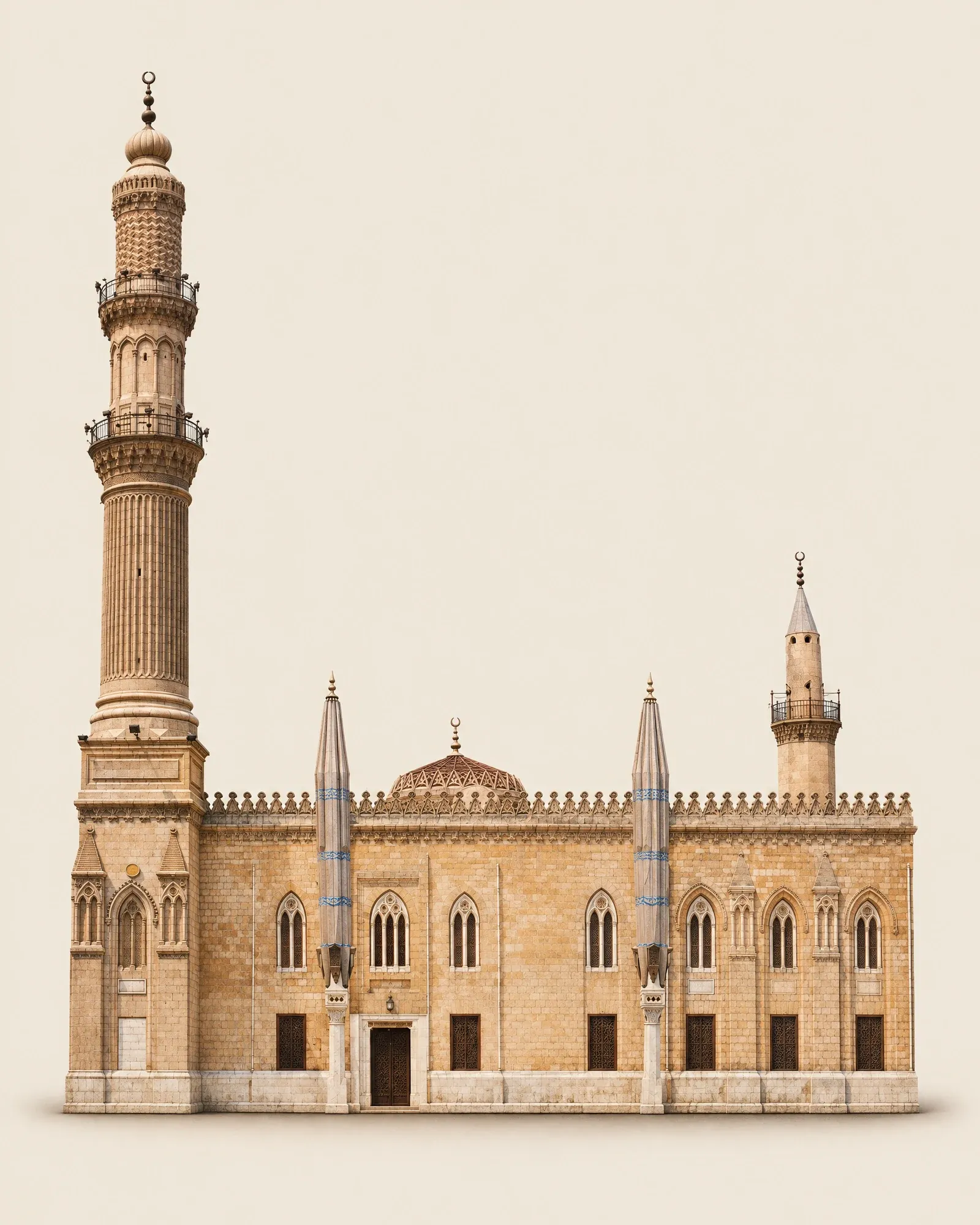
Al-Husayn’s body was buried by the Banu Asad of the nearby village of Ghadiriyya at the spot where his shrine later rose. His head was taken to ’Ubayd Allah in Kufa and then to Yazid in Damascus, and several places later claimed to be its burial place. Daftary notes that the shrine at Karbala has been a major place of Shi’i pilgrimage, and that the martyrdom is commemorated every year in mourning rituals and passion plays known as ta’ziya.21
Responsibility and meaning
The early sources tend to blame ’Ubayd Allah b. Ziyad and to exonerate Yazid, who is said to have cursed his governor. Madelung argues that the prime responsibility lay with Yazid, who knew that al-Husayn would threaten his rule as long as he lived, appointed a governor known to hate him, and praised the execution of Muslim b. ’Aqil.22
Madelung also rejects the view of al-Husayn as a reckless rebel. Al-Husayn kept his oath to Mu’awiya despite condemning his conduct and never accepted Yazid, but he did not seek martyrdom either: he offered to leave Iraq once his Kufan support had gone. In Madelung’s reading, his decision to answer the Kufan call reflected a conviction, shared with his father, that the Prophet’s family was divinely chosen to lead the community and had both the right and the obligation to seek that leadership.23
Daftary writes that the martyrdom gave Shi’ism a new religious fervour and consolidated its distinct identity. Kufan Shi’is who had failed to help him formed the Tawwabun, or Penitents. Under Sulayman b. Surad some 4,000 of them gathered at Nukhayla in Rabi’ II 65/November 684 and were defeated at ’Ayn al-Warda.24
Family and the Imamate
Al-Husayn’s favourite wife was Rabab, daughter of Imru’ al-Qays b. ’Adi, a chief of the Banu Kalb. She bore Sukayna and the young ’Abd Allah killed at Karbala. Madelung considers that the son who survived, Zayn al-’Abidin, was the elder, born during Ali’s caliphate to a slave woman probably from Sind, and that Shaykh al-Mufid is probably right to call him ’Ali al-Akbar.25
Al-Husayn is the third Imam for the Twelvers and the second for the Ismailis of all branches. All later Ismaili Imams trace their descent from him through Zayn al-’Abidin. Daftary notes that the Husaynid line was later defined, with the Hasanid, as the “Fatimid” ’Alids, descended from the Prophet through Fatima.26
Footnotes
-
Wilferd Madelung, “Hosayn b. ’Ali i. Life and significance in Shi’ism,” Encyclopaedia Iranica, vol. XII, fasc. 5 (2004), pp. 493–498, https://www.iranicaonline.org/articles/hosayn-b-ali-i/. ↩
-
Madelung, “Hosayn b. ’Ali i,” Encyclopaedia Iranica, vol. XII, fasc. 5 (2004), https://www.iranicaonline.org/articles/hosayn-b-ali-i/. ↩
-
Madelung, “Hosayn b. ’Ali i,” Encyclopaedia Iranica, vol. XII, fasc. 5 (2004), https://www.iranicaonline.org/articles/hosayn-b-ali-i/. ↩
-
Madelung, “Hosayn b. ’Ali i,” Encyclopaedia Iranica (2004), https://www.iranicaonline.org/articles/hosayn-b-ali-i/; Farhad Daftary, The Isma’ilis: Their History and Doctrines, 2nd ed. (Cambridge University Press, 2007), pp. 48–49. ↩
-
Madelung, “Hosayn b. ’Ali i,” Encyclopaedia Iranica, vol. XII, fasc. 5 (2004), https://www.iranicaonline.org/articles/hosayn-b-ali-i/. ↩
-
Madelung, “Hosayn b. ’Ali i,” Encyclopaedia Iranica (2004), https://www.iranicaonline.org/articles/hosayn-b-ali-i/; Daftary, The Isma’ilis, 2nd ed. (Cambridge University Press, 2007), p. 49. ↩
-
Madelung, “Hosayn b. ’Ali i,” Encyclopaedia Iranica (2004), https://www.iranicaonline.org/articles/hosayn-b-ali-i/; Daftary, The Isma’ilis, 2nd ed. (Cambridge University Press, 2007), p. 49. ↩
-
Madelung, “Hosayn b. ’Ali i,” Encyclopaedia Iranica, vol. XII, fasc. 5 (2004), https://www.iranicaonline.org/articles/hosayn-b-ali-i/. ↩
-
Madelung, “Hosayn b. ’Ali i,” Encyclopaedia Iranica (2004), https://www.iranicaonline.org/articles/hosayn-b-ali-i/; Daftary, The Isma’ilis, 2nd ed. (Cambridge University Press, 2007), pp. 49–50. ↩
-
Madelung, “Hosayn b. ’Ali i,” Encyclopaedia Iranica, vol. XII, fasc. 5 (2004), https://www.iranicaonline.org/articles/hosayn-b-ali-i/. ↩
-
Madelung, “Hosayn b. ’Ali i,” Encyclopaedia Iranica (2004), https://www.iranicaonline.org/articles/hosayn-b-ali-i/; Daftary, The Isma’ilis, 2nd ed. (Cambridge University Press, 2007), p. 50. ↩
-
Madelung, “Hosayn b. ’Ali i,” Encyclopaedia Iranica, vol. XII, fasc. 5 (2004), https://www.iranicaonline.org/articles/hosayn-b-ali-i/. ↩
-
Madelung, “Hosayn b. ’Ali i,” Encyclopaedia Iranica, vol. XII, fasc. 5 (2004), https://www.iranicaonline.org/articles/hosayn-b-ali-i/. ↩
-
Madelung, “Hosayn b. ’Ali i,” Encyclopaedia Iranica, vol. XII, fasc. 5 (2004), https://www.iranicaonline.org/articles/hosayn-b-ali-i/. ↩
-
Madelung, “Hosayn b. ’Ali i,” Encyclopaedia Iranica, vol. XII, fasc. 5 (2004), https://www.iranicaonline.org/articles/hosayn-b-ali-i/. ↩
-
Madelung, “Hosayn b. ’Ali i,” Encyclopaedia Iranica (2004), https://www.iranicaonline.org/articles/hosayn-b-ali-i/; Daftary, The Isma’ilis, 2nd ed. (Cambridge University Press, 2007), p. 50. ↩
-
Madelung, “Hosayn b. ’Ali i,” Encyclopaedia Iranica (2004), https://www.iranicaonline.org/articles/hosayn-b-ali-i/; Farhad Daftary, Historical Dictionary of the Ismailis (Scarecrow Press, 2012), s.v. “al-Husayn b. ’Ali b. Abi Talib”. ↩
-
Madelung, “Hosayn b. ’Ali i,” Encyclopaedia Iranica, vol. XII, fasc. 5 (2004), https://www.iranicaonline.org/articles/hosayn-b-ali-i/. ↩
-
Madelung, “Hosayn b. ’Ali i,” Encyclopaedia Iranica, vol. XII, fasc. 5 (2004), https://www.iranicaonline.org/articles/hosayn-b-ali-i/. ↩
-
Daftary, Historical Dictionary of the Ismailis (Scarecrow Press, 2012), s.v. “al-Husayn b. ’Ali b. Abi Talib”; Daftary, The Isma’ilis, 2nd ed. (Cambridge University Press, 2007), pp. 50–51. ↩
-
Madelung, “Hosayn b. ’Ali i,” Encyclopaedia Iranica, vol. XII, fasc. 5 (2004), https://www.iranicaonline.org/articles/hosayn-b-ali-i/. ↩
-
Daftary, Historical Dictionary of the Ismailis (Scarecrow Press, 2012), s.v. “al-Husayn b. ’Ali b. Abi Talib”; Daftary, The Isma’ilis, 2nd ed. (Cambridge University Press, 2007), pp. 57–58. ↩