Place and name
Karbala lies about 90 kilometres south-west of Baghdad. It is one of the four Shi’i shrine cities of Iraq, with Najaf, Kazimayn and Samarra, known collectively as the ’atabat, the “sacred thresholds”. Al-Husayn b. Ali and his half-brother al-’Abbas are buried there. The name probably derives from Akkadian qarballatu, a pointed headdress, which became Karbala in Aramaic. Popular etymologies derived it instead from Kur Babil, “the environs of Babylon”, or from an Arabic word for a footprint in soft ground.1
The battle of 61/680
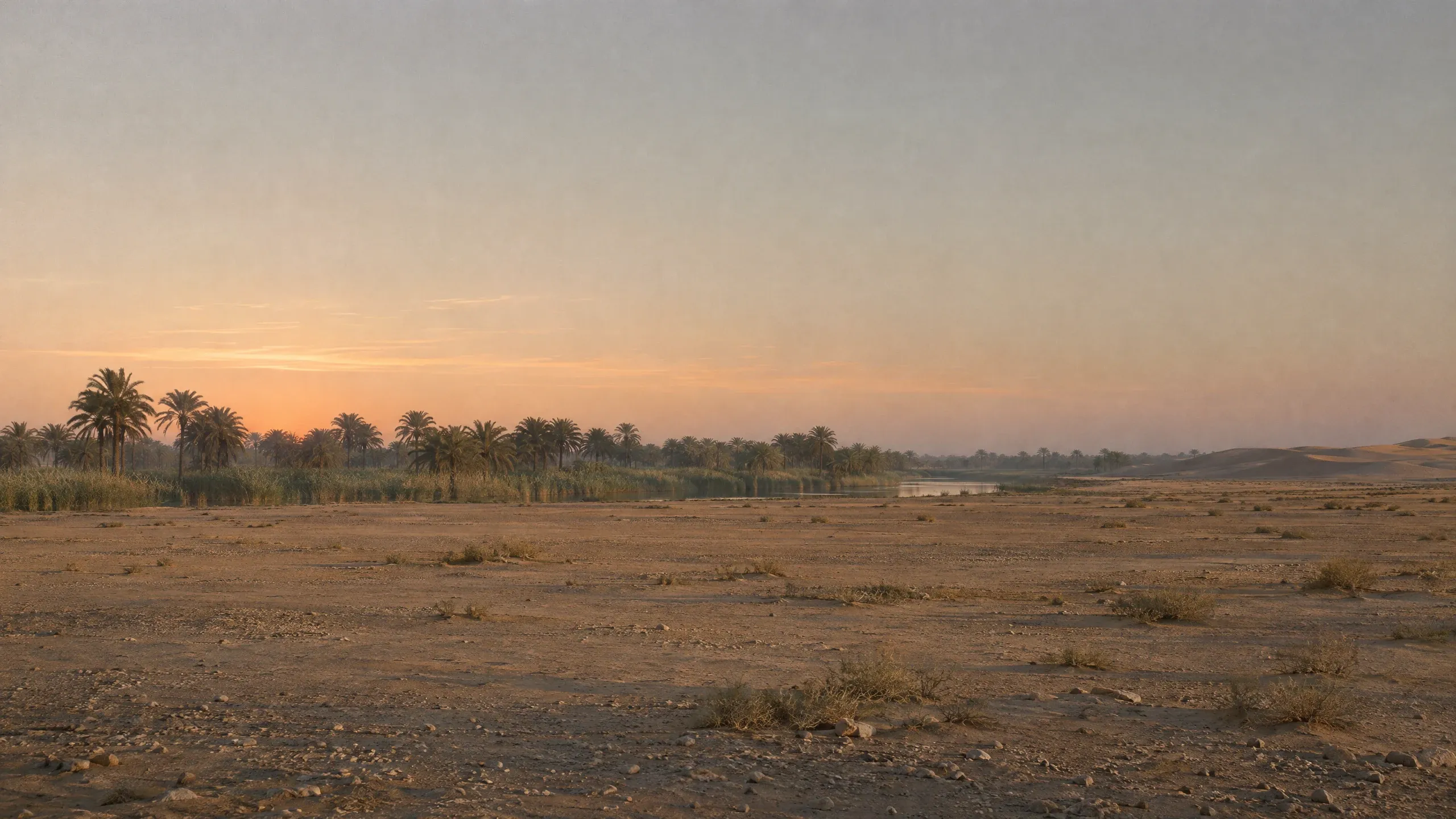
Al-Husayn set out from Mecca for Kufa in Dhu’l-Hijja 60/September 680 at the invitation of the Kufan Shi’is. On the way an Umayyad cavalry force under al-Hurr b. Yazid stopped him from going on to Kufa or back to Medina. On 2 Muharram 61/2 October 680 he was made to camp on the waterless plain of Karbala. The next day an army of 4,000 under ’Umar b. Sa’d b. Abi Waqqas arrived, sent by the governor of Kufa, ’Ubayd Allah b. Ziyad, with orders to accept nothing short of a pledge of allegiance to Yazid. Al-Husayn’s camp was cut off from the Euphrates.2
The battle was fought on 10 Muharram, the day known in Shi’ism as ‘Ashura’, from morning to sunset. Al-Husayn’s male companions, seventy or seventy-two, were killed one after another. In Shi’i tradition he was the last to die. The Umayyad troops looted the camp, cut off the heads of the dead, and took the women and children captive. Among them was al-Husayn’s surviving son ’Ali, later Imam Zayn al-’Abidin. Litvak describes the tragedy as “the constitutive event of Shi’ism as a religion”, a symbol of the righteous few defeated by an oppressive majority.3
The early cult
Men of the Banu Asad from a nearby village buried al-Husayn and al-’Abbas on the battlefield. As early as 65/684–685 the grave had become a place of pilgrimage. In that year the Kufan Penitents (Tawwabun) stopped there to mourn before marching to their deaths at ’Ayn al-Warda. In the first decades, visits were dangerous and made mainly by members of the ’Alid family.4
The Imams then worked to establish visitation (ziyara) as a core practice of Shi’i identity, particularly visits on ‘Ashura’ and on the fortieth day after al-Husayn’s death (arba’in). Early traditions attribute this effort to Ja’far al-Sadiq. The Imams attributed blessing and healing power to the soil of Karbala and promised heavenly rewards to its visitors. Pilgrimage to Karbala could be made throughout the year, and it became a popular alternative to Mecca and Medina.5
Under the Abbasids
Under the early Abbasids a tomb was built over al-Husayn’s grave. Umm Musa, mother of the caliph al-Mahdi, endowed its custodians as part of an attempt to heal the rift between the Abbasids and the ’Alids. In 236/850–851 the caliph al-Mutawakkil (r. 232–247/847–861), who followed a strongly anti-’Alid policy, had the tomb and the buildings around it destroyed, banned pilgrimage, and ordered the site to be ploughed and sown. After his death the tomb was rebuilt.6
Karbala also played a part in the early Ismaili da’wa. Daftary relates that ’Ali b. al-Fadl, a Yemeni Shi’i, was won over to the movement while visiting al-Husayn’s tomb at Karbala. Halm adds that he then went with Ibn Hawshab to found the Ismaili mission in Yemen in 268/881.7
The Buyid shrine and after
Under the pro-’Alid Buyids, Karbala became for many Shi’is the main goal of pilgrimage. In 369/979–980 the Buyid amir ’Adud al-Dawla built a shrine over al-Husayn’s grave. Schools, hostels and cemeteries grew up around it, since burial at Karbala had become a pious act from the 3rd/9th century. The Saljuq conquest of Baghdad in 447/1055 was a blow to the Shi’is, but Sultan Malikshah visited Karbala in 479/1086 and ordered its walls repaired. The Ilkhan Ghazan Khan visited in 1303. Ibn Battuta, there in 1326–1327, described a large madrasa and a hospice beside the shrine and date groves watered by the Euphrates.8
Ottomans and Safavids
After the rise of the Safavids in Iran in 1501 and the Ottoman conquest of Baghdad in 1533, the shrine cities became a prize in the rivalry between the two empires. During two brief periods of Safavid rule, 1508–1533 and 1622–1638, building work was carried out at the shrines and several thousand Persians settled in Karbala; about 1,700 Persians died in the Ottoman reconquest of 1638. Sultan Suleyman had the Husayniyya canal repaired to bring Euphrates water to the city. A dam built by the Ottoman governor Hasan Pasha (1704–1723) secured its supply. Litvak argues that this partly explains why Karbala rather than Najaf became the leading Shi’i centre after the fall of the Safavids in 1722.9
In the 18th century Karbala became the foremost Shi’i centre of learning (hawza). Persian scholars fleeing the collapse of the Safavid state settled there, and the city’s population and culture became largely Iranian well into the mid-20th century. From the 1730s it was the centre of the Akhbari school under Shaykh Yusuf al-Bahrani (1695–1772). Muhammad Baqir al-Bihbahani (d. 1207/1793) challenged the Akhbaris from the 1760s and restored the dominance of the Usuli school in Twelver Shi’ism.10
Karbala and the Ismailis
For Ismailis, as for other Shi’is, Karbala is the place where the line of their Imams nearly ended. Of al-Husayn’s sons, only ’Ali Zayn al-’Abidin survived the battle, because he was too ill to fight. Every later Ismaili Imam descends from him. Daftary writes that the martyrdom at Karbala gave Shi’ism a new religious fervour and consolidated its identity. He also notes that the Ismailis, like the Twelvers, honour al-Husayn as an Imam.11
Footnotes
-
Meir Litvak, “Karbala,” Encyclopaedia Iranica, vol. XV, fasc. 5 (2010), pp. 550–556, https://www.iranicaonline.org/articles/karbala/. ↩
-
Wilferd Madelung, “Hosayn b. ’Ali i. Life and significance in Shi’ism,” Encyclopaedia Iranica, vol. XII, fasc. 5 (2004), https://www.iranicaonline.org/articles/hosayn-b-ali-i/; Litvak, “Karbala,” Encyclopaedia Iranica (2010), https://www.iranicaonline.org/articles/karbala/. ↩
-
Litvak, “Karbala,” Encyclopaedia Iranica (2010), https://www.iranicaonline.org/articles/karbala/; Madelung, “Hosayn b. ’Ali i,” Encyclopaedia Iranica (2004), https://www.iranicaonline.org/articles/hosayn-b-ali-i/. ↩
-
Litvak, “Karbala,” Encyclopaedia Iranica (2010), https://www.iranicaonline.org/articles/karbala/; Madelung, “Hosayn b. ’Ali i,” Encyclopaedia Iranica (2004), https://www.iranicaonline.org/articles/hosayn-b-ali-i/; Farhad Daftary, The Isma’ilis: Their History and Doctrines, 2nd ed. (Cambridge University Press, 2007), pp. 50–51. ↩
-
Litvak, “Karbala,” Encyclopaedia Iranica (2010), https://www.iranicaonline.org/articles/karbala/. ↩
-
Litvak, “Karbala,” Encyclopaedia Iranica (2010), https://www.iranicaonline.org/articles/karbala/. ↩
-
Daftary, The Isma’ilis, 2nd ed. (Cambridge University Press, 2007), p. 109; Heinz Halm, “Ebn Hawsab,” Encyclopaedia Iranica, vol. VIII, fasc. 1 (1997), pp. 28–29, https://www.iranicaonline.org/articles/ebn-hawsab/. ↩
-
Litvak, “Karbala,” Encyclopaedia Iranica (2010), https://www.iranicaonline.org/articles/karbala/. ↩
-
Litvak, “Karbala,” Encyclopaedia Iranica (2010), https://www.iranicaonline.org/articles/karbala/. ↩
-
Litvak, “Karbala,” Encyclopaedia Iranica (2010), https://www.iranicaonline.org/articles/karbala/. ↩
-
Madelung, “Hosayn b. ’Ali i,” Encyclopaedia Iranica (2004), https://www.iranicaonline.org/articles/hosayn-b-ali-i/; Daftary, The Isma’ilis, 2nd ed. (Cambridge University Press, 2007), pp. 50, 57. ↩