The first hidden Imam
’Abd Allah b. Muhammad b. Isma’il succeeded his father, Muhammad b. Isma’il, as central leader of the Ismaili da’wa not long after 179/795. He was the first of the “hidden Imams” (al-a’imma al-masturin) of the dawr al-satr, the period of concealment before the Fatimid caliphate. Historians add the epithet al-Akbar, “the Elder”, to distinguish him from his descendant ’Abd Allah al-Mahdi, founder of the Fatimid dynasty.1
Nizari tradition, which this site follows in numbering the Imams, knows the eighth Imam as al-Wafi, “the one true to his word”. Daftary records that ’Abd Allah “later received also the surname of al-Radi”. A modern Nizari community history reconciles the names by calling him “ar-Radi Abdullah al-Wafi” and “Wafi Ahmad”. These epithets belong to later tradition rather than to the earliest sources.2
The official Fatimid account
According to the official Fatimid account, the hidden Imams who led the movement after Muhammad b. Isma’il were his descendants. Muhammad designated his eldest son ’Abd Allah as his successor, and ’Abd Allah became the first Imam of a second series of seven (heptad). Daftary notes that Muhammad had two sons, Isma’il and Ja’far, born in Medina, and four more born after his emigration. One of the later four, ’Abd Allah, was considered his rightful successor by later Ismailis.3
Before the reform of 286/899, these leaders did not openly claim the Imamate. Most early Ismailis believed that Muhammad b. Isma’il was the seventh and last Imam and would return as the Qa’im. On the evidence of early Ismaili texts, Daftary suggests that the central leaders presented themselves as the hujja, or “proof”, of the hidden Imam. Through the hujja, followers could reach the Imam and, through him, the awaited Mahdi.4
Concealment and flight
To escape Abbasid persecution, ’Abd Allah sought refuge in various parts of Persia and revealed his identity and residence only to a few trusted associates. He eventually settled at Askar Mukram near Ahwaz in Khuzistan, where he seems to have spent much of his life. The Ismaili da’i al-Husayn al-Ahwazi, a native of Ahwaz, accompanied him when he left ’Askar Mukram for Basra. Al-Husayn later converted Hamdan Qarmat in southern Iraq.5
The Istitar al-imam of the da’i Ahmad b. Ibrahim al-Nisaburi (late 4th/10th century) is the main Ismaili narrative source for ’Abd Allah’s settlement in Salamiyya. It also describes the later journey of ’Abd Allah al-Mahdi from Syria to North Africa.6
Salamiyya
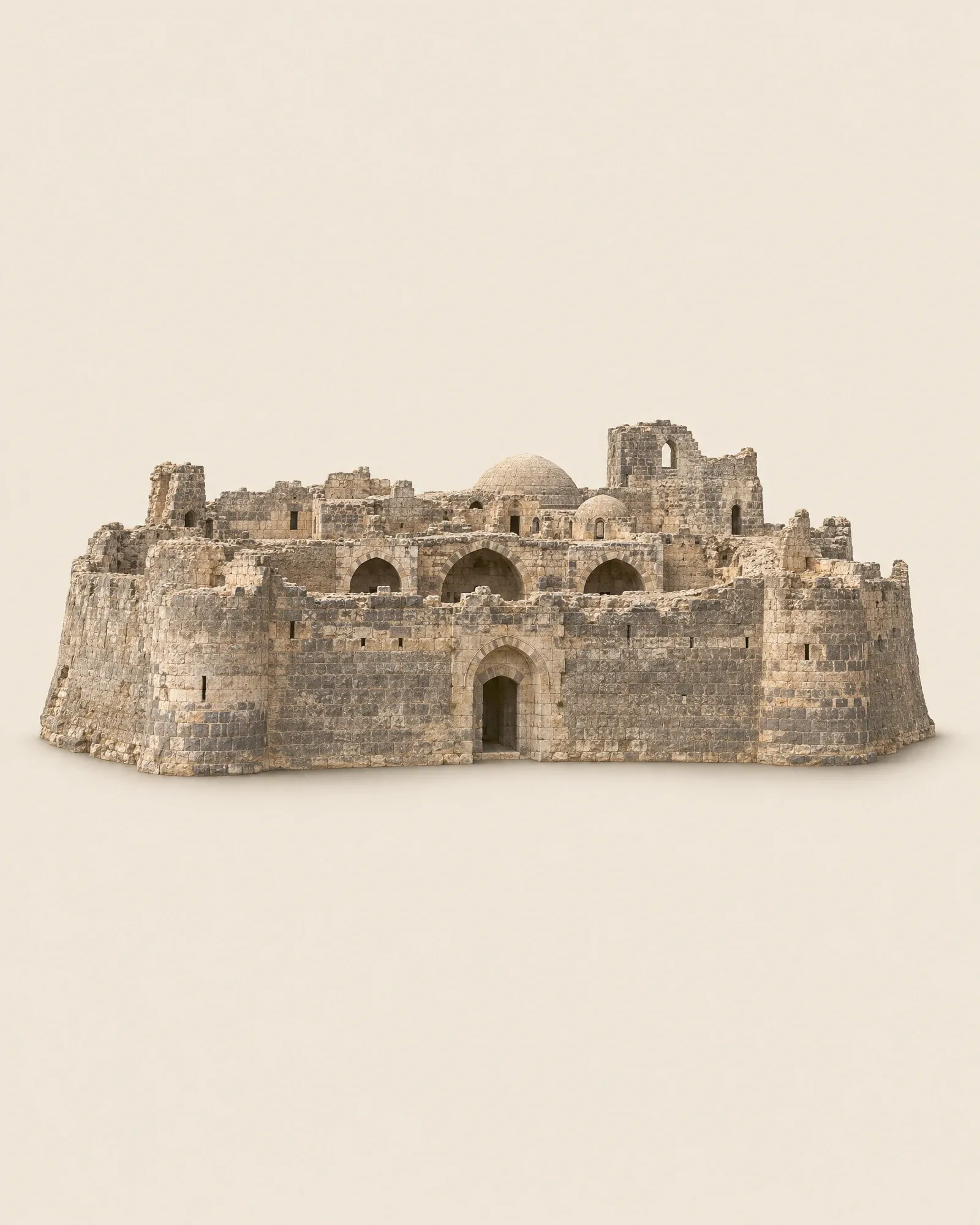
From Basra, ’Abd Allah moved to Salamiyya in central Syria. Daftary places the ancient town at the edge of the Syrian desert, some 35 kilometres south-east of Hama. At that time it was being resettled by an Abbasid, Muhammad b. ’Abd Allah b. Salih, who governed the locality. Ismaili da’is bought a plot of land there for ’Abd Allah, and he settled permanently. He posed as an ordinary Hashimid merchant; many Hashimids lived in the town. Salamiyya remained the residence of the Imams and the headquarters of the da’wa for several decades.7
The Nizari community history records later traditions that the Imam was known locally as an ’attar (druggist or perfumer). It also says he lived for a time in Nishapur, Daylam and Nihawand, and that da’is disguised as pedlars searched for him for a year before finding him in the Jabal al-Summaq. These traditions come mainly from later Ismaili literature. The academic sources do not confirm them, and Daftary warns that the Ismaili accounts of this period are anachronistic.8
Death and succession
’Abd Allah died at Salamiyya in about 212/827–828, after designating his son Ahmad as his successor. He was buried in Salamiyya. The community history gives the same year and says that he named his son before his chief da’is.9
The polemical confusion with Ibn al-Qaddah
Anti-Ismaili polemic deliberately confused the ’Alid ’Abd Allah al-Akbar with a non-’Alid, ’Abd Allah b. Maymun al-Qaddah. The polemicist Ibn Rizam wrote in the early 4th/10th century, and his account was used by Akhu Muhsin around 372/982. In their version, a Daysani (Bardesanian) dualist named ’Abd Allah b. Maymun founded the movement and taught a seven-stage initiation ending in libertinism. He was said to have moved from Ahwaz to ’Askar Mukram, Basra and Salamiyya, where he died after 261/874. Daftary calls the Kitab al-siyasa attributed to the Ismailis a malevolent forgery. He describes the charges of libertinism and atheism as “totally unfounded”.10
Ivanow showed that the historical Maymun al-Qaddah was a Meccan client (mawla) of the Banu Makhzum and a disciple of Muhammad al-Baqir. His son ’Abd Allah was a companion and transmitter of hadith from Ja’far al-Sadiq and died in the second half of the 2nd/8th century, long before the da’wa took shape. The earliest hostile authors, al-Nawbakhti, al-Qummi and al-Tabari, do not mention Ibn al-Qaddah, and neither does the anti-Fatimid Baghdad manifesto of 402/1011.11
Daftary explains why Ismaili sources themselves sometimes link ’Abd Allah to “Maymun”. Al-Mahdi’s letter to Yemen says the true Imams after Ja’far used the names Mubarak, Maymun and Sa’id, and Maymun was a sobriquet of Muhammad b. Isma’il. In a statement attributed to the Fatimid caliph al-Mu’izz, ’Abd Allah son of Muhammad b. Isma’il is called the son of “Maymun al-Qaddah” in a symbolic sense: maymun al-naqiba, “of auspicious nature”, and al-qadih, “the striker of the flint of guidance”.12
The genealogy problem
Daftary stresses that the names of the hidden Imams do not appear in the earliest Ismaili sources found so far. As a result, Ismailis disagreed over their names, number, sequence and descent. The traditional Fatimid sequence is Muhammad b. Isma’il, ’Abd Allah b. Muhammad, Ahmad b. ’Abd Allah, al-Husayn b. Ahmad and ’Abd Allah b. al-Husayn. The leaders used pseudonyms to protect themselves, and their enemies circulated non-’Alid pedigrees. The Fatimid caliphs also refused to publish an official genealogy. Bernard Lewis proposed two parallel lines of Imams in this period, one of trustee and one of permanent Imams. Abbas Hamdani and François de Blois argued that the official genealogy combined two lines of Ja’far’s descendants. Daftary notes that Lewis’s view has not been generally accepted.13
What Daftary considers certain is that, after Muhammad b. Isma’il, ’Abd Allah and his descendants led the da’wa, first from Khuzistan and then from Salamiyya.14
Footnotes
-
Farhad Daftary, Historical Dictionary of the Ismailis (Scarecrow Press, 2012), s.v. “’Abd Allah al-Akbar”; Farhad Daftary, The Isma’ilis: Their History and Doctrines, 2nd ed. (Cambridge University Press, 2007), pp. 99–100. ↩
-
Daftary, Historical Dictionary of the Ismailis (Scarecrow Press, 2012), s.v. “’Abd Allah al-Akbar”; Daftary, The Isma’ilis, 2nd ed. (Cambridge University Press, 2007), p. 100; Mumtaz Ali Tajddin Sadik Ali, Brief History of the Shia Ismaili Imams (Karachi, 2009), p. 27, https://archive.org/details/bk892. ↩
-
Daftary, The Isma’ilis, 2nd ed. (Cambridge University Press, 2007), pp. 96, 99. ↩
-
Daftary, The Isma’ilis, 2nd ed. (Cambridge University Press, 2007), pp. 96–97, 117. ↩
-
Daftary, The Isma’ilis, 2nd ed. (Cambridge University Press, 2007), p. 100; Daftary, Historical Dictionary of the Ismailis (Scarecrow Press, 2012), s.vv. “’Abd Allah al-Akbar”, “al-Husayn al-Ahwazi”. ↩
-
Daftary, Historical Dictionary of the Ismailis (Scarecrow Press, 2012), s.v. “al-Nisaburi, Ahmad b. Ibrahim”. ↩
-
Daftary, The Isma’ilis, 2nd ed. (Cambridge University Press, 2007), p. 100; Daftary, Historical Dictionary of the Ismailis (Scarecrow Press, 2012), s.v. “Salamiyya”. ↩
-
Tajddin, Brief History of the Shia Ismaili Imams (Karachi, 2009), pp. 27–29, https://archive.org/details/bk892; Daftary, The Isma’ilis, 2nd ed. (Cambridge University Press, 2007), p. 95. ↩
-
Daftary, The Isma’ilis, 2nd ed. (Cambridge University Press, 2007), p. 100; Daftary, Historical Dictionary of the Ismailis (Scarecrow Press, 2012), s.v. “’Abd Allah al-Akbar”; Tajddin, Brief History of the Shia Ismaili Imams (Karachi, 2009), p. 29, https://archive.org/details/bk892. ↩
-
Daftary, Historical Dictionary of the Ismailis (Scarecrow Press, 2012), s.v. “’Abd Allah al-Akbar”; Daftary, The Isma’ilis, 2nd ed. (Cambridge University Press, 2007), pp. 99, 101–102. ↩
-
Daftary, The Isma’ilis, 2nd ed. (Cambridge University Press, 2007), p. 103. ↩
-
Daftary, The Isma’ilis, 2nd ed. (Cambridge University Press, 2007), p. 104. ↩
-
Daftary, The Isma’ilis, 2nd ed. (Cambridge University Press, 2007), pp. 100–101, 107. ↩
-
Daftary, The Isma’ilis, 2nd ed. (Cambridge University Press, 2007), p. 107. ↩