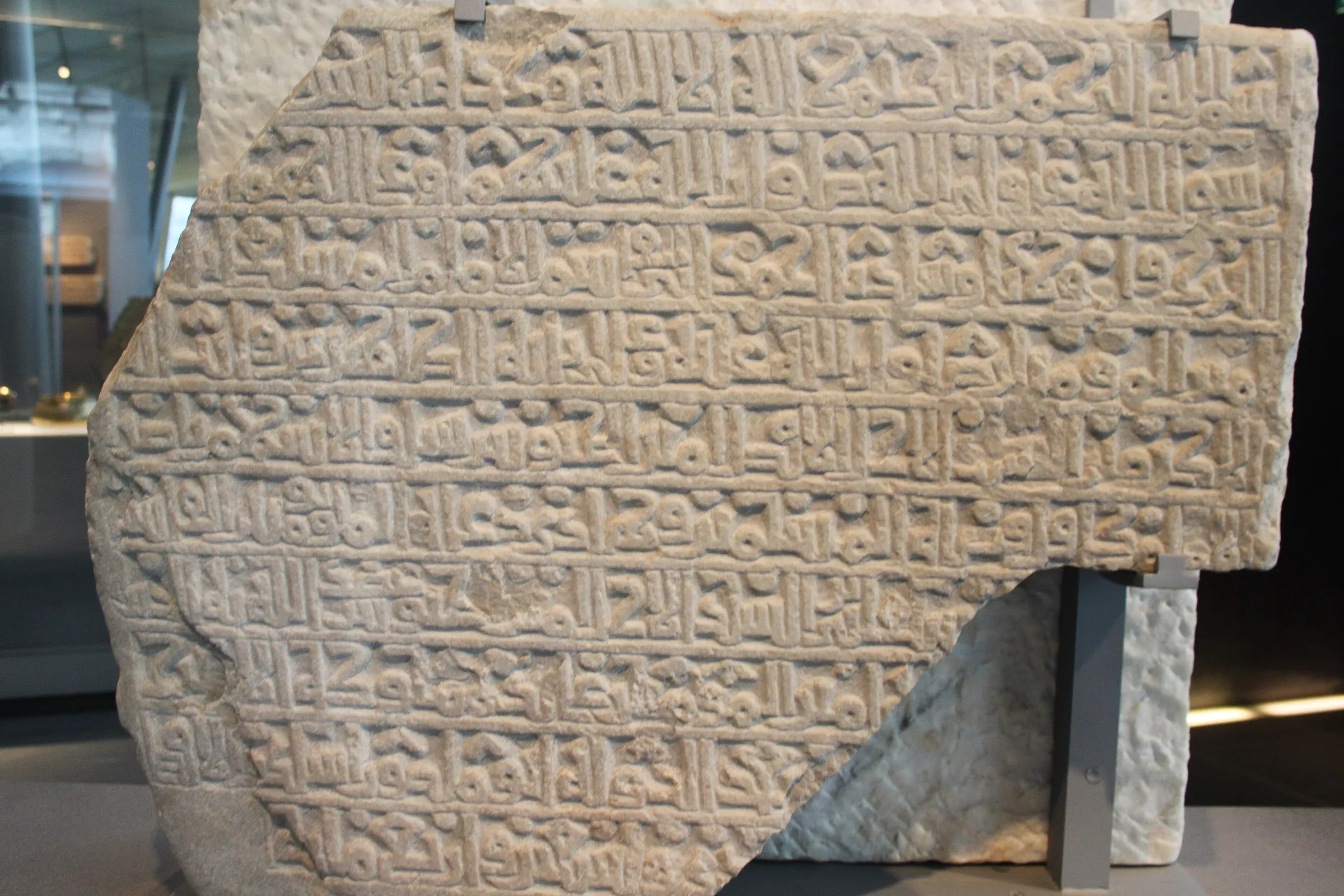
Abu’l-Qasim Shahanshah, known by his vizieral title al-Afdal, “the most excellent” (1066–1121), was vizier and commander of the armies (amir al-juyush) under three Fatimid caliphs from 1094 until he was assassinated in 1121. He was the son of Badr al-Jamali, the Armenian general who had restored order in Fatimid Egypt. In December 1094 al-Afdal set aside al-Mustansir’s designated heir Nizar and put Nizar’s younger half-brother on the throne as al-Musta’li. This split the Ismaili da’wa permanently into the Musta’li and Nizari branches (see the Nizari–Musta’li split).1
Heir to Badr al-Jamali
Badr al-Jamali came to Egypt in the 1070s at al-Mustansir’s invitation, took control of the army and administration, and from 470/1078 also acted as chief da’i. Al-Afdal succeeded his father as vizier and commander of the armies a few months before al-Mustansir died. That gave him the army, the bureaucracy and the court at the moment the succession opened.2
The coup of 1094
Al-Mustansir died in Dhu’l-Hijja 487 / December 1094. His eldest son Nizar, then about fifty, had received the nass, the designation that Ismaili doctrine treats as the basis of the imamate. Daftary writes that al-Afdal, “aiming to retain the reins of power in his own hands”, supported Nizar’s much younger half-brother Abu’l-Qasim Ahmad. Ahmad was about twenty, already married to al-Afdal’s sister, and would depend entirely on the vizier.3
The day after al-Mustansir’s death, al-Afdal put Ahmad on the throne with the title al-Musta’li bi’llah and quickly gained the allegiance of the court and the leaders of the da’wa in Cairo. Accounts of what happened at court conflict, and versions favourable to al-Musta’li were circulated later. Daftary nevertheless concludes that “it is a historical fact” that al-Mustansir never revoked Nizar’s rights, and that al-Musta’li’s accession was secured “in a palace coup d’état”.4
Nizar’s revolt
Nizar refused to accept the coup and fled to Alexandria. There the city’s Turkish governor, Nasir al-Dawla Aftakin, who hoped to replace al-Afdal, and the Ismaili qadi Ibn ’Ammar backed him. Early in 488/1095 Nizar was proclaimed Imam and caliph with the title al-Mustafa li-Din Allah, and a gold dinar struck in his name at Alexandria in that year survives. His forces first drove back al-Afdal’s army and advanced close to Cairo. Towards the end of 488 AH al-Afdal besieged Alexandria. By then Nizar’s coalition had weakened, and he surrendered. He was taken to Cairo and killed there in prison.5
Consequences
Daftary writes that by choosing al-Musta’li, al-Afdal “split the Fatimid Isma’ilis into two rival factions which were to become bitter enemies”. The da’wa in Cairo, most Ismailis of Egypt, many in Syria, and all of Yemen and western India accepted al-Musta’li. The Ismailis of the Saljuq lands, led by Hasan-i Sabbah, recognised Nizar and broke with Cairo. In Daftary’s judgement, al-Afdal had in effect alienated almost all the Ismaili communities of the eastern Islamic world, above all in Persia.6
Ruler of Egypt
Al-Musta’li stayed a figurehead throughout his reign (487–495/1094–1101). When he died in 1101, al-Afdal placed his five-year-old son on the throne as al-Amir, and remained in effective control for most of the new reign. Daftary calls him “the unchallenged ruler of Fatimid Egypt for some twenty-seven years”.7
His years in office coincided with the arrival of the First Crusade. Al-Afdal took back Tyre in 490/1097 and the next year captured Jerusalem from the Artuqid Turks, Sukman and Ilghazi. In 492/1099 the Crusaders defeated a Fatimid army led by al-Afdal near Ascalon, and Jerusalem fell to them. In 496/1103 his son Sharaf al-Ma’ali defeated the Franks and took Ramla. Over the following two decades the Fatimids lost Acre, Tripoli and Sidon, and finally Tyre in 518/1124, leaving only Ascalon.8
Towards the end of the eleventh century al-Afdal also closed the Dar al-’Ilm, the Fatimid academy in Cairo that had been a centre of da’wa teaching. His successor reopened it.9
Assassination, 1121
Al-Afdal was assassinated in Cairo in 515/1121. Daftary considers it likely that al-Amir, who wanted to rule in his own right, was behind the killing. He adds that “as related in some sources and claimed by the Nizaris themselves”, the Nizaris may have planned it. Nizari tradition names three fida’is from Aleppo, and says Hasan-i Sabbah ordered seven days of celebration at Alamut when the news arrived.10
The new vizier, al-Ma’mun al-Bata’ihi, was himself suspected of involvement in his patron’s death. He reopened the Dar al-’Ilm and took strict precautions against Nizari agents from Alamut. In 516/1122 he held an assembly in the palace to restate the case for al-Musta’li. The resulting epistle, al-Hidaya al-Amiriyya, was the first Musta’li refutation of Nizari claims, written some twenty-eight years after al-Afdal’s coup.11
Al-Afdal’s son Abu ’Ali Ahmad, known as Kutayfat, briefly seized power after al-Amir’s murder in 1130. He set the Fatimid dynasty aside and recognised the hidden Imam of the Twelver Shi’is, until he was killed in 526/1131.12
Footnotes
-
Farhad Daftary, Historical Dictionary of the Ismailis (Scarecrow Press, 2012), s.v. “al-Afdal b. Badr al-Jamali”; Farhad Daftary, The Isma’ilis: Their History and Doctrines, 2nd ed. (Cambridge University Press, 2007), p. 241. ↩
-
Daftary, The Isma’ilis, pp. 241, 311. ↩
-
Daftary, The Isma’ilis, p. 241. ↩
-
Daftary, The Isma’ilis, pp. 241–242. ↩
-
Daftary, The Isma’ilis, p. 242; Daftary, Historical Dictionary, s.v. “Nizar b. al-Mustansir”. ↩
-
Daftary, The Isma’ilis, pp. 242–243; Daftary, Historical Dictionary, s.v. “Musta’lians, Musta’liyya”. ↩
-
Daftary, The Isma’ilis, pp. 243–244; Daftary, Historical Dictionary, s.v. “al-Afdal b. Badr al-Jamali”. ↩
-
Daftary, The Isma’ilis, pp. 243–244. ↩
-
Daftary, The Isma’ilis, p. 244. ↩
-
Daftary, The Isma’ilis, pp. 244, 342. ↩
-
Daftary, The Isma’ilis, pp. 244–245. ↩
-
Daftary, The Isma’ilis, p. 246. ↩