Abu Mansur Nizar (1045–1095) was the eldest son of the Fatimid caliph-Imam al-Mustansir. Nizari Ismailis count him as their nineteenth Imam, and the Nizari branch takes its name from him. Al-Mustansir had designated him as successor, but when the caliph died in December 1094 the vizier al-Afdal put Nizar’s younger half-brother on the throne as al-Musta’li. Nizar rebelled at Alexandria, was proclaimed caliph with the title al-Mustafa li-Din Allah, was defeated within the year and died in prison in Cairo. The dispute over his succession divided the Ismaili movement permanently (see the Nizari–Musta’li split).1
The heir of al-Mustansir
Nizar was born in 437/1045, during the long reign of his father, the eighteenth Imam. Ismaili doctrine holds that each Imam designates his successor by nass, an explicit appointment. Daftary states that Nizar, as the eldest son, had received al-Mustansir’s nass and was therefore expected to succeed him. He was about fifty when his father died.2
Real power in Egypt by then lay with the military viziers. From the 1070s Badr al-Jamali controlled the army, the administration and, from 470/1078, the da’wa. A few months before al-Mustansir’s death Badr’s son al-Afdal succeeded him as vizier and commander of the armies.3
The succession of December 1094
Al-Mustansir died in Dhu’l-Hijja 487 / December 1094. Al-Afdal, wishing to keep power in his own hands, backed Nizar’s much younger half-brother Abu’l-Qasim Ahmad, then about twenty. Ahmad was married to al-Afdal’s sister and would depend on him entirely. On the day after al-Mustansir’s death al-Afdal placed Ahmad on the throne as al-Musta’li bi’llah. He quickly secured the allegiance of the court and of the leaders of the da’wa in Cairo.4
The sources disagree about what happened at court. Versions favouring al-Musta’li were circulated later, including the claim that al-Mustansir changed his designation on his deathbed. Daftary nevertheless concludes that “it is a historical fact” that Nizar’s succession rights were never revoked, and that al-Musta’li came to power “in a palace coup d’état”.5
The revolt at Alexandria
Nizar refused to recognise his brother and fled to Alexandria with another half-brother, ’Abd Allah. Alexandria was a centre of the military factions that Badr al-Jamali had crushed. Its Turkish governor, Nasir al-Dawla Aftakin, who hoped to replace al-Afdal, supported Nizar, as did the city’s Ismaili qadi, Ibn ’Ammar, and the local Arab population. Early in 488/1095 Nizar received the oath of allegiance as Imam and caliph and took the title al-Mustafa li-Din Allah.6
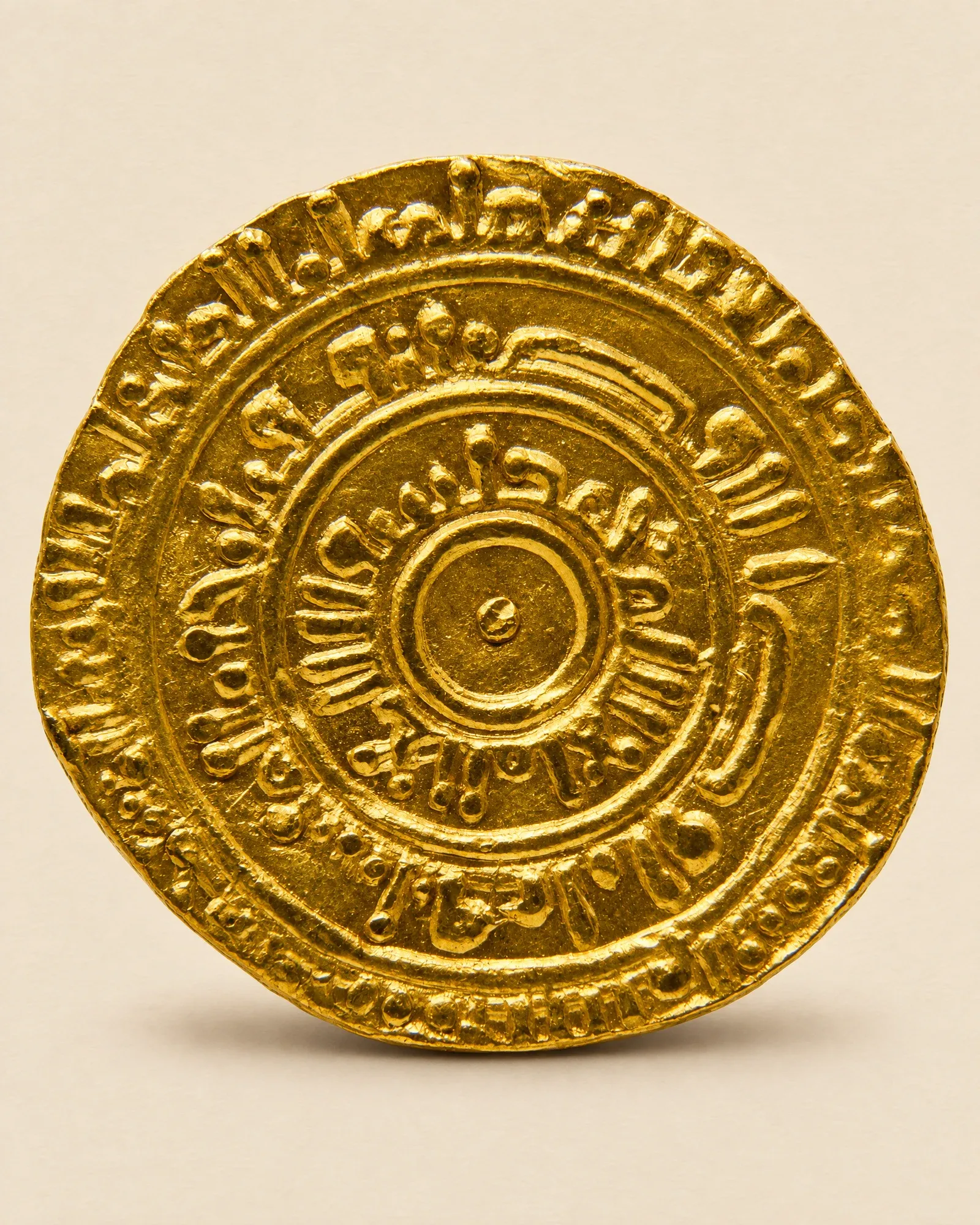
Physical evidence of this short caliphate survives. A gold dinar struck at Alexandria (al-Iskandariyya) in 488 AH in the name of al-Mustafa li-Din Allah was found in 1994 and is now in the library of The Institute of Ismaili Studies in London.6
Defeat and death
At first the revolt went well. Nizar drove back al-Afdal’s forces and advanced close to Cairo. But his coalition weakened. Towards the end of 488 AH al-Afdal besieged Alexandria and forced Nizar to surrender. He was taken to Cairo and imprisoned, and Daftary records that he was put to death there by being walled up (immured) at the end of 488/1095.7
Recognition in the east
Nizar’s defeat in Egypt did not settle the question for the wider movement. The da’wa in Cairo, most Ismailis of Egypt, many in Syria and all those of Yemen and western India accepted al-Musta’li, whom they count as their nineteenth Imam. The Persian Ismailis, led by Hasan-i Sabbah, who had already succeeded ’Abd al-Malik b. ’Attash as head of the da’wa in the Saljuq lands, recognised Nizar. They broke with Cairo and founded an independent Nizari da’wa, and the Ismailis of Iraq followed them.8
In Syria loyalties were divided at first: Ridwan of Aleppo initially acknowledged al-Musta’li. By 524/1130 most Syrian Ismailis had become Nizari, organised by emissaries from Persia. The communities of Badakhshan and the upper Oxus stayed out of the dispute for a long time.9 The two branches became known as the Musta’liyya and the Nizariyya.8
Nizar’s descendants
Nizar had sons, and Nizarid claimants continued to cause trouble for the later Fatimids. Daftary records several revolts by his descendants in Egypt, the last of them led by a grandson in 556/1161.10
The Nizaris of Persia faced a practical problem: the Imam was out of reach. Hasan-i Sabbah and his next two successors did not name an Imam. For about seventy years, through the reign of Muhammad b. Buzurg-Ummid (1138–1162), coins were struck at Alamut, the “seat of Daylam” (Kursi al-Daylam), in the name of Nizar al-Mustafa li-Din Allah. His descendants were blessed without being named. Hasan-i Sabbah was regarded as the hujja, the chief representative, of the hidden Imam during what the Nizaris called a period of concealment (satr).11
The line at Alamut
Nizari tradition holds that a son or grandson of Nizar was brought secretly from Egypt to Alamut and raised there. Al-Amir’s anti-Nizari epistle, al-Hidaya al-Amiriyya (1122), mocked this claim. Daftary reports one version in which the qadi Abu’l-Hasan Sa’idi brought a grandson of Nizar, al-Muhtadi, to Alamut in 488/1095, and the secret was known to Hasan-i Sabbah. The genealogy accepted in later Nizari tradition runs from Nizar through Ali al-Hadi, Muhammad al-Muhtadi and Hasan al-Qahir to Hasan II, who revealed himself as Imam in 1164.12
Musta’li polemic
The Musta’li case against Nizar was first set out in writing almost thirty years after the event. In Shawwal 516 / 1122 the vizier al-Ma’mun held an assembly in the Cairo palace. Nizar’s full sister, speaking from behind a screen, testified that al-Mustansir had designated al-Musta’li on his deathbed. The vizier then had the secretary Ibn al-Sayrafi draw up an epistle to be read from the pulpits of Egypt. Preserved as al-Hidaya al-Amiriyya, it accepted that the original nass had gone to Nizar but argued that it had been revoked. When it was read in Damascus it caused uproar among the Nizaris there, whose leader wrote a refutation.13
Footnotes
-
Farhad Daftary, Historical Dictionary of the Ismailis (Scarecrow Press, 2012), s.v. “Nizar b. al-Mustansir”; Farhad Daftary, The Isma’ilis: Their History and Doctrines, 2nd ed. (Cambridge University Press, 2007), pp. 241–242. ↩
-
Daftary, The Isma’ilis, p. 241; Daftary, Historical Dictionary, s.v. “Nizar b. al-Mustansir”. ↩
-
Daftary, The Isma’ilis, pp. 241, 311. ↩
-
Daftary, The Isma’ilis, p. 241. ↩
-
Daftary, The Isma’ilis, pp. 241–242. ↩
-
Daftary, The Isma’ilis, p. 242. ↩
-
Daftary, The Isma’ilis, pp. 243, 325. ↩
-
Daftary, The Isma’ilis, pp. 325–326. ↩
-
Daftary, The Isma’ilis, pp. 325–326. ↩
-
Daftary, The Isma’ilis, pp. 326, 363–364. ↩
-
Daftary, The Isma’ilis, p. 245. ↩