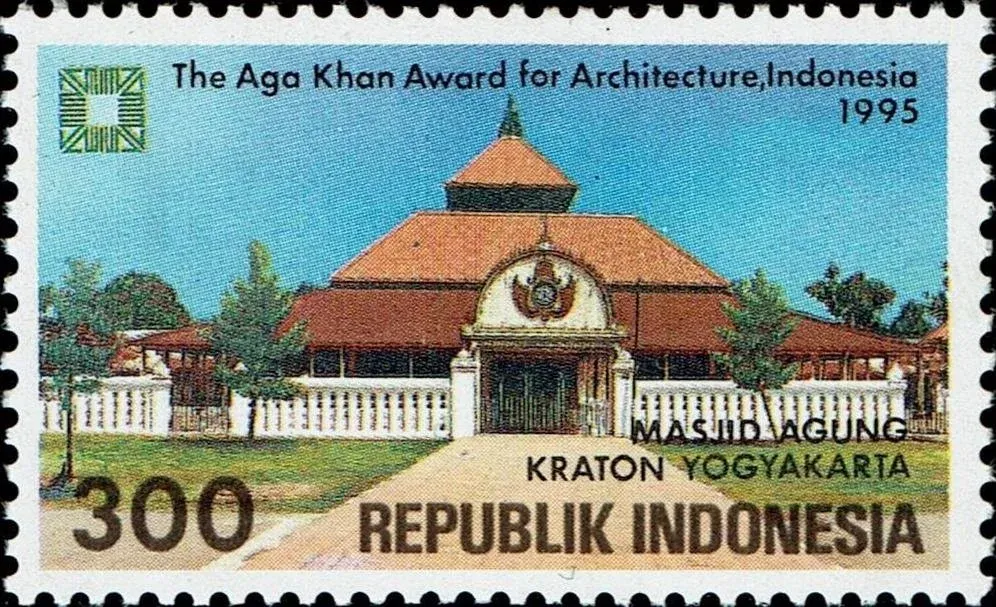
The Aga Khan Award for Architecture (AKAA) is a triennial prize established by Aga Khan IV in 1977 and first presented in 1980. It is given, in the words of its administrators, “to projects that set new standards of excellence in architecture, planning practices, historic preservation and landscape architecture”, and its purpose is “to identify and encourage building concepts that successfully address the needs and aspirations of communities in which Muslims have a significant presence”. The prize fund is US$1 million per cycle, described in 2025 as “one of the largest in architecture”. The Award is part of the Aga Khan Trust for Culture, the cultural agency of the Aga Khan Development Network.12
Origins
Tajddin’s Encyclopaedia of Ismailism attributes the Award’s foundation to the Imam’s experience of building: “It was the Imam’s own involvement in construction in developing countries during the 1960s and 1970s that evoked his concern with the deteriorating architectural heritage and inappropriate building practices in many Muslim societies.” The Award was founded in 1977 “to sensitize those who build in the developing world to the unique heritage of Muslim history and architecture.” The AKDN obituary of Aga Khan IV lists it among his principal cultural initiatives, alongside the Historic Cities Programme and the Aga Khan Museum.34
Criteria
The Award’s published criteria emphasise “architecture that not only provides for people’s physical, social and economic needs, but that also stimulates and responds to their cultural expectations.” Particular attention is given to “building schemes that use local resources and appropriate technology in innovative ways”.1
Steering committee and master jury
The Award is governed by a steering committee which was chaired by Aga Khan IV. “A new committee is constituted each cycle to establish the eligibility criteria for project submissions, provide thematic direction in response to emerging priorities and issues”, and it “is responsible for the selection and appointment of the master jury for each Award cycle, and for the Award’s programme of international seminars, lectures, exhibitions and publications.” Selection of winners rests with “an independent master jury”.1
The jury works from a shortlist reviewed on site. In the 2022 cycle the nine-member jury, whose members included Nada Al Hassan, Amale Andraos, Francis Kéré, Lina Ghotmeh, Anne Lacaton and Nader Tehrani, chose 20 shortlisted projects from 16 countries and then six winners “after on-site reviews of the shortlist by a team of experts”. The 2025 jury likewise “selected seven winners after considering on-site reviews of shortlisted projects”.52
Documentation
The Award has assembled one of the largest archives of contemporary building in Muslim societies. AKDN states that it “has completed 16 cycles of activity since 1977, and documentation has been compiled on almost 10,000 building projects throughout the world.” By the end of the fifteenth cycle, in 2022, it had awarded 128 projects. Tajddin notes that “a seminar to present the award-winning projects is organized following each ceremony”, and that the cycles “have created an archive of contemporary projects” reviewed “according to rigorous documentary and technical criteria”.153
Ceremonies
Each cycle closes with a ceremony held in a site chosen for its importance in the history of Islamic architecture. The first six were held in the Shalimar Garden in Lahore (1980), the Topkapi Palace in Istanbul (1983), the Badi Palace in Marrakesh (1986), Saladin’s Citadel in Cairo (1989), the Registan in Samarkand (1992) and the Kraton in Solo, Indonesia (1995).3
Later ceremonies included Al Ain in the United Arab Emirates (2016), where Aga Khan IV said that “architecture is the only art form which has a direct, daily impact on the quality of human life”; Kazan, in the Republic of Tatarstan in the Russian Federation (2019), at the invitation of President Rustam Minnikhanov; and Muscat, Oman (2022), held together with the Aga Khan Music Awards. The winners of the 2025 cycle were announced in Bishkek, Kyrgyz Republic, on 2 September 2025.652
The Chairman’s Award
Separately from the cycle prizes, a Chairman’s Award has been given for lifetime achievement. Tajddin records that it was conferred twice, on the Egyptian architect Hassan Fathy and the Iraqi architect Rifat Chadirji; AKDN’s archive shows Fathy receiving it from Aga Khan IV in 1980. Tajddin also cites as examples of the range of the main Award the mud-brick mosque at Yaama in Niger and the Institut du Monde Arabe in Paris.31
The 2022 cycle
The fifteenth cycle (2020–2022) drew 463 nominations. Its six winners were:5
- Urban River Spaces, Jhenaidah, Bangladesh, a riverside landscape made on a former dump site;
- Community Spaces in Rohingya Refugee Response, Teknaf, Bangladesh, by Rizvi Hassan, Khwaja Fatmi and Saad Ben Mostafa;
- Blimbingsari Airport, Banyuwangi, Indonesia, by andramatin;
- Argo Contemporary Art Museum and Cultural Centre, Tehran, Iran, by ASA North / Ahmadreza Schricker;
- Renovation of the Niemeyer Guest House, Tripoli, Lebanon, by East Architecture Studio;
- Kamanar Secondary School, Thionck Essyl, Senegal, by Dawoffice.
The 2025 cycle
The sixteenth cycle (2023–2025) produced seven winners, sharing US$1 million. In AKDN’s descriptions they were:2
- Khudi Bari, in various locations in Bangladesh, by Marina Tabassum Architects: “a replicable solution built with bamboo and steel for displaced communities affected by climatic and geographic changes”;
- West Wusutu Village Community Centre, Hohhot, China, by Zhang Pengju: a centre “built from reclaimed bricks”;
- Revitalisation of Historic Esna, Egypt, by Takween Integrated Community Development, which “addresses cultural tourism challenges through physical interventions, socioeconomic initiatives and innovative urban strategies”;
- Majara Residence and Community Redevelopment, Hormuz Island, Iran, by ZAV Architects;
- Jahad Metro Plaza, Tehran, Iran, by KA Architecture Studio, “a once dilapidated station transformed into a vibrant urban node for pedestrians”;
- Vision Pakistan, Islamabad, by DB Studios, housing a charity for vocational training;
- Wonder Cabinet, Bethlehem, Palestine, by AAU Anastas, “a multipurpose, non-profit exhibition and production space”.
These were the first winners announced after the death of Aga Khan IV in February 2025.24
Place within the network
The Award sits beside the other programmes of the Aga Khan Trust for Culture, which AKDN states was founded in 1988 and is headquartered in Geneva: the Historic Cities Programme, which has restored districts and created parks such as al-Azhar Park in Cairo, and the Aga Khan Music Programme. AKDN describes the Trust as working “through music, architecture, museums and restoring historic monuments”. The Trust’s remit also includes the Aga Khan Music Award, the AKTC Education Programme and the Aga Khan Museum. The Imamat’s own buildings, such as the Ismaili Centres, are treated separately on this site.784
Footnotes
-
Aga Khan Development Network, “Aga Khan Award for Architecture” (Aga Khan Trust for Culture), introduction and governance sections, https://the.akdn/en/how-we-work/our-agencies/aga-khan-trust-culture/aga-khan-award-for-architecture. ↩ ↩2 ↩3 ↩4 ↩5
-
Aga Khan Development Network, “Aga Khan Award for Architecture 2025 winners”, press release, Bishkek, 2 September 2025, https://the.akdn/en/how-we-work/our-agencies/aga-khan-trust-culture/aga-khan-award-for-architecture/aga-khan-award-for-architecture-2023-2025-cycle/aga-khan-award-for-architecture-2025-winners. ↩ ↩2 ↩3 ↩4 ↩5
-
Mumtaz Ali Tajddin, Encyclopaedia of Ismailism, entry “Aga Khan Award for Architecture (AKAA)”, reproduced by the Heritage Society, https://heritage.ismaili.net/node/98210. ↩ ↩2 ↩3 ↩4
-
Aga Khan Development Network, “His Highness Prince Karim Aga Khan IV, 1936–2025” (2025), section “Patron of the arts”, https://the.akdn/en/resources-media/whats-new/spotlights/his-highness-prince-karim-aga-khan-iv-19362025. ↩ ↩2 ↩3
-
World Architecture Community, “Winners announced for Aga Khan Award for Architecture 2022”, 2022, https://worldarchitecture.org/architecture-news/eneph/winners-announced-for-aga-khan-award-for-architecture-2022.html. ↩ ↩2 ↩3 ↩4
-
The Ismaili, “Aga Khan Award for Architecture shortlist announced”, 2019, https://the.ismaili/us/en/news/aga-khan-award-architecture-shortlist-announced. ↩
-
Aga Khan Development Network, “Aga Khan Trust for Culture” (agency page), https://the.akdn/en/how-we-work/our-agencies/aga-khan-trust-culture. ↩
-
Aga Khan Development Network, “Our agencies”, entry “Aga Khan Trust for Culture”, https://the.akdn/en/how-we-work/our-agencies. ↩