The Aga Khan Development Network (AKDN) is the group of development agencies founded and directed by the Ismaili Imams of the modern period, principally Aga Khan IV. It works in health, education, habitat, culture, microfinance and commercial enterprise, in more than 30 countries, with a stated emphasis on “some of the poorest parts of Asia and Africa”. Its agencies serve people “regardless of origin, race, gender, or religion”; they are not confined to Ismailis. Since February 2025 the network has been headed by Aga Khan V.1
Origins
The network’s institutions descend from the schools, clinics, hospitals and cooperative and insurance societies founded by the Ismaili community under Aga Khan III, particularly in East Africa and South Asia (see Ismailis of East Africa). The AKDN obituary of Aga Khan IV states that he “inherited and enhanced schools that his grandfather … established in Asia and Africa”, and that he “founded what is today known as the Aga Khan Development Network more than 50 years ago”. The Guardian gives 1967 as the founding date of the group.23
The name “Aga Khan Development Network” came into general use later than the agencies themselves, as a collective description of separately constituted bodies. Britannica describes the AKDN as “an umbrella organization for nine subsidiary organizations”.45
Legal structure
AKDN states that it “works primarily through agencies that are registered in Switzerland as non-profit institutions”. Two are constituted differently. Aga Khan University “is chartered by the Government of Pakistan as an international university with the authority to operate programmes, branches and campuses anywhere in the world”. The University of Central Asia “is a self-governing regional university whose Charter was established pursuant to an international treaty between Tajikistan, Kazakhstan, the Kyrgyz Republic and the Ismaili Imamat”.6
The Aga Khan Fund for Economic Development (AKFED) “is incorporated as a for-profit development agency under Swiss law”, while “its project companies operate as commercial entities under the laws of the countries in which they are resident”. It is described as “the only development agency in the AKDN that works on a commercial basis”; its surpluses “are reinvested in further development initiatives, including contributions to social and cultural projects”.6
The nine agencies
AKDN lists nine agencies:5
- Aga Khan Foundation (AKF), which “improves the quality of life for the most marginalised communities”, with programmes in early childhood development, rural development and civil society. In Tanzania it has worked in early childhood education “for three decades”, in Zanzibar and southern Tanzania; in Portugal its K’Cidade programme works in diverse urban parishes of Lisbon.
- Aga Khan Health Services (AKHS), which “prioritises health promotion, disease prevention and primary health care”, with community programmes, “facilities including eight hospitals”, and medical training.
- Aga Khan Agency for Habitat (AKAH), which “reduces risks to remote communities from disasters”, working on physical hazards, preparedness and emergency response.
- Aga Khan Schools, the network’s schools, including the Aga Khan Academies.
- Aga Khan University (AKU), founded in Karachi in 1983.
- University of Central Asia (UCA), founded by treaty in 2000.
- Aga Khan Trust for Culture (AKTC), which works “through music, architecture, museums and restoring historic monuments”, and administers the Aga Khan Award for Architecture, the Historic Cities Programme, the Aga Khan Music Programme and the Aga Khan Museum.
- Aga Khan Agency for Microfinance (AKAM), which “provides loans, savings and remittance services to reduce poverty”.
- Aga Khan Fund for Economic Development (AKFED), which “offers investment funding and managerial and technical expertise to create viable, self-sustaining and profitable companies”.
Scale
The network’s own published figures, as given in the AKDN obituary of February 2025, are: two universities, more than 200 schools and more than 700 health facilities; electricity generated annually for 10 million people; health care for 5 million; education for 2 million students; and 5 million visitors a year at its parks and gardens. The same text gives “an annual budget of approximately US$1 billion for its non-profit activities” and some 96,000 employees, “the vast majority of whom are Asians and Africans living and working in their home countries or regions”. These are institutional figures and are not independently audited in the sources consulted; the Guardian, writing on the same day, gave a staff figure of 80,000 and the same budget.13
The obituary also counts, within the schools, a portfolio of 200 schools serving “more than 85,000 students”, and lists the commercial sectors of AKFED as “commercial banking, insurance, telecommunications, energy, tourism and media”.21
Funding
According to AKDN, “a significant portion of the funding for development activities comes from partnerships with national governments, multilateral institutions and private sector partners”. The Imam “provides regular funding for administration, new programme and country initiatives, and for some core activities”, and the Ismaili community contributes volunteer time and donations. The Aga Khan Foundation’s affiliates raise money from the public through the annual Partnership Walks and Partnership Golf tournaments held in Canada, the United States and the United Kingdom.6
Method
The network describes its approach as long-term and integrated: “we embed physical and social infrastructure, health and education services, business and finance facilities, environmental planning and more within the communities where we work, in partnership with governments, businesses, civil society organisations and the communities themselves”. It states that its work “is underpinned by the ethical principles of Islam, emphasising self-reliance and human dignity”, and that all programmes “promote peaceful pluralism, aim for gender equality and respect the environment”.5
The AKDN obituary describes the founder’s instruction that the agencies “work closely with national and local governments on a politically neutral basis”. Before his accession, Prince Rahim chaired the network’s Environment and Climate Committee, reflecting the weight given to climate in the network’s later programmes.17
Education and the universities
Education was described by AKDN as among Aga Khan IV’s “most important priorities”. Aga Khan University was founded in 1983 as “Pakistan’s first private, internationally chartered university” and by 2025 operated in six countries. In September 2025 it opened the first phase of its Kampala campus, described by the university as its first “full-scale campus expansion outside of Pakistan”. See Aga Khan University.28
The University of Central Asia was created in 2000 to serve “high mountain societies”. Its first campus opened at Naryn in the Kyrgyz Republic on 19 October 2016, on a 252-hectare site given by the Kyrgyz government; the first intake of 71 undergraduates was nearly 40 per cent women. A campus at Khorog in Tajikistan followed, and a third was planned at Tekeli in Kazakhstan. See Khorog and Ismailis of Central Asia.9
Culture
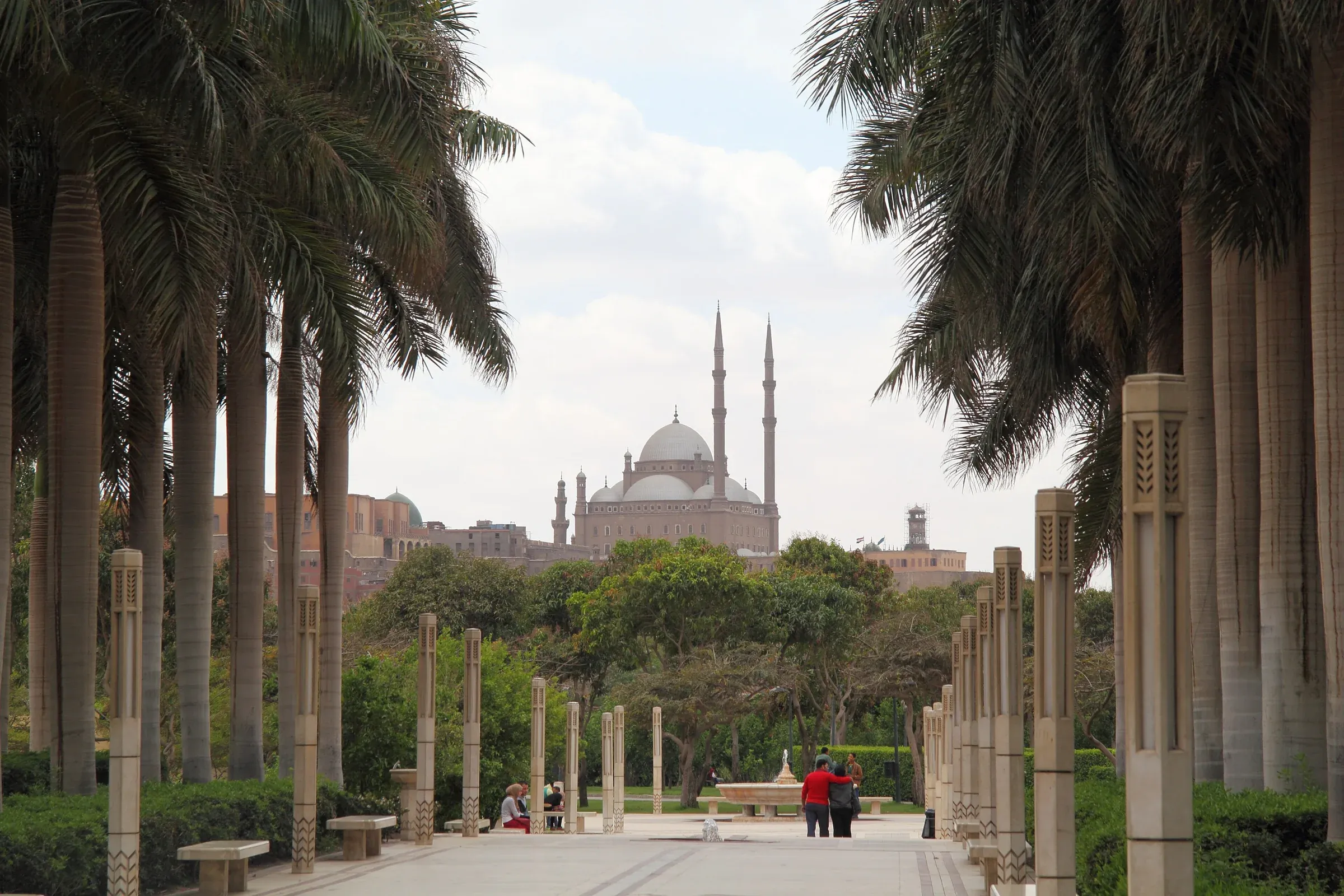
The cultural agency, the Aga Khan Trust for Culture, administers the Aga Khan Award for Architecture (founded 1977), the Historic Cities Programme, which has restored historic districts and created parks such as al-Azhar Park in Cairo, and the Aga Khan Music Programme, which “fosters the development of musical heritage in societies where Muslims have a significant presence”. The Aga Khan Museum in Toronto opened in 2014.10
Relationship to the Imamat and the community
The AKDN is distinct from the community’s religious and social governance institutions, the councils and boards established under the Ismaili Constitution, though members of the community serve in both as volunteers and staff. The Ismaili Imamat describes the network as a means of fulfilling the Imam’s responsibility for “improving the quality of human life”, consistent with the principle that “faith does not remove Muslims or their Imams from daily, practical matters”. The Seat of the Imamat in Lisbon, established in 2018, provides the base for the Imamat’s agreements with governments, many of which concern AKDN programmes.1112
Footnotes
-
Aga Khan Development Network, “His Highness Prince Karim Aga Khan IV, 1936–2025” (2025), section “The Aga Khan Development Network”, https://the.akdn/en/resources-media/whats-new/spotlights/his-highness-prince-karim-aga-khan-iv-19362025. ↩ ↩2 ↩3 ↩4
-
Aga Khan Development Network, “His Highness Prince Karim Aga Khan IV, 1936–2025” (2025), section “Engagement in education”, https://the.akdn/en/resources-media/whats-new/spotlights/his-highness-prince-karim-aga-khan-iv-19362025. ↩ ↩2 ↩3
-
“Rahim al-Hussaini named as 50th Aga Khan after death of father”, The Guardian, 5 February 2025, https://www.theguardian.com/world/2025/feb/05/rahim-al-hussaini-named-as-50th-aga-khan-after-death-of-father. ↩ ↩2
-
Encyclopaedia Britannica, “Aga Khan IV” (2025), section “Career as imam”, https://www.britannica.com/biography/Aga-Khan-IV. ↩
-
Aga Khan Development Network, “Our agencies” (How We Work), agency summaries, https://the.akdn/en/how-we-work/our-agencies. ↩ ↩2 ↩3
-
Aga Khan Development Network, “Frequently asked questions” (Our Approach), questions on legal status and funding, https://the.akdn/en/how-we-work/our-approach/frequently-asked-questions. ↩ ↩2 ↩3
-
The Institute of Ismaili Studies, “Prince Rahim Aga Khan V Named 50th Hereditary Imam of the Shia Ismaili Muslims”, 5 February 2025, https://www.iis.ac.uk/news/2025/february/prince-rahim-aga-khan-v-named-50th-hereditary-imam-of-the-shia-ismaili-muslims/. ↩
-
“AKU launches its first full campus outside Pakistan”, Dawn, 12 September 2025, https://www.dawn.com/news/1941399/aku-launches-its-first-full-campus-outside-pakistan. ↩
-
Aga Khan Development Network, “University of Central Asia opens its first campus”, press release, Naryn, 19 October 2016, https://www.akdn.org/press-release/university-central-asia-opens-its-first-campus-part-broad-commitment-fostering-social. ↩
-
Aga Khan Development Network, “His Highness Prince Karim Aga Khan IV, 1936–2025” (2025), section “Patron of the arts”, https://the.akdn/en/resources-media/whats-new/spotlights/his-highness-prince-karim-aga-khan-iv-19362025. ↩
-
Ismaili Imamat, “The Ismaili Imamat” (official website), introductory statement, https://ismaili.imamat/. ↩
-
The Ismaili, “Mawlana Hazar Imam designates the Seat of the Ismaili Imamat”, July 2018, https://the.ismaili/news/mawlana-hazar-imam-designates-seat-imamat. ↩