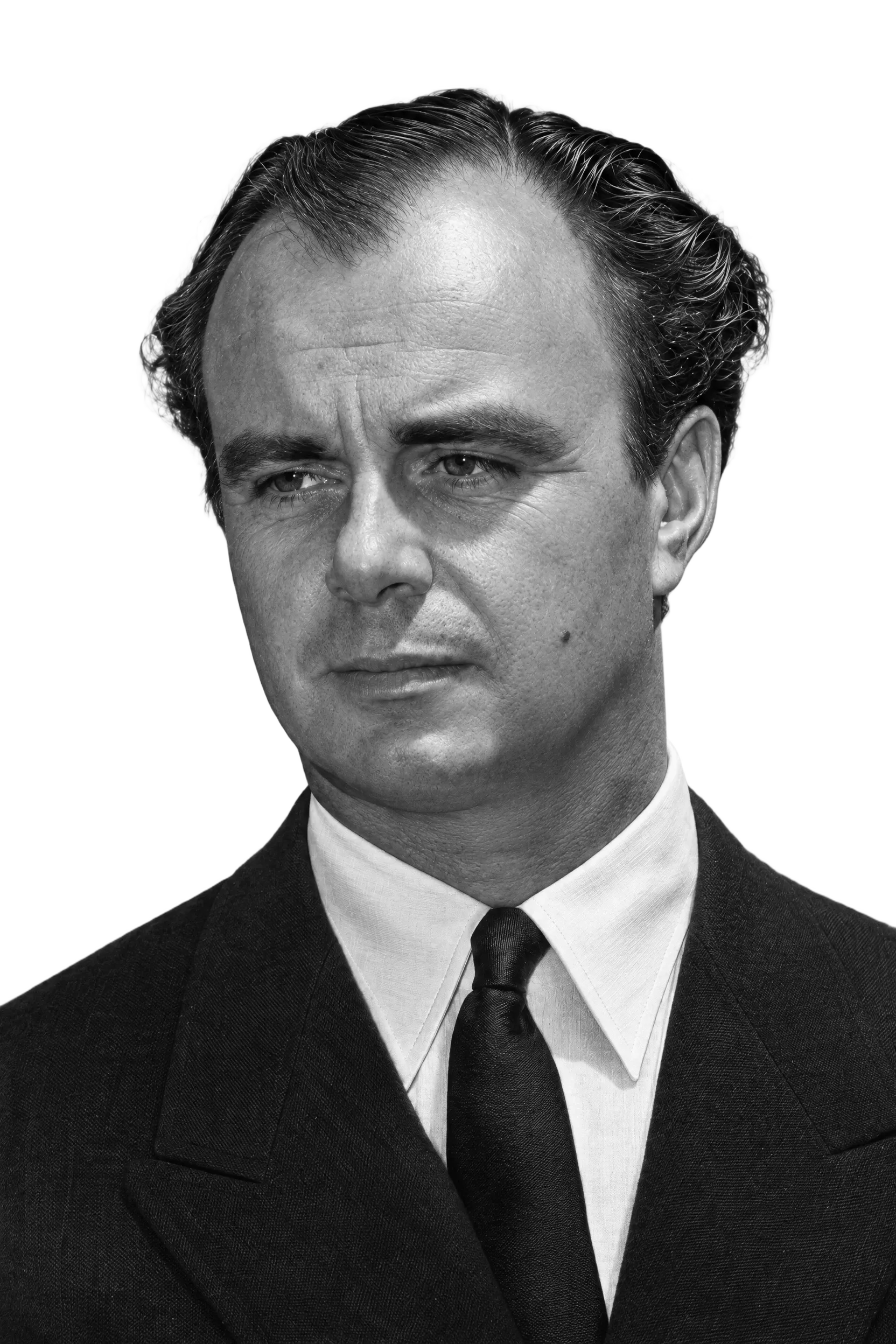
Aly Khan (1911-1960) was the elder surviving son of Aga Khan III, born of his marriage to the Italian dancer Theresa Magliano. He was widely expected to succeed his father, but the will of 1955 named his son Karim, who became Aga Khan IV in 1957. Aly Khan served in the Second World War, became one of the best-known racehorse owners in Europe and, late in life, represented Pakistan at the United Nations. He died in a car accident in 1960 and was buried at Salamiyya in Syria. He is not counted among the Imams.1
Birth and education
Daftary records that Aga Khan III married Theresa Magliano in Cairo in 1908 and that their son Aly was born in Turin in 1911. Greenwall gives his full name as Ali Solomon Khan and dates his birth to 13 May 1910. Theresa Magliano died in 1926. In his memoirs Aga Khan III writes that in the early 1920s “my son, Aly, his childish delicacy overcome, lived in England with his tutor, Mr. C. W. Waddington”, while his mother lived in the south of France. In the winter of 1923-24 mother and son accompanied the Imam to India.2
Early public life
Greenwall records that Aly Khan acted as his father’s secretary before the second Round Table Conference in London in 1931, when Aga Khan III led the Muslim delegation. At about twenty he was commissioned as a lieutenant in a Territorial battalion of the Wiltshire Regiment. He learnt to fly, rode in races and bought yearlings for his father’s stables. A plate in Greenwall’s book shows him behind his father as the Imam leads in Mahmoud, winner of the Derby of 1936.3
In 1934 Aly Khan was in Karachi when his father’s first wife, Shahzadi Begum, died in Bombay. In 1938, Greenwall records, the India Office ruled that he was correctly styled “the Aly Khan” rather than “Prince Aly Khan”, although the Jockey Club continued to allow the princely title for racing.4
Marriages and children
In May 1936 Aly Khan married Joan Yarde-Buller, daughter of Lord Churston and former wife of Loel Guinness. Greenwall records that she took the Muslim name Tajudowlah. Aga Khan III wrote that the marriage “had my full and affectionate approval”. It produced two sons: Karim, born on 13 December 1936, and Amyn. Writing in the early 1950s, the Imam hoped that Karim would study at the Massachusetts Institute of Technology and Amyn at Harvard Law School. In the event Karim read Islamic history at Harvard.5
The couple drifted apart after the war. Aly Khan then married the American actress Rita Hayworth, and Aga Khan III records that he advised them to marry once they told him they were devoted to each other. Aga Khan III mentions a granddaughter from this marriage. Greenwall records the couple’s travel to East Africa and their subsequent separation, which was followed by an American divorce suit.6
War service
The memoirs record that at the start of the Second World War Aly Khan “had taken a commission in a British Yeomanry Regiment and with official approval had been attached to the French”. In June 1940 he was with French forces in Syria. Aga Khan III writes that Aly and Joan were both in the Middle East during the war, first in Egypt and then in Syria. Greenwall adds that after the Allied landing in North Africa Aly Khan served with American forces as a liaison officer and received a medal.7
Racing
Before the war Aly Khan had no share in the ownership of his father’s stables, a point the Imam notes when explaining his offer of horses to the British National Stud. During the war Aly leased the colt Tehran to his father; Tehran was second in the Derby of 1944 and won the St Leger later that year. A plate in Greenwall’s book shows Aly Khan behind his father when My Love won the Derby of 1948.8
The Diamond Jubilee and community roles
At the Diamond Jubilee ceremonies of 1946 both sons were present. Greenwall records that at Bombay Aly Khan flew in from Europe while Sadruddin accompanied his father and stepmother, Om Habibeh. At Dar es Salaam the Imam was again accompanied by the Begum and his two sons. Greenwall, writing in 1952, judged that Aly Khan, then over forty, had as yet had little opportunity to take part in the affairs of the community. See The Diamond Jubilee.9
The succession of 1957
Aga Khan III died at Versoix, near Geneva, in July 1957. Daftary records that many had expected Aly Khan to succeed him. The will of 1955 instead designated Karim, then twenty and an undergraduate at Harvard. All Nizari communities offered their allegiance to the new Imam, who was installed in ceremonies at Dar es Salaam, Nairobi, Kampala, Karachi and Bombay. Daftary notes that Aly Khan “personally did not question his father’s designation”.10
Diplomat and death
Daftary records that Aly Khan represented Pakistan at the United Nations in his last years. He died in a car accident in 1960 and was buried in a permanent mausoleum at Salamiyya, the Syrian town associated with the early Ismaili Imams, in 1972. See The Ismailis of Syria.11
Footnotes
-
Farhad Daftary, The Isma’ilis: Their History and Doctrines, 2nd ed. (Cambridge University Press, 2007), pp. 482, 496-497, https://archive.org/details/bk692. ↩
-
Daftary, The Isma’ilis, p. 482; Harry J. Greenwall, His Highness the Aga Khan, Imam of the Ismailis (London: Cresset Press, 1952), p. 162, https://archive.org/details/his-highness-the-aga-khan-imam-of-the-ismailis; Aga Khan III, The Memoirs of Aga Khan: World Enough and Time (London: Cassell, 1954), p. 206, https://archive.org/details/memoirsofagakhan00agak. ↩
-
Greenwall, His Highness the Aga Khan, pp. 36, 128, 169. ↩
-
Greenwall, His Highness the Aga Khan, pp. 161, 171. ↩
-
Greenwall, His Highness the Aga Khan, p. 171; Aga Khan III, Memoirs, p. 312; Daftary, The Isma’ilis, p. 497. ↩
-
Aga Khan III, Memoirs, pp. 312-313; Greenwall, His Highness the Aga Khan, pp. 172-175. ↩
-
Aga Khan III, Memoirs, pp. 273, 312; Greenwall, His Highness the Aga Khan, p. 172. ↩
-
Aga Khan III, Memoirs, pp. 271, 279; Greenwall, His Highness the Aga Khan, list of plates. ↩
-
Greenwall, His Highness the Aga Khan, pp. 89, 177. ↩
-
Daftary, The Isma’ilis, pp. 496-497. ↩
-
Daftary, The Isma’ilis, p. 497. ↩