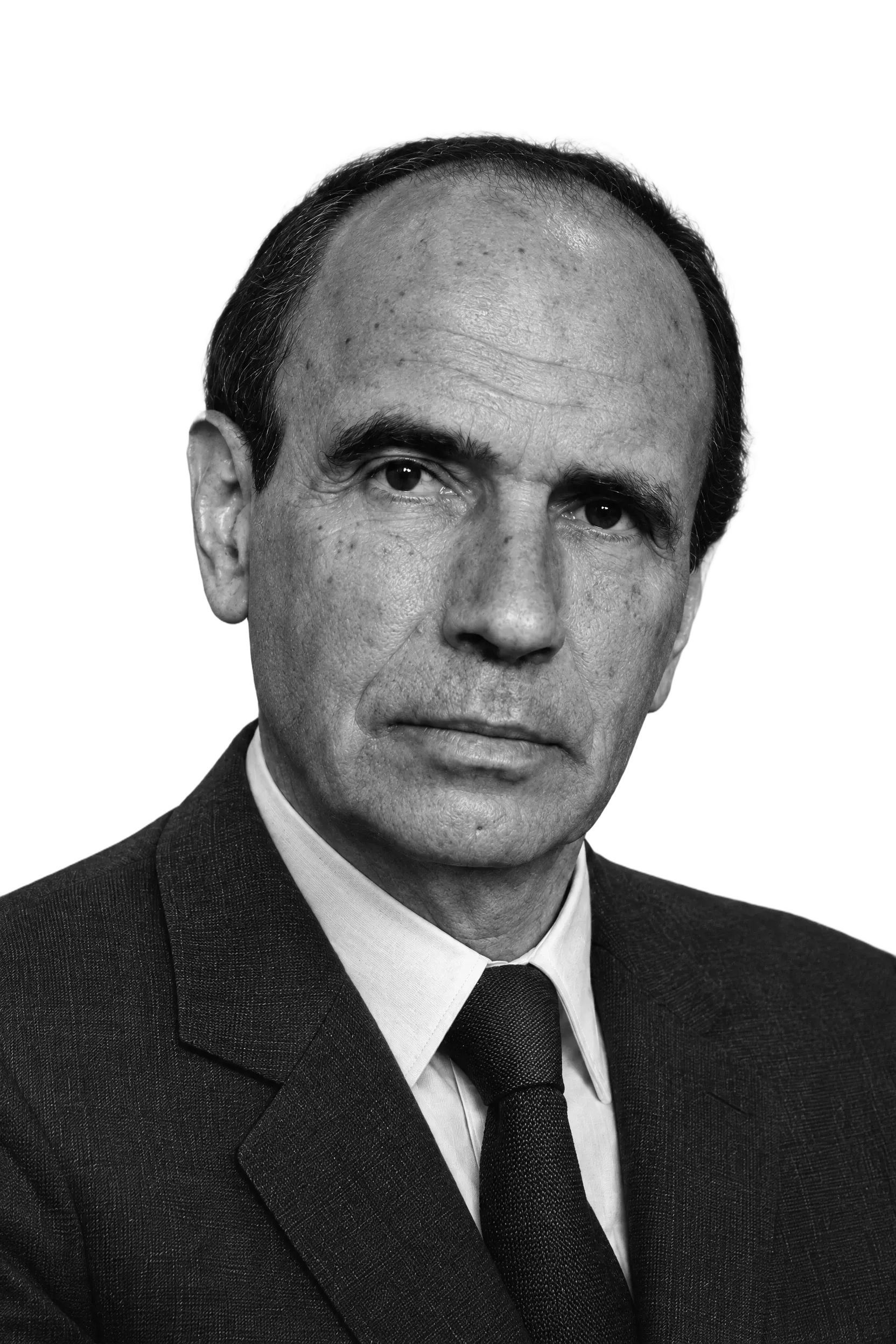
Prince Sadruddin Aga Khan (17 January 1933 – 12 May 2003) was the son of Aga Khan III, the uncle of Aga Khan IV and one of the best-known international civil servants of his generation. He served as United Nations High Commissioner for Refugees from the mid-1960s to 1977, was twice a candidate for Secretary-General, coordinated UN humanitarian programmes for Afghanistan and Iraq, and spent his later years on environmental causes. He was also a major collector of Islamic art, part of whose collection passed to the Aga Khan Museum in Toronto.12
Birth and education
Sadruddin was born in Paris. The Guardian’s obituary notes that “his mother was French, his father had lived his early life in India but was of Iranian descent, and had acquired British nationality”, and that he “saw himself as a citizen of the world – a multilingual, highly cultured cosmopolitan”. He was educated at Le Rosey in Switzerland and at Harvard. Soon after Harvard he married Nina Dyer; they divorced in 1962. In 1972 he married Catherine Aleya, who survived him.13
The succession of 1957
Sadruddin was passed over in the succession of 1957, when Aga Khan III designated his grandson Karim, rather than either of his sons, as the 49th Imam; see Aga Khan IV and Prince Aly Khan. The Guardian’s obituarist wrote that “the formidable old Aga Khan had apparently felt that Sadruddin would remain a playboy”, and that Sadruddin “rarely showed his disappointment. He respected Karim; but the two never became very close”. This is the assessment of a single obituary and is reported here as such.1
Nubia
His first United Nations work drew on his knowledge of Nubian art. The Guardian records that “he became an adviser to the UN educational, scientific and cultural organisation (Unesco), which was embarking on its project to save Nubian monuments threatened by the construction of the Aswan Dam”. Aswan was also the place of his father’s mausoleum, in which Aga Khan IV was buried in 2025.1
High Commissioner for Refugees
In 1958 Sadruddin was “made an adviser to the UNHCR, rising to the role of deputy high commissioner in 1962 and high commissioner in 1966”, according to the Guardian. The New York Times gives a slightly different chronology: “after three years as Deputy High Commissioner for Refugees, he became the High Commissioner in 1965 at 33, the youngest person ever to hold the position, and went on to be the longest-serving, remaining in office until 1977”. The two obituaries agree that his tenure ended in 1977 and that it lasted about twelve years.12
The Guardian describes him as “highly effective, as an administrator and above all as an advocate, able to cajole, shame and persuade governments to provide tolerable funding as crisis after crisis created more and more refugees”. His years in office covered the refugee crisis of 1971–1972 that accompanied the independence of Bangladesh, when “hundreds of thousands of refugees” had to be resettled; the expulsion of the Asians of Uganda, “including many Ismailis”, in 1972 (the Guardian’s obituary dates it to 1973, in error); refugees from Chile after the coup of 1973; and the division of Cyprus in 1974. For the Ugandan expulsion see The Ugandan Expulsion of 1972.1
Afghanistan and Iraq
After leaving UNHCR, Sadruddin continued to undertake humanitarian missions for the United Nations. He was “coordinator for UN humanitarian and economic assistance programmes in Afghanistan between 1988 and 1990”, and after the Gulf war of 1990–1991 was “brought in … to provide humanitarian assistance, especially to the Shi’ites in Iraq”. The Guardian’s judgment was that “he barely dented the refugee problems in either case”: in Afghanistan he “asserted that the west had little interest in the return of refugees”, and in Iraq “he insisted that UN sanctions had to be lifted if Saddam Hussein was to be persuaded to behave more humanely”.1
Candidacies for Secretary-General
Sadruddin twice sought election as Secretary-General of the United Nations. “He had first sought the post in 1981, when the Soviet Union made clear that it would veto his candidacy.” In 1991 he had the support of President George H. W. Bush, but, the Guardian writes, “it was obvious that Sadruddin would be unable to secure the required majority”.1
Bellerive and the environment
In his later years Sadruddin “turned much of his energies into his Bellerive Foundation to promote environmental causes”, based at his home, the Chateau de Bellerive on the Lake of Geneva. He also “organised seminars on global development problems, devising strategies for lessening the gap between rich and poor”. The Guardian’s obituary concludes: “Sadruddin was always an Ismaili, but he did not dwell much on his religious beliefs. He was concerned with morals and ethics, and tolerance was an essential part of his credo.”1
The collector
Sadruddin was a collector of Islamic art. A press report published at the opening of the Aga Khan Museum in 2014 quoted Aga Khan IV, speaking with Prince Amyn, as saying that “the genesis of the family’s collection starts with their grandfather and uncle, both of whom were voracious collectors”, that is, Aga Khan III and Sadruddin; the same report treats Sadruddin’s death in 2003, and the question of the future of his estate, as a turning point in the formation of the museum. See Fatimid Art and Architecture for earlier Ismaili patronage of the arts.45
Death and burial
Sadruddin died in Boston on 12 May 2003, aged 70; the New York Times reported that he “died in a hospital after a short illness, his office in Geneva announced”, while the Guardian gave the cause as cancer. On 16 May 2003, after traditional Muslim ceremonies beneath the arches of the Chateau de Bellerive, “the site of an ancient Cistercian abbey”, he was buried in the local cemetery of Collonge-Bellerive. According to the family’s announcement, the bier was carried by male members of the family led by his nephews Aga Khan IV and Prince Amyn, with his great-nephews Prince Rahim and Prince Hussain. Aga Khan IV “indicated that it was Prince Sadruddin’s and Princess Catherine Aleya’s wish that their mortal remains ultimately be laid to rest in Muslim soil in Egypt where the Princess was born”.213
Footnotes
-
Hella Pick, “Prince Sadruddin Aga Khan” (obituary), The Guardian, 15 May 2003, https://www.theguardian.com/news/2003/may/15/guardianobituaries1. ↩ ↩2 ↩3 ↩4 ↩5 ↩6 ↩7 ↩8 ↩9 ↩10
-
Paul Lewis, “Sadruddin Aga Khan, 70, U.N. Relief Official”, The New York Times, 15 May 2003, section B, p. 11, https://www.nytimes.com/2003/05/15/world/sadruddin-aga-khan-70-un-relief-official.html. ↩ ↩2 ↩3
-
“Prince Sadruddin Aga Khan laid to rest in Collonge-Bellerive”, 16 May 2003, family press release as reproduced by the Heritage Society, https://heritage.ismaili.net/node/79665. ↩ ↩2
-
“The Aga Khan’s New Islamic Treasure Trove”, press report of 4 September 2014 reproduced by the Heritage Society (original publication not named on the reproduction), https://heritage.ismaili.net/node/80260. ↩
-
Aga Khan Museum, “About”, https://agakhanmuseum.org/about/. ↩