Overview
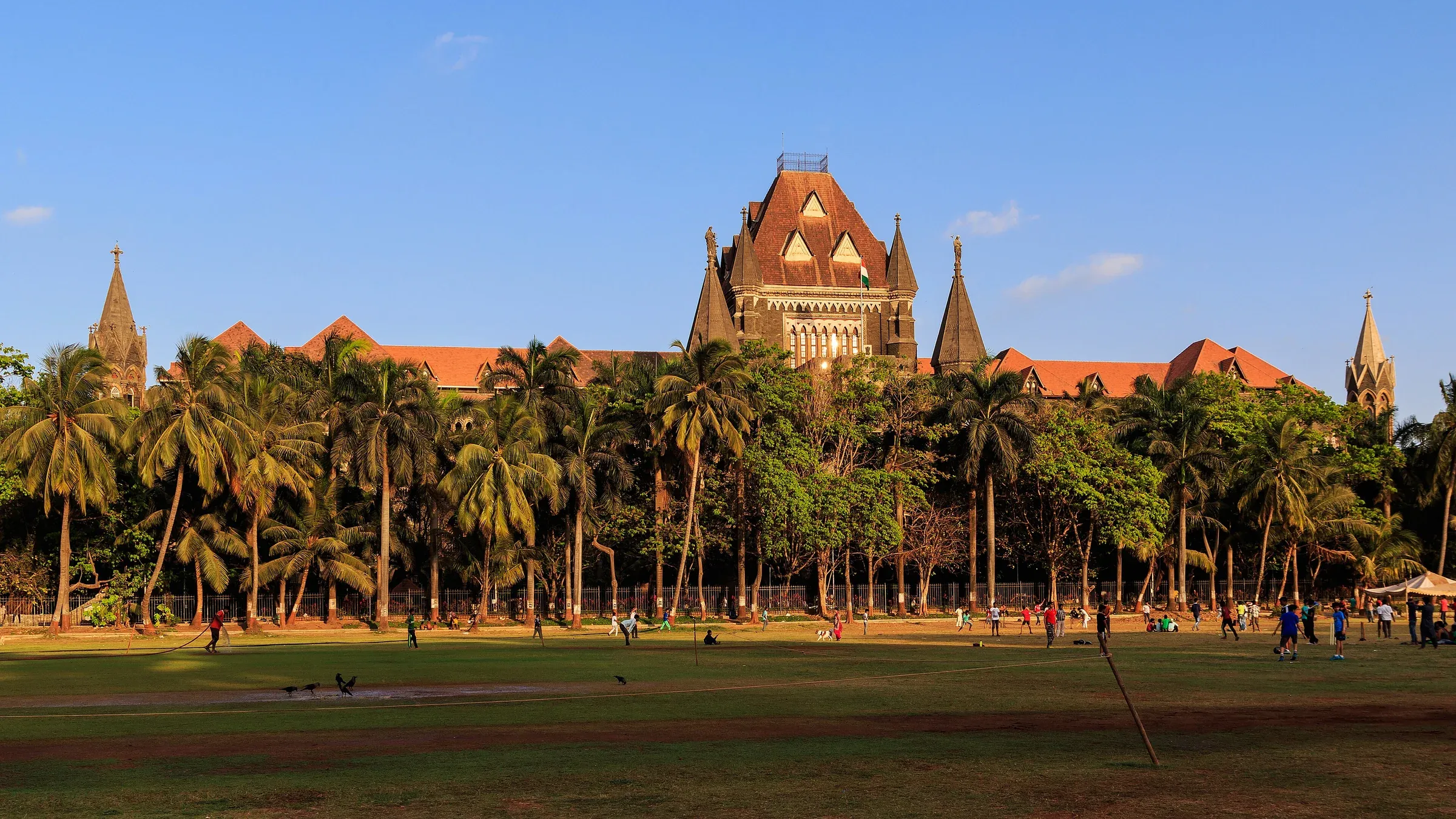
The Aga Khan Case, formally the Khojah Case, was a suit brought in Bombay in 1862, and decided by the High Court of Bombay in 1866, by a group of dissident Khojas against Aga Khan I, the forty-sixth Nizari Ismaili Imam, and his supporters. The plaintiffs claimed that the Khojas had always been Sunni Muslims and that the Aga Khan had no rights over their communal property or dues. Sir Joseph Arnould heard the case in April and June 1866 and gave judgment on 12 November 1866 for the Aga Khan on every point. The judgment defined the Khojas in British Indian law as “Shia Imamee Ismailis”, recognised the Aga Khan as their spiritual head and hereditary Imam, and confirmed his right to their religious dues. It remains one of the foundational documents of modern Ismaili history.1
Background: the Imam in Bombay
Aga Khan I settled in Bombay in 1848, the first Imam of his line to live in India. The Khojas, for centuries the largest section of the Nizari community, now sent their dues directly to his residence. He attended the jamatkhana on major occasions, held a weekly durbar, and over three decades brought the community’s loosely organised institutions under his direct control, appointing the mukhi and kamadia who collected the dues, above all the dassondh or tithe. The British addressed him as His Highness and gave him their protection.2
Taqiyya and Khoja identity
The dispute grew out of the Khojas’ history. Centuries of taqiyya had left many Khojas with practices that looked Sunni or Hindu to outsiders, and Khoja inheritance followed Hindu custom rather than Islamic law. A party within the community, attached to these customs and resentful of the Imam’s control of communal funds, came to argue that the Khojas were Sunnis and owed the Aga Khan nothing.3
The Barbhai
Opposition first appeared in 1829, while the Imam was still in Persia, when some Bombay Khojas refused to pay the dassondh. The Imam sent a representative, accompanied by his grandmother, who sued them; the suit was withdrawn in 1830, but the assembled jamat expelled the dissidents. Led by Habib Ibrahim and at first twelve in number, they became known as the Barbhai, “twelve brothers”. They were readmitted in 1835 after paying their arrears, but remained the core of a lasting opposition.4
Earlier cases
In 1847 two Khoja sisters sued for a share of their father’s estate. The Aga Khan, represented by his brother Muhammad Baqir Khan, upheld the Islamic rules of female inheritance; the Barbhai supported the Khoja custom that excluded women. Sir Erskine Perry ruled that Khoja custom should prevail even where it conflicted with Islamic law, in effect recognising the Khojas as a distinct community. The dissidents were excommunicated again in 1848 and set up their own jamatkhana. At Mahim, where the two parties shared a building, four Barbhai were murdered by Khojas loyal to the Imam in 1267/1850; nineteen men were tried and four sentenced to death.5
In 1861 the Aga Khan circulated a document setting out Ismaili practice on marriage, ablution and funerals and asked every Khoja family to sign it; most did. The dissidents refused, insisting that the Khojas had always been Sunnis, and were expelled once more in 1862.6
The suit
In June 1862 the dissidents, led by Habib Ibrahim’s son Ahmed Habibbhai, filed suit (Arnould’s judgment records that the bill was filed in June 1862 and amended in September 1862; Daftary dates the suit to 1866) against the Aga Khan. They argued that the Khojas had been Sunnis since their conversion from Hinduism by Pir Sadr al-Din, and asked the court to order an account of all communal property and dues; to declare that the property was held in trust for the Khojas alone, with no Shi’i entitled to any share; to require periodic elections of mukhis and kamadias; and to bar the Aga Khan from managing communal property, appointing officers or excommunicating members.7
Arnould defined the issue as whether the community “always has been bound in close ties of spiritual allegiance to the ancestors of the first defendant Aga Khan, the hereditary chiefs or Imams of the Ismailis, whom the Khojah community always have regarded … as their Moorsheds or spiritual heads”. He noted that the great mass of the voluminous evidence was directed to this question.8
The hearing
The hearing took place in April and June 1866. The Aga Khan testified in person, and the court reviewed the whole history of the community. Arnould asked, in his own words, “Who are the Shia Imamee Ismailis?”, and answered with a history of the Shi’a from Ali and his sons al-Hasan and al-Husayn through the Ismaili Imams, the Fatimids and Alamut. The barrister Edward Irving Howard delivered a speech in the case in June 1866, later published as The Shia School of Islam and its Branches, Especially that of the Imamee-Ismailies (Bombay, 1866).9
The judgment
Arnould accepted the Khoja tradition that Pir Sadr al-Din had come from Khurasan as an Ismaili da’i sent by “Shah Islam”, an ancestor of the Aga Khan, and that the faith he taught was “the Shia Imamee Ismaili faith”. He rejected the plaintiffs’ account of Sadr al-Din as a Sunni living at Multan. On the community’s name he wrote that “Khojah” means both “the honourable or worshipful person” and “the disciple”, so that, applied to Sadr al-Din’s converts, it meant roughly “the honourable converts”.10
His judgment held that the Khojas were a community of Shia Imami Ismailis; that the Aga Khan was their spiritual head and the hereditary descendant of the Imams of Alamut; that he was entitled to the customary dues; and that all the community property of the Nizari Khojas should be placed in his name and under his absolute control. The case was decided for the Aga Khan and the other defendants on every point.11
Consequences
The judgment established in British law the legal identity of the Nizari Khojas and the position of the Imam. Daftary concludes that Aga Khan I’s authority was never again seriously challenged. Beben and Mohammad Poor note that, having settled permanently in Bombay, the Imam had every reason to keep close relations with the British, whose courts had now confirmed his position.12
The case was also a source of history. Arnould’s judgment, printed in Bombay in 1866, gathered testimony and documents on Khoja tradition that were otherwise unrecorded, and its account of the Khojas’ origins was drawn on by later historians of the community.13
Footnotes
-
Farhad Daftary, The Isma’ilis: Their History and Doctrines, 2nd ed. (Cambridge University Press, 2007), p. 476; Joseph Arnould, Judgment by the Hon’ble Sir Joseph Arnould in the Khojah Case, otherwise known as the Aga Khan Case (Bombay Gazette Steam Press, 1866), https://archive.org/details/bk1209. ↩
-
Daftary, The Isma’ilis, 2nd ed. (Cambridge University Press, 2007), pp. 473–474. ↩
-
Daftary, The Isma’ilis, 2nd ed. (Cambridge University Press, 2007), pp. 474–475. ↩
-
Daftary, The Isma’ilis, 2nd ed. (Cambridge University Press, 2007), pp. 474–475. ↩
-
Daftary, The Isma’ilis, 2nd ed. (Cambridge University Press, 2007), pp. 475–476. ↩
-
Daftary, The Isma’ilis, 2nd ed. (Cambridge University Press, 2007), p. 476. ↩
-
Daftary, The Isma’ilis, 2nd ed. (Cambridge University Press, 2007), p. 476. ↩
-
Arnould, Judgment (1866), https://archive.org/details/bk1209. ↩
-
Arnould, Judgment (1866), https://archive.org/details/bk1209; Daftary, The Isma’ilis, 2nd ed. (Cambridge University Press, 2007), p. 476; Shafique N. Virani, “The Scent of the Scarlet Pimpernels: Ismaili Leaders of the 11th/17th Century”, in Farhad Daftary and Janis Esots, eds, The Renaissance of Shi’i Islam (I.B. Tauris / Institute of Ismaili Studies, 2022), p. 33, n. 2. ↩
-
Arnould, Judgment (1866), https://archive.org/details/bk1209. ↩
-
Daftary, The Isma’ilis, 2nd ed. (Cambridge University Press, 2007), p. 476; Arnould, Judgment (1866). ↩
-
Daftary, The Isma’ilis, 2nd ed. (Cambridge University Press, 2007), pp. 476–477; Daniel Beben and Daryoush Mohammad Poor, The First Aga Khan: Memoirs of the 46th Ismaili Imam (I.B. Tauris / Institute of Ismaili Studies, 2018), Foreword, p. xxviii. ↩
-
Daftary, The Isma’ilis, 2nd ed. (Cambridge University Press, 2007), p. 476. ↩