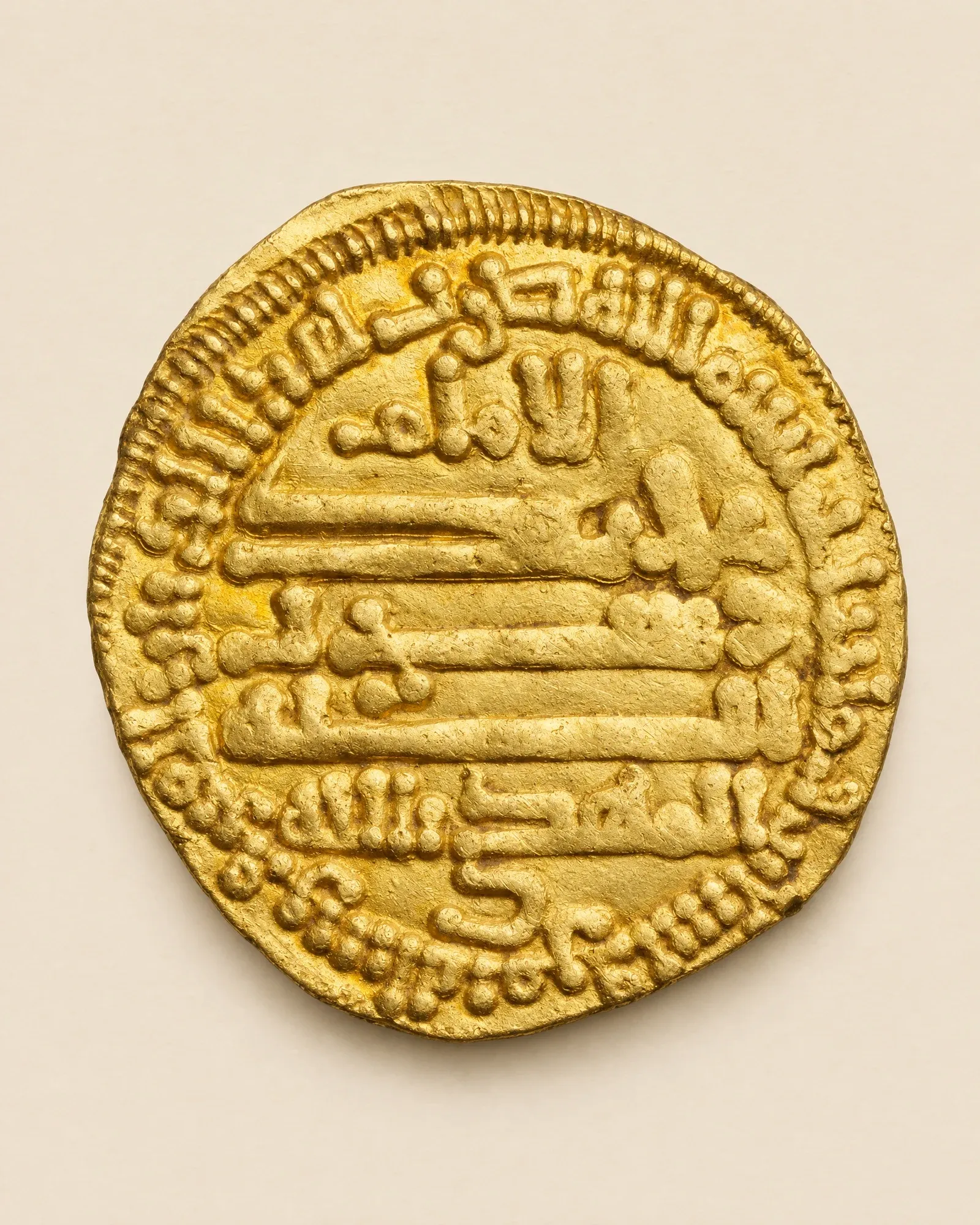
Abd Allah al-Mahdi bi’llah was the eleventh Ismaili Imam in the Nizari reckoning and the founder of the Fatimid caliphate. He led the Ismaili movement from Salamiyya in Syria, declared the imamate openly, crossed North Africa in disguise, and in 909–910 was proclaimed caliph in Ifriqiya, the first Imam of the ahl al-bayt since Ali ibn Abi Talib to rule a major Muslim state.12
Early life and succession
Abd Allah was born in 259 or 260/873–874. His father, al-Husayn, died when he was about eight, and he grew up under the guardianship of his paternal uncle Abu Ali Muhammad, known as Sa’id al-Khayr (d. c. 286/899). He succeeded to the leadership of the movement shortly before 286/899.1
By the early 280s/890s the Ismaili da’wa was a single movement directed from Salamiyya. Its members called it al-da’wa al-hadiya, “the rightly guiding mission”; outsiders called them Qarmatis or Batinis.3 Until Abd Allah’s accession the leaders at Salamiyya had not claimed the imamate openly. They presented themselves as the hujja, the “proof” or representative, of the hidden Imam Muhammad ibn Isma’il, whose return as the Mahdi the movement awaited.4
The reform of 286/899
Shortly after his accession, da’is in Iraq noticed a change of tone in the instructions sent from Salamiyya. Hamdan Qarmat sent the da’i Abdan to Salamiyya to investigate, and Abdan learned that the new leader now claimed the imamate for himself and for his ancestors who had led the movement since Muhammad ibn Isma’il. Hamdan renounced his allegiance and disappeared, and Abdan was murdered; the sources place all these events in 286/899.34 The communities that rejected the claim became known as the Qarmatis; those that accepted it formed the loyal, later Fatimid, Ismailis.1
The reform had doctrinal consequences. By recognising a continuing line of Imams, Abd Allah allowed for more than one heptad of Imams in the era of Islam. The end of time and the role of the Mahdi were postponed indefinitely, bringing Fatimid Ismaili eschatology closer to that of other Muslims, while the Qarmatis kept the older expectation.5
From Salamiyya to Sijilmasa
Abd Allah left Salamiyya in 289/902 with his young son Abu’l-Qasim, the future al-Qa’im.1 After a stay at Ramla he reached Egypt early in 291/904 and lived in Fustat for a year disguised as a Hashimid merchant, received by the local chief da’i. When an Abbasid army arrived in 292/905 he turned west rather than to Yemen, perhaps because of the intensity of the Abbasid search and the defection of the Yemeni da’i Firuz. His da’i Abu’l-Abbas, sent ahead, was arrested by the Aghlabids at Qayrawan. In Shawwal 292/August 905 Abd Allah reached Sijilmasa, the caravan city on the northern edge of the Sahara.6 His chamberlain Ja’far wrote an account of the journey that survives.6
He lived in Sijilmasa for four years as a merchant, keeping in contact with the da’i Abu Abd Allah al-Shi’i, who was building a Kutama Berber army in the mountains of eastern Algeria.7
Proclamation
In 296/909 the Kutama overthrew the Aghlabids. Abu Abd Allah entered Raqqada on 25 March 909 and governed in Abd Allah’s name, then marched west, ending the Rustamid state of Tahart on the way. At Sijilmasa the Midrarid amir had placed Abd Allah under house arrest; Abu Abd Allah freed him and drove out the Banu Midrar. In Dhu’l-Hijja 296/August 909 Abd Allah was acclaimed caliph there in ceremonies lasting several days.8910
He entered Raqqada on 20 Rabi’ II 297/4 January 910. The next day the khutba in all the mosques of Qayrawan named him al-imam al-mahdi bi’llah and amir al-mu’minin, and a manifesto announced that the caliphate had returned to the ahl al-bayt.9 Jurists were ordered to follow the teachings of Ja’far al-Sadiq, and the Shi’i formula “Come to the best of works” (hayya ’ala khayr al-’amal) was added to the call to prayer. Ismailism became the creed of the state, but there was no mass conversion.911
Consolidation
The revolution had released forces the new caliph had to discipline. Abu Abd Allah and his brother Abu’l-Abbas, resentful of their reduced authority, became involved in a conspiracy and were executed in 298/911. A Kutama revolt in support of a rival Mahdi followed and was suppressed; from then on the Kutama remained loyal, forming a regular army, while a navy was built.1213
In the west, Tahart was conquered in 911 and entrusted to the Miknasa chief Masala ibn Habus, who defeated the Idrisid Yahya IV of Fez around 917–921 and deposed him in 922–923; Masala’s death in 924 weakened the Fatimid position in the far Maghrib.1415 The Umayyad Abd al-Rahman III answered the Fatimid challenge in 929 by taking the title of caliph himself.14
The Egyptian expeditions
Egypt was the dynasty’s goal from the start. In 914 a Kutama army under Habasa took Barqa and Alexandria, but was routed at Giza in January 915. A second invasion under Abu’l-Qasim in 919 took Alexandria and stayed in Egypt for two years, until the Fatimid fleet was destroyed by ships from Cilicia and the Abbasid commander Mu’nis drove the army back.1311 Only Barqa remained in Fatimid hands.15
Mahdiya
Abd Allah began building a new capital on the east coast of Ifriqiya in 300/912 and moved there in 308/921. Mahdiya stood on a narrow promontory, about 180 metres across at its neck, closed by a wall with an iron gate; it contained palaces for the caliph and his heir, a harbour cut into the rock, an arsenal and a congregational mosque entered through a monumental gateway.1611 Daftary explains its site by the need for security from the hostile Sunni population of Qayrawan and by the dynasty’s naval power.16
Sicily
Sicily, Aghlabid since 264/878, passed to the Fatimids with Ifriqiya. A revolt in 299/912 brought Ibn Qurhub to power; he recognised the Abbasid caliph al-Muqtadir until he was handed over to al-Mahdi and executed in 304/916.1718 Fatimid fleets raided Calabria and Lombardy, and Byzantium paid tribute.18
Death and succession
Brett reports that in his last years al-Mahdi was said to defer to his son as to one greater than himself.14 He died in Rabi’ I 322/March 934, after a caliphate of twenty-five years and an imamate of thirty-five, and was succeeded by Abu’l-Qasim, who took the title al-Qa’im bi-Amr Allah.19 His remains were later carried to Cairo by al-Mu’izz in 973.20
Footnotes
-
Farhad Daftary, Historical Dictionary of the Ismailis (Scarecrow Press, 2012), s.v. “al-Mahdi, Abd Allah (Ubayd Allah)”. ↩ ↩2 ↩3 ↩4
-
Farhad Daftary, The Isma’ilis: Their History and Doctrines, 2nd ed. (Cambridge University Press, 2007), p. 137. ↩
-
Farhad Daftary, The Isma’ilis: Their History and Doctrines, 2nd ed. (Cambridge University Press, 2007), p. 116. ↩ ↩2
-
Farhad Daftary, The Isma’ilis: Their History and Doctrines, 2nd ed. (Cambridge University Press, 2007), p. 117. ↩ ↩2
-
Farhad Daftary, The Isma’ilis: Their History and Doctrines, 2nd ed. (Cambridge University Press, 2007), p. 133. ↩
-
Farhad Daftary, The Isma’ilis: Their History and Doctrines, 2nd ed. (Cambridge University Press, 2007), p. 125. ↩ ↩2
-
Farhad Daftary, The Isma’ilis: Their History and Doctrines, 2nd ed. (Cambridge University Press, 2007), p. 126. ↩
-
Farhad Daftary, The Isma’ilis: Their History and Doctrines, 2nd ed. (Cambridge University Press, 2007), p. 127. ↩
-
Farhad Daftary, The Isma’ilis: Their History and Doctrines, 2nd ed. (Cambridge University Press, 2007), p. 128. ↩ ↩2 ↩3
-
Michael Brett, “The Fatimid revolution (861–973) and its aftermath in North Africa”, in J. D. Fage (ed.), The Cambridge History of Africa, vol. 2 (Cambridge University Press, 1978), p. 604. ↩
-
Michael Brett, “The Fatimid revolution (861–973) and its aftermath in North Africa”, in J. D. Fage (ed.), The Cambridge History of Africa, vol. 2 (Cambridge University Press, 1978), p. 603. ↩ ↩2 ↩3
-
Farhad Daftary, The Isma’ilis: Their History and Doctrines, 2nd ed. (Cambridge University Press, 2007), p. 141. ↩
-
Michael Brett, “The Fatimid revolution (861–973) and its aftermath in North Africa”, in J. D. Fage (ed.), The Cambridge History of Africa, vol. 2 (Cambridge University Press, 1978), p. 602. ↩ ↩2
-
Michael Brett, “The Fatimid revolution (861–973) and its aftermath in North Africa”, in J. D. Fage (ed.), The Cambridge History of Africa, vol. 2 (Cambridge University Press, 1978), p. 605. ↩ ↩2 ↩3
-
Farhad Daftary, The Isma’ilis: Their History and Doctrines, 2nd ed. (Cambridge University Press, 2007), p. 142. ↩ ↩2
-
Farhad Daftary, Historical Dictionary of the Ismailis (Scarecrow Press, 2012), s.v. “Mahdiyya”. ↩ ↩2
-
Farhad Daftary, The Isma’ilis: Their History and Doctrines, 2nd ed. (Cambridge University Press, 2007), p. 143. ↩
-
Farhad Daftary, The Isma’ilis: Their History and Doctrines, 2nd ed. (Cambridge University Press, 2007), p. 144. ↩ ↩2
-
Farhad Daftary, The Isma’ilis: Their History and Doctrines, 2nd ed. (Cambridge University Press, 2007), p. 145. ↩
-
Farhad Daftary, The Isma’ilis: Their History and Doctrines, 2nd ed. (Cambridge University Press, 2007), p. 162. ↩