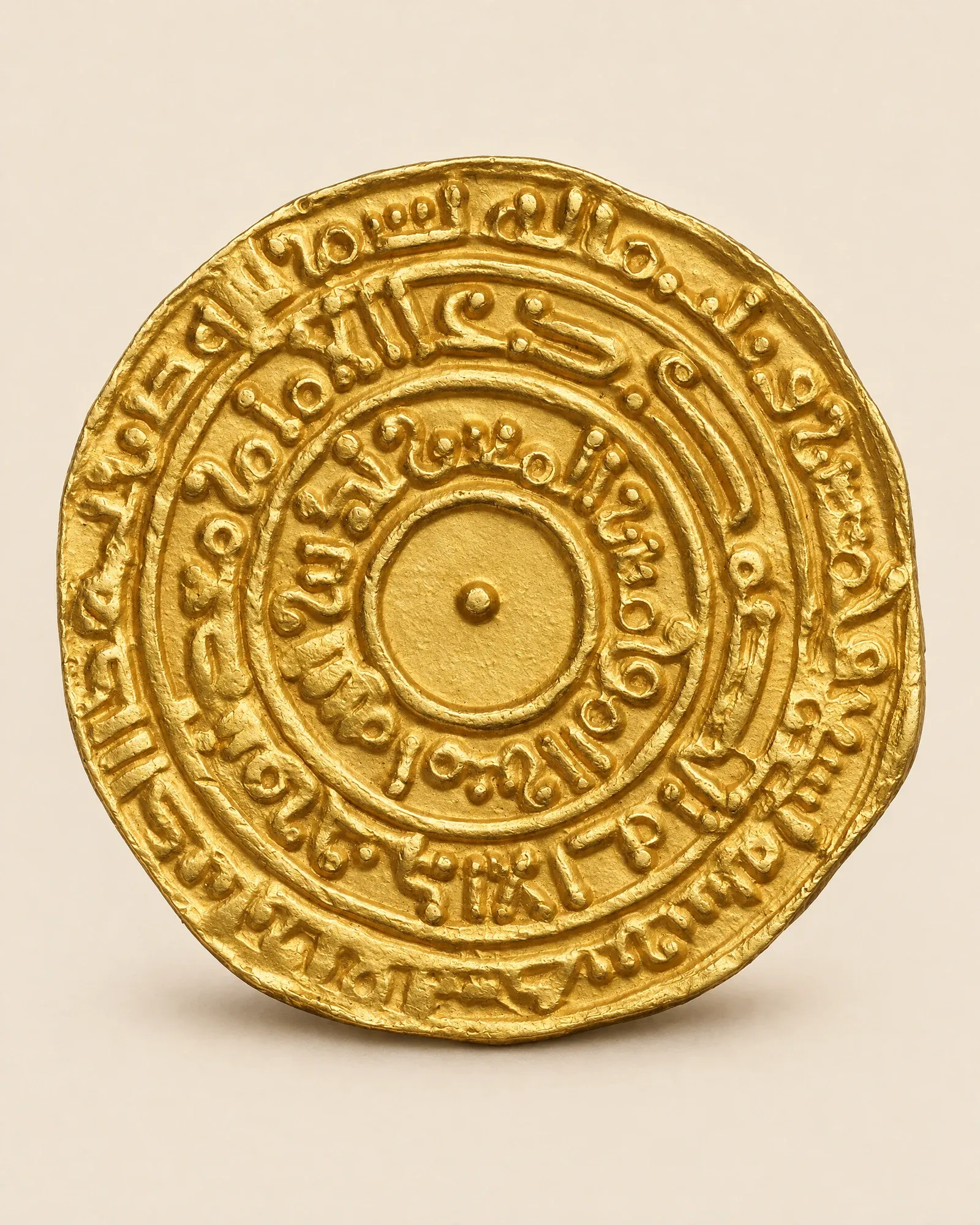
Abu Tamim Ma’add al-Mu’izz li-Din Allah was the fourteenth Ismaili Imam and the fourth Fatimid caliph. In a reign of twenty-two years he completed the conquest of the Maghrib, took Egypt, founded Cairo and moved the dynasty there, and gave Ismailism a codified law and a revised doctrine.
Accession
Ma’add was born in 319/931, the eldest son of Isma’il al-Mansur, and succeeded him in Shawwal 341/March 953 with the title al-Mu’izz li-Din Allah, “he who strengthens the religion of God”.12 Daftary describes him as an excellent planner, an efficient organiser and a statesman amply talented in diplomacy.3
The Maghrib to the Atlantic
At his accession the western Maghrib had slipped from Fatimid control. On al-Mansur’s death the governor of Tahart, Ya’la ibn Muhammad of the Banu Ifran, transferred his allegiance to Cordoba; the Midrarids of Sijilmasa were again independent; and Abd al-Rahman III dominated northern Morocco from Ceuta and Tangier.4 In 345/955–956 the Fatimid fleet raided Almeria in al-Andalus.4
In 347/958 al-Mu’izz sent his secretary and general Jawhar west. Jawhar defeated and killed Ya’la near Tahart, took Sijilmasa and killed its Midrarid amir, and in 349/960 took Fez, capturing its Umayyad governor. Ziri ibn Manad of the Sanhaja distinguished himself in the siege. Fatimid authority now reached the Atlantic, with the exception of Ceuta.3 The court poet Ibn Hani’ al-Andalusi, who joined al-Mu’izz in 347/958, celebrated these campaigns.5 Ibn Hani’ was murdered in 362/973 on his way to join the court in Egypt, perhaps by Umayyad or Abbasid agents.6
Sicily and Byzantium
In Sicily the Kalbid governors fought the Byzantines on the island and in Calabria. A major Byzantine defeat in 345/956–957 was followed by an embassy from Constantine VII to al-Mu’izz in 346/957–958.7 In 351/962 the Kalbids took Taormina and renamed it al-Mu’izziyya, and in 354/964 they defeated an expedition sent by Nicephorus II Phocas by land and sea and seized Rametta. A treaty of 356/967 followed.8
Preparing for Egypt
Preparations for the conquest of Egypt took about a decade. The army was enlarged beyond the Kutama, and da’is worked in Egypt, even approaching its regent Kafur.9 When Kafur died in 357/968 Egypt was suffering famine and weak government, and Ya’qub ibn Killis, who had run Kafur’s finances, fled to al-Mu’izz and urged the invasion.9 Sanders records that al-Mu’izz brought a hundred camel-loads of gold bars to Egypt, and that the gold mines of Upper Egypt and Nubia later sustained the coinage.10
The conquest and Cairo
Jawhar left Qayrawan in Rabi’ I 358/February 969, entered Fustat in Sha’ban 358/July 969 and issued a guarantee of safety to its people.11 North of Fustat he laid out a new palace city on a plan provided by al-Mu’izz. First called al-Mansuriyya, it was renamed al-Qahira al-Mu’izziyya, “the victorious [city] of al-Mu’izz”.11 In Jumada I 359/April 970 Jawhar began the congregational mosque of al-Azhar, completed two years later.11 He replaced the debased Ikhshidid currency with a high-quality gold coinage, the Mu’izzi dinar, and required taxes to be paid in it (see Fatimid coinage).12
Mecca and Medina, whose amirs al-Mu’izz had subsidised, recognised him in 359/969–970.6 In Syria, however, the Qarmatis of Bahrayn under al-Hasan al-A’sam allied with the Buyids and Hamdanids, retook Damascus in 360/971, killed the Fatimid commander Ja’far ibn Falah and besieged Cairo until Rabi’ I 361/December 971.13
The move to Cairo
Al-Mu’izz left Ifriqiya in Shawwal 361/August 972, leaving Buluggin ibn Ziri as governor; Buluggin’s descendants, the Zirids, ruled there until 543/1148.13 He entered Cairo in Ramadan 362/June 973 with his sons, the da’is, many Kutama, his treasury and the coffins of his predecessors.13 In 363/974 al-A’sam invaded again and besieged Cairo but was defeated when his Jarrahid ally deserted him; the Qarmatis later made peace for the tribute they had received from the Ikhshidids.14 Al-Mu’izz dismissed Jawhar soon after his arrival and placed the finances under Ibn Killis.14
Doctrine and the eastern da’wa
Al-Mu’izz was the first Fatimid caliph to pursue specific da’wa goals beyond his frontiers, partly to win back the Qarmatis.14 He partly reverted to the early doctrine of the imamate: Muhammad ibn Isma’il was again recognised as the Qa’im and seventh natiq, whose functions were exercised by the Fatimid Imams as his deputies (khulafa’).1516 Prayers for the days of the week and a collection of private devotions, al-Munajat, are attributed to him.16 He also permitted a Neoplatonised cosmology, and the Khurasani da’i Abu Ya’qub al-Sijistani came to support the Fatimids.17
In Sind a Fatimid vassal state was established around 347/958 with its seat at Multan. About 354/965 the da’i Halam ibn Shayban had the khutba read there for al-Mu’izz.1718
The codification of Ismaili law
Under al-Mu’izz’s supervision al-Qadi al-Nu’man, confirmed as chief judge in 343/954, compiled the Da’a’im al-Islam, which the Imam endorsed as the official code of the state. It remains the main legal text of the Tayyibi Ismailis, including the Bohras.191 Al-Nu’man died in Cairo in Jumada II 363/March 974, and al-Mu’izz led his funeral prayer.19
Death
Al-Mu’izz died in Rabi’ II 365/December 975, aged forty-four, after a reign of twenty-two years. He was buried in the mausoleum beside the Fatimid palace that held his predecessors and would hold his successors.141 His eldest son Tamim, a poet suspected of intrigue with disloyal relatives, had been passed over; his designated heir Abd Allah died in 364/975, and the succession went to his third son, Nizar, al-Aziz.2021
Footnotes
-
Farhad Daftary, Historical Dictionary of the Ismailis (Scarecrow Press, 2012), s.v. “al-Mu’izz”. ↩ ↩2 ↩3
-
Farhad Daftary, The Isma’ilis: Their History and Doctrines, 2nd ed. (Cambridge University Press, 2007), p. 147. ↩
-
Farhad Daftary, The Isma’ilis: Their History and Doctrines, 2nd ed. (Cambridge University Press, 2007), p. 156. ↩ ↩2
-
Michael Brett, “The Fatimid revolution (861–973) and its aftermath in North Africa”, in J. D. Fage (ed.), The Cambridge History of Africa, vol. 2 (Cambridge University Press, 1978), p. 613. ↩ ↩2
-
Farhad Daftary, The Isma’ilis: Their History and Doctrines, 2nd ed. (Cambridge University Press, 2007), p. 160. ↩
-
Farhad Daftary, The Isma’ilis: Their History and Doctrines, 2nd ed. (Cambridge University Press, 2007), p. 161. ↩ ↩2
-
Farhad Daftary, The Isma’ilis: Their History and Doctrines, 2nd ed. (Cambridge University Press, 2007), p. 144. ↩
-
Farhad Daftary, The Isma’ilis: Their History and Doctrines, 2nd ed. (Cambridge University Press, 2007), p. 145. ↩
-
Farhad Daftary, The Isma’ilis: Their History and Doctrines, 2nd ed. (Cambridge University Press, 2007), p. 158. ↩ ↩2
-
Paula A. Sanders, “The Fatimid state, 969–1171”, in Carl F. Petry (ed.), The Cambridge History of Egypt, vol. 1 (Cambridge University Press, 1998), p. 162. ↩
-
Farhad Daftary, The Isma’ilis: Their History and Doctrines, 2nd ed. (Cambridge University Press, 2007), p. 159. ↩ ↩2 ↩3
-
Paula A. Sanders, “The Fatimid state, 969–1171”, in Carl F. Petry (ed.), The Cambridge History of Egypt, vol. 1 (Cambridge University Press, 1998), p. 158. ↩
-
Farhad Daftary, The Isma’ilis: Their History and Doctrines, 2nd ed. (Cambridge University Press, 2007), p. 162. ↩ ↩2 ↩3
-
Farhad Daftary, The Isma’ilis: Their History and Doctrines, 2nd ed. (Cambridge University Press, 2007), p. 163. ↩ ↩2 ↩3 ↩4
-
Farhad Daftary, The Isma’ilis: Their History and Doctrines, 2nd ed. (Cambridge University Press, 2007), p. 164. ↩
-
Farhad Daftary, The Isma’ilis: Their History and Doctrines, 2nd ed. (Cambridge University Press, 2007), p. 165. ↩ ↩2
-
Farhad Daftary, The Isma’ilis: Their History and Doctrines, 2nd ed. (Cambridge University Press, 2007), p. 166. ↩ ↩2
-
Farhad Daftary, The Isma’ilis: Their History and Doctrines, 2nd ed. (Cambridge University Press, 2007), p. 167. ↩
-
Farhad Daftary, The Isma’ilis: Their History and Doctrines, 2nd ed. (Cambridge University Press, 2007), p. 169. ↩ ↩2
-
Farhad Daftary, The Isma’ilis: Their History and Doctrines, 2nd ed. (Cambridge University Press, 2007), p. 172. ↩
-
Farhad Daftary, The Isma’ilis: Their History and Doctrines, 2nd ed. (Cambridge University Press, 2007), p. 173. ↩