Kiya Buzurg-Ummid (d. 1138) was the second leader of the Nizari Ismaili state. He governed Lamasar for more than twenty years and then, from 1124 to 1138, held Alamut as da’i of Daylam and head of the Nizari da’wa. Like Hasan-i Sabbah he did not claim the imamate; he acted for an Imam who was not publicly known. His son and grandson after him made the leadership of Alamut hereditary.1
Lamasar
Lamasar (also Lambasar or Lanbasar) stood above the upper Shahrud in Rudbar, west of Alamut, about forty kilometres north-east of Qazwin. Its holder, Rasamuj, first submitted to Hasan-i Sabbah, then broke the agreement and tried to hand the castle to the Saljuq amir Nushtagin. Hasan sent Buzurg-Ummid with three other chiefs, Kiya Abu Ja’far, Kiya Abu ’Ali and Kiya Garshasb, to take it. Daftary dates the assault to Dhu’l-Qa’da 489 / November 1096, adding that Juvayni gives 495/1102.2
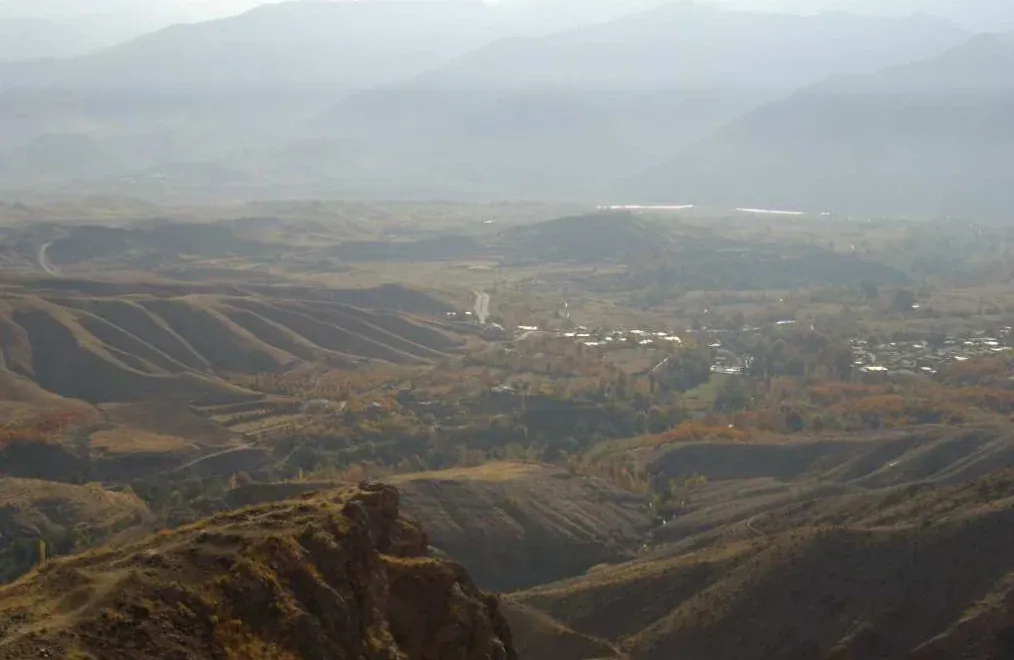
Buzurg-Ummid became governor of what was the largest Nizari castle in Daylaman. Using local labour he rebuilt it as a major stronghold, with cisterns that still survive, together with fine buildings and gardens. Lamasar guarded the western approach to Alamut from the Shahrud valley and was the second most important castle in the Rudbar network.2 During the long attrition campaign of Anushtagin Shirgir (1109–1118) the Saljuqs besieged Lamasar along with the other castles of the district.3
Succession, 1124
When Hasan-i Sabbah died in 1124, Buzurg-Ummid was brought to Alamut to succeed him. The da’i Abu ’Ali Ardistani went round the Nizari castles and obtained their allegiance to the new leader, and no part of the community opposed him. Daftary notes how difficult this smooth transfer must have been for the quarrelling Saljuqs to understand. Buzurg-Ummid was a native of Rudbar, an able administrator and soldier. Older writers believed he was related by marriage to the Caspian dynasties, but Daftary shows this was a confusion with the Zaydi ’Alid ruler Kiya Buzurg al-Da’i ila’l-Haqq.4
Wars and stalemate
The Saljuqs tested the new leader quickly. In 518/1124 about 700 Nizaris were massacred at Amid in Diyar Bakr. In 520/1126 Sultan Sanjar sent his vizier against Turaythith in Quhistan and against Bayhaq and Tarz near Nishapur, with orders to kill the Nizaris and seize their property. The army withdrew without much result. In the same year Sultan Mahmud’s army under Asil, Shirgir’s nephew, was driven out of Rudbar. A second attack also failed, and the amir Tamurtughan was taken prisoner and held at Alamut until Sanjar asked for his release.5
Nizari power in Rudbar grew in these years. The Nizaris took Mansura and other places in Taliqan and built new castles, including Sa’adatkuh and, most importantly, Maymundiz, begun in Rabi’ I 520 / April 1126. In 521/1127 fida’is killed the Saljuq vizier Mu’in al-Din Abu Nasr Ahmad, who had led the expedition into Quhistan. In 523/1129 the Quhistani Nizaris were strong enough to send an army into Sistan.6
In Jumada I 523 / May 1129 Sultan Mahmud invited Alamut to send an envoy to Isfahan. Buzurg-Ummid sent Khwaja Muhammad Nasihi Shahrastani, but he and a colleague were lynched by a crowd as they left the court. The sultan denied responsibility and refused to punish the killers. The Nizaris replied with a raid on Qazwin, which began a long hostility between the Qazwinis and their Nizari neighbours.7
After Mahmud’s death in 525/1131 the Nizaris turned against the Zaydi claimant Abu Hashim ’Alawi in Gilan. An army from Alamut defeated him in Muharram 526 / late 1131 and brought him to Alamut. According to the Nizari chronicler of the reign he abandoned his claim before he was executed. The fida’is of these years also killed the Fatimid caliph al-Amir in 1130 and the ’Abbasid caliph al-Mustarshid near Maragha in Dhu’l-Qa’da 529 / August 1135.8
A territorial state
By the end of Buzurg-Ummid’s rule the Nizaris held a state of their own. It had two main areas in Persia, Rudbar and a large part of Quhistan, along with the southern Jabal Bahra’ in Syria. It had its own mint and was recognised by others as an independent power. In 530/1136 the Saljuq amir Yaranqush, who had been an enemy of the Nizaris, fled to Alamut after the Khwarazmians drove him out. Buzurg-Ummid refused to surrender him to the Khwarazmshah, saying he would not betray a man who had sought refuge with him.9
Buzurg-Ummid died in Jumada I 532 / February 1138 and was buried beside Hasan-i Sabbah. His tomb was visited by the Nizaris until the end of the Alamut period. Three days before his death he named his son Muhammad as heir. Muhammad ruled until 1162, and from then on the leadership of Alamut stayed in Buzurg-Ummid’s line until the proclamation of the Qiyama changed how that leadership was understood.10
Footnotes
-
Farhad Daftary, The Isma’ilis: Their History and Doctrines, 2nd ed. (Cambridge University Press, 2007), pp. 344, 355. ↩
-
Daftary, The Isma’ilis, p. 337. ↩
-
Daftary, The Isma’ilis, p. 344. ↩
-
Daftary, The Isma’ilis, pp. 344–345. ↩
-
Daftary, The Isma’ilis, p. 345. ↩
-
Daftary, The Isma’ilis, pp. 345–346. ↩
-
Daftary, The Isma’ilis, p. 346. ↩
-
Daftary, The Isma’ilis, pp. 352–353. ↩
-
Daftary, The Isma’ilis, p. 355. ↩