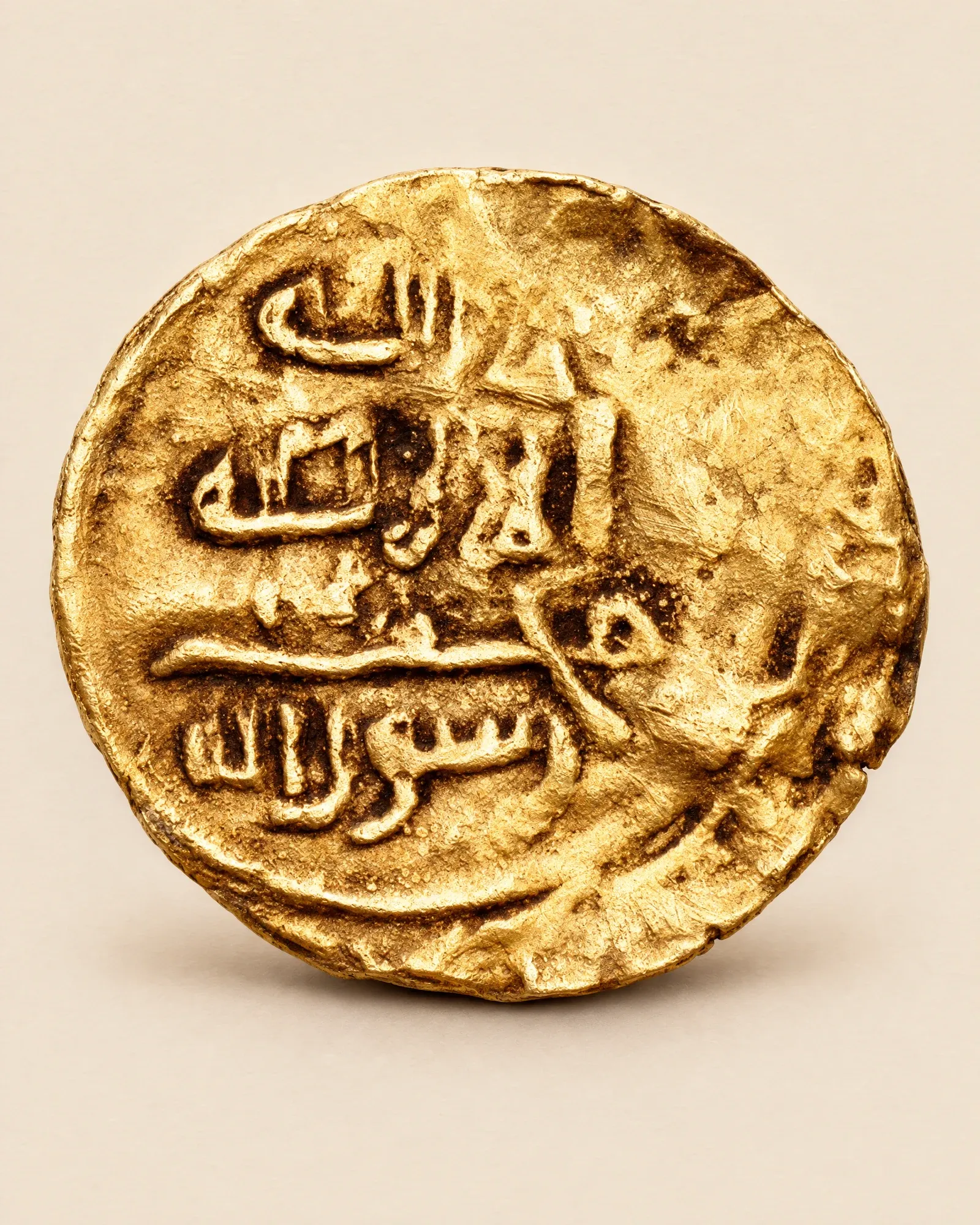
Hasan II (1126–1166), known to the Nizaris as ’ala dhikrihi’l-salam, “on his mention be peace”, was the fourth lord of Alamut and is counted by the Nizari Ismailis as their twenty-third Imam. On 17 Ramadan 559 / 8 August 1164 he proclaimed the Qiyama, the resurrection, which declared the Nizaris freed from the outward forms of the religious law and opened a new era of their history. He moved from the rank of representative of the hidden Imam to the open claim, made explicit by his son, that he was himself the Imam descended from Nizar. He was murdered at Lamasar less than two years after the proclamation.1
Upbringing at Alamut
According to the Persian historians, Hasan was born in 520/1126 and grew up at Alamut as the son and heir of Muhammad b. Buzurg-Ummid, the third lord of Alamut. He took an early interest in the history and doctrines of the Ismaili da’wa. He studied the teachings of Hasan-i Sabbah and read philosophical and Sufi works. He became skilled in ta’wil, esoteric interpretation, and gathered followers at Alamut.2
He grew up at a time of disappointment. The Nizaris had reached a stalemate with the Saljuqs, and many looked back to the campaigns of Hasan-i Sabbah’s day. They had also been waiting since Nizar’s death for their Imam to appear. Daftary describes how younger Nizaris turned to older Ismaili ideas about the coming of the Imam and the qiyama, when justice would be established. Many came to regard Hasan as the Imam promised by Hasan-i Sabbah.3
Conflict with Muhammad b. Buzurg-Ummid
Muhammad b. Buzurg-Ummid kept strictly to the shari’a and to the conduct of the da’wa on behalf of the hidden Imam. He treated belief in Hasan’s imamate as heresy. On one occasion he had 250 of Hasan’s followers killed at Alamut and expelled another 250 from the castle. From then until his father’s death Hasan disowned these ideas in speech and in writing.4
Accession
Muhammad b. Buzurg-Ummid died in Rabi’ I 557 / March 1162. Hasan, about thirty-five and already designated heir, succeeded him as lord of Alamut. Daftary notes that he was “then considered to be Muhammad b. Buzurg-Ummid’s son”. For about two and a half years he made no public change.5 His relationship with the Syrian Nizaris began in this period. Rashid al-Din Sinan, who had trained at Alamut and been a close companion of Hasan, was sent to Syria and took over the leadership there around this time.6
The proclamation at Alamut
In Ramadan 559 Hasan had a pulpit (minbar) erected, facing west, in the prayer ground at the foot of Alamut, with four banners in white, red, yellow and green. On 17 Ramadan / 8 August 1164 he assembled representatives from the Nizari territories in Persia: those from Rudbar and Daylam in front, those from Khurasan and Quhistan on the right, and those from central and western Persia on the left.7
At about noon Hasan came down from the castle in a white garment and white turban and went up into the pulpit. Holding a sword, he delivered what he said was a message from the hidden Imam. The Imam had sent them his blessings, called them his chosen servants, “relieved [them] of the duties and burdens of the shari’a” and brought them to the resurrection. Hasan then delivered an Arabic sermon, said to be the Imam’s own words, which the jurist Muhammad Busti translated into Persian.7
The sermon named Hasan the Imam’s da’i and hujja, as his predecessors had been, and also his khalifa, a deputy with full authority. The congregation was told to obey him in all spiritual and worldly matters. Hasan then performed the two prostrations of the festival prayer and invited those present to break their Ramadan fast at a prepared table. He declared the day the “festival of the resurrection” (’id-i qiyamat). Afterwards the Nizaris celebrated 17 Ramadan every year.8
The proclamation in Quhistan and Syria
About two months later a similar ceremony took place at the fortress of Mu’minabad, east of Birjand in Quhistan. Hasan sent the sermon and epistle to the ra’is Muzaffar, who had led the Quhistani Nizaris since 555/1160, by the hand of Muhammad Khaqan. Juvayni dates the reading to 28 Dhu’l-Qa’da 559 / 18 October 1164. At Mu’minabad Hasan’s status was stated more clearly. As al-Mustansir had been God’s khalifa on earth and Hasan-i Sabbah had been al-Mustansir’s, so Hasan was now God’s khalifa and Muzaffar was his in Quhistan.9 The Qiyama was announced in Syria somewhat later. Daftary attributes the proclamation there to Sinan and notes that it had limited effect and is not mentioned in Syrian Nizari texts.10
The doctrine of the Qiyama
Hasan was announcing the Last Day, but, drawing on Ismaili ta’wil, it was understood in symbolic and spiritual terms. The resurrection meant the revealing of the unveiled truth (haqiqa) in the person of the Imam. Those who recognised the Imam could now understand the inner meaning (batin) of the law and were already in Paradise. Those who did not were spiritually non-existent. Later Nizari sources say that Hasan-i Sabbah, as hujja of the qa’im, had sounded the first blast of the trumpet and Hasan II the second.11
The Persian historians, all hostile to the Nizaris, state that Hasan abolished the shari’a. They explain that this world is the place of action without reckoning and the Qiyama the place of reckoning without action, and that true prayer meant being always with God in one’s heart. Rashid al-Din and Kashani say that this abolition was why the Nizaris were called malahida, “heretics”.12 Daftary reads the Qiyama as “a declaration of independence” from the wider Muslim society and at the same time “an admission of the failure” of the Nizari effort to win it over. The phase it opened lasted forty-six years, until 607/1210.13
From khalifa to Imam
In Daftary’s reading Hasan claimed, in two stages, to be the Imam and indeed the imam-qa’im. At Alamut he was the Imam’s khalifa, a title no earlier lord of Alamut had used, and the Persian historians explain it as sole vicegerent (qa’im-maqam va na’ib-i munfarid). At Mu’minabad that rank was equated with the one held by al-Mustansir. In later epistles (fusul) he hinted more clearly that he was the Imam and son of an Imam of Nizar’s line, even though in outward appearance he was Muhammad b. Buzurg-Ummid’s son.14 His son Nur al-Din Muhammad made the claim explicit. Nizari genealogy names Hasan’s true father as the hidden Imam Hasan al-Qahir.15
A contested episode
Daftary stresses that this account rests on the Persian historians, a few later Nizari works and the standard interpretation of Hodgson, Corbin and Madelung. He calls the Qiyama “a highly controversial episode”. Many modern Nizaris question parts of the narrative. In their view, a basic function of every Imam has been to interpret the shari’a and the practice of the faith for his own time, and the Qiyama was such an interpretation.16 Daftary also notes that the outside world did not notice the Qiyama until after the fall of Alamut. Ibn al-Athir does not mention it, and even Juvayni reports no libertinism in Rudbar.17
Death
Hasan II ruled for only four years. On 6 Rabi’ I 561 / 9 January 1166 he was stabbed to death in the castle of Lamasar by his brother-in-law, Hasan b. Namawar, who belonged to a local Daylami branch of the Buyid family and opposed Hasan II’s new policies. His nineteen-year-old son Nur al-Din Muhammad succeeded him and had Namawar and his relatives executed.18
Footnotes
-
Farhad Daftary, The Isma’ilis: Their History and Doctrines, 2nd ed. (Cambridge University Press, 2007), pp. 358–363; Farhad Daftary, Historical Dictionary of the Ismailis (Scarecrow Press, 2012), appendix “Nizari Imams”. ↩
-
Daftary, The Isma’ilis, pp. 357–358. ↩
-
Daftary, The Isma’ilis, p. 357. ↩
-
Daftary, The Isma’ilis, p. 358. ↩
-
Daftary, The Isma’ilis, p. 358. ↩
-
Daftary, The Isma’ilis, pp. 366, 370. ↩
-
Daftary, The Isma’ilis, p. 359. ↩
-
Daftary, The Isma’ilis, p. 359; ’Ata-Malik Juvayni, The History of the World-Conqueror, tr. J. A. Boyle (Manchester University Press, 1958), vol. 2, pp. 690–691. ↩
-
Daftary, The Isma’ilis, pp. 359, 370. ↩
-
Daftary, The Isma’ilis, pp. 359–360. ↩
-
Daftary, The Isma’ilis, p. 360. ↩
-
Daftary, The Isma’ilis, pp. 360–361. ↩
-
Daftary, The Isma’ilis, p. 361. ↩
-
Daftary, The Isma’ilis, pp. 363–364. ↩
-
Daftary, The Isma’ilis, pp. 361–362. ↩
-
Daftary, The Isma’ilis, p. 362. ↩
-
Daftary, The Isma’ilis, p. 363. ↩