What can be known
Shams al-Din Muhammad is the first Imam of the post-Alamut era and among the most obscure figures in the Nizari list. No document written by him or addressed to him survives, and no contemporary chronicle names him. What is known comes from later Nizari tradition, from allusions in the poetry of Nizari Quhistani, and from what can be inferred about the condition of the Nizari community after 1256. This page sets out each strand and indicates how secure it is.1
The broad facts are not seriously contested. He was a son of Rukn al-Din Khurshah, the last Imam to rule from Alamut; he succeeded to the Imamate when his father was killed by the Mongols in 655/1257; he lived in concealment; and he died around 710/1310 after an Imamate of about half a century. Both later branches of the Nizari Imamate, the Qasim-Shahi line recognised by today’s Nizari Ismailis and the extinct Muhammad-Shahi line, count him as their Imam.2
The fall of Alamut and the hidden heir
In 654/1256 Khurshah surrendered to the Mongol prince Hulegu, and the fortresses of Rudbar and Quhistan were dismantled one after another. Khurshah was sent to Mongolia to see the Great Khan Möngke and was killed on the return journey in 655/1257. Juwayni, the Persian historian who served the Mongols, claimed that the whole of Khurshah’s family and the Nizari population had been put to the sword; Daftary concludes that this claim was not true. Communities survived in Daylam, Quhistan and elsewhere, and the Imamate continued.3
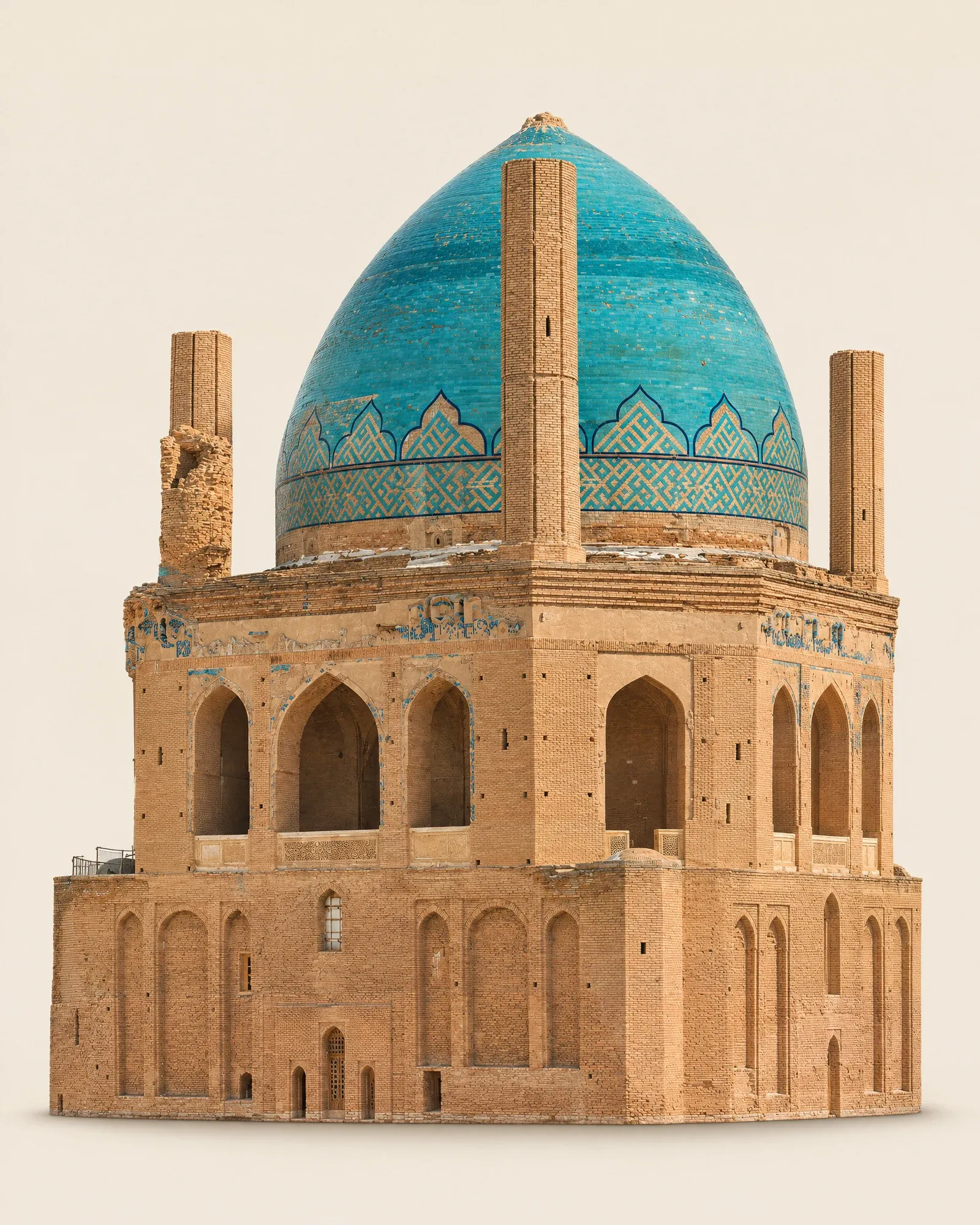
According to Nizari tradition, Shams al-Din Muhammad, who was still a minor, had received the nass, the designation as successor, from his father, and had been hidden before the castles fell. He was taken to Adharbayjan in north-western Persia, a region at the heart of the Ilkhanid state but far from the Nizari heartlands, where a member of Khurshah’s family could live unrecognised. Tradition holds that he worked there as an embroiderer, which is why later sources give him the epithet Zarduz, “gold-embroiderer”.4
Nizari Quhistani’s journey
The only near-contemporary witness is the poet Sa’d al-Din Nizari Quhistani, born at Birjand in 645/1247–1248. In Shawwal 678/February 1280 Nizari set out from Tun in Quhistan on a journey of about two years through Adharbayjan and the Caucasus, which he described in a verse travelogue, the Safar-nama, of about 1,200 couplets. In it he alludes, in guarded language, to a meeting with a figure whom Daftary reads as the Imam, possibly at Tabriz in 679/1280. The poem does not name him and could not have done so safely. It nonetheless indicates that the Imam’s whereabouts were known to at least some Persian Nizaris and that they travelled long distances to see him.5
Nizari Quhistani matters for another reason. He was probably the first Nizari author to express his religious ideas in the language of Sufism, with its pirs and murids, its khanaqahs and dervishes. This was the cover under which Shams al-Din Muhammad and his successors would live. Daftary states that Shams al-Din and his immediate successors in the Qasim-Shahi line lived clandestinely for the most part as Sufi pirs, with their followers adopting the Sufi designation of murid.6
The community without its Imam
During Shams al-Din’s Imamate the scattered Nizari communities had little contact with him and developed under local leaders. Daftary describes how the Nizaris of Persia, Syria, Central Asia and South Asia each elaborated their own religious and literary traditions, and how taqiyya, precautionary dissimulation, was adopted by communities on their own initiative rather than as a policy directed by the Imam. Many disguised themselves as Sunnis.7
Armed resistance flared once. In 674/1275–1276 Nizaris of Rudbar, allied with a descendant of the Khwarazmshahs, retook Alamut and held it for about a year before forces of the Ilkhan Abaqa expelled them. There is no evidence that the hidden Imam directed this attempt.8
Further east, the Nizari da’wa was carried by refugee da’is to Badakhshan and the Pamirs and to Sind, where the pirs of the South Asian tradition were active. Pir Shams, who flourished around the middle of the fourteenth century and was active in Multan and Uch, belongs to this period; his mausoleum at Multan is locally known as that of Shams-i Tabriz, a sign of how freely these names travelled. The Khoja ginans name Qasim Shah, Shams al-Din’s successor in the Qasim-Shahi line.9
Legend: Shams-i Tabriz
In later legend Shams al-Din Muhammad was identified with Shams-i Tabriz, the wandering dervish who transformed the life of Jalal al-Din Rumi in Konya in the 1240s. The identification rests on the shared name and on Adharbayjan, and it fits the later Nizari habit of claiming great Persian mystics as co-religionists. Daftary treats it as legendary. Rumi’s Shams died around 645/1247, when the future Imam was at most a young child (he was still a minor in 1256), and the same name was also attached, in Multan, to the tomb of Pir Shams.10
Death and the question of succession
Shams al-Din Muhammad is said to have died in Adharbayjan around 710/1310. The Qasim-Shahi line names Qasim Shah as his successor; the Muhammad-Shahi line names Ala al-Din Mu’min Shah. Syrian Nizari oral tradition says that the split between the two lines occurred at Shams al-Din’s death, with two sons disputing the succession. Daftary notes, however, that the earliest Qasim-Shahi sources name Mu’min Shah as Shams al-Din’s son and successor, followed by Qasim Shah, which would place the dispute a generation later. The evidence is set out in The Muhammad-Shahi/Qasim-Shahi split.11
The official list of Nizari Imams for the post-Alamut period was finalised only in the late nineteenth century, and the numbering of the Imams after Shams al-Din follows that list. In the Qasim-Shahi count used on this site, Shams al-Din Muhammad is the twenty-eighth Imam and his successor Qasim Shah the twenty-ninth.12
Footnotes
-
Farhad Daftary, The Isma’ilis: Their History and Doctrines, 2nd ed. (Cambridge University Press, 2007), pp. 403–404, 411–413. ↩
-
Daftary, The Isma’ilis, 2nd ed. (Cambridge University Press, 2007), pp. 410–413. ↩
-
Daftary, The Isma’ilis, 2nd ed. (Cambridge University Press, 2007), p. 410; see also The Mongol conquest. ↩
-
Daftary, The Isma’ilis, 2nd ed. (Cambridge University Press, 2007), p. 411. ↩
-
Daftary, The Isma’ilis, 2nd ed. (Cambridge University Press, 2007), pp. 411–412. ↩
-
Daftary, The Isma’ilis, 2nd ed. (Cambridge University Press, 2007), pp. 412, 419. ↩
-
Daftary, The Isma’ilis, 2nd ed. (Cambridge University Press, 2007), pp. 403–404, 410. ↩
-
Daftary, The Isma’ilis, 2nd ed. (Cambridge University Press, 2007), p. 411. ↩
-
Daftary, The Isma’ilis, 2nd ed. (Cambridge University Press, 2007), pp. 410, 442–444. ↩
-
Daftary, The Isma’ilis, 2nd ed. (Cambridge University Press, 2007), pp. 413, 420. ↩
-
Daftary, The Isma’ilis, 2nd ed. (Cambridge University Press, 2007), pp. 413–414. ↩
-
Daftary, The Isma’ilis, 2nd ed. (Cambridge University Press, 2007), pp. 413, 418. ↩