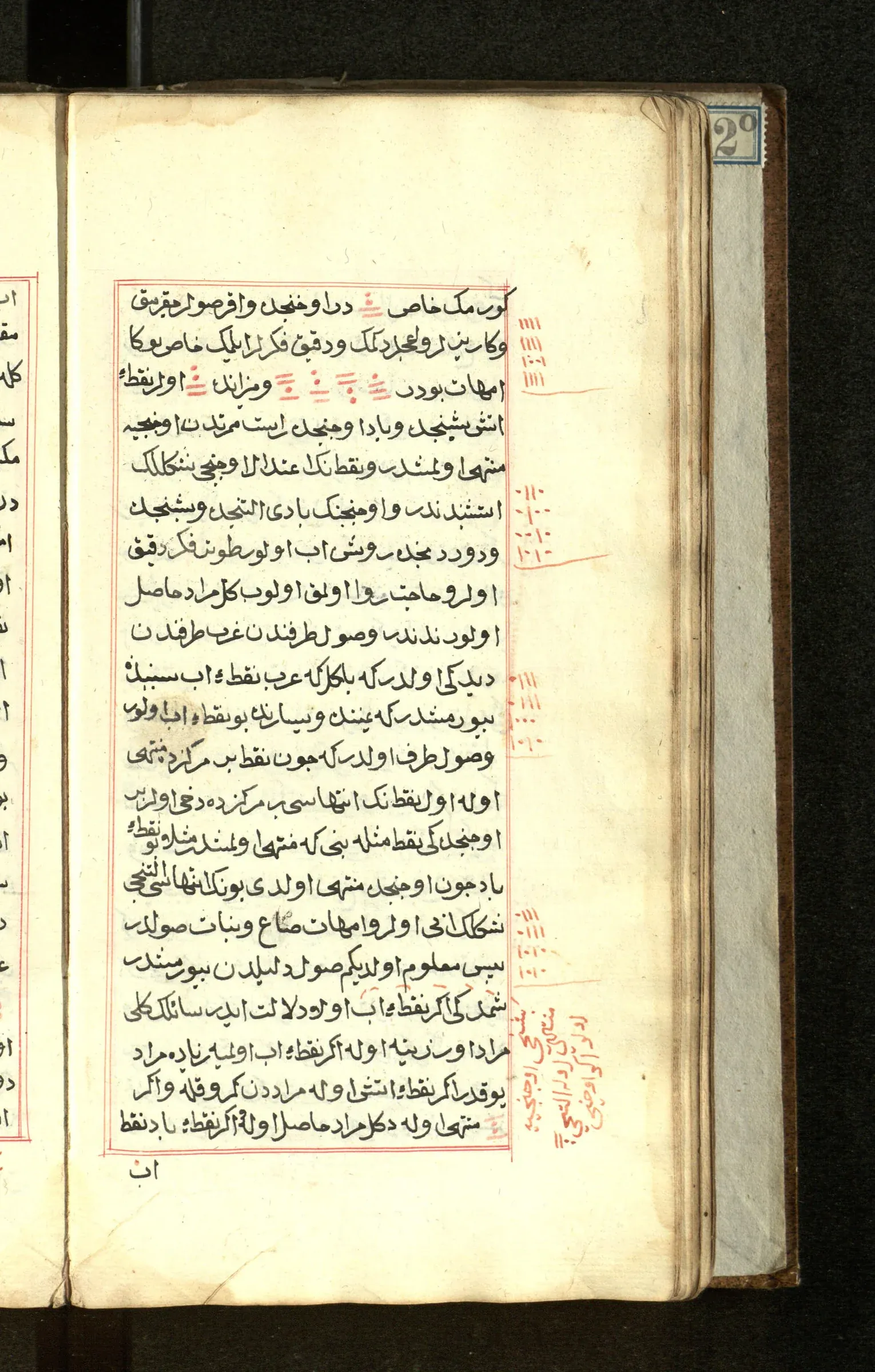
Khwaja Nasir al-Din Abu Ja’far Muhammad b. Muhammad al-Tusi (1201–1274) was one of the leading philosophers, astronomers and mathematicians of the medieval Islamic world. He also wrote some of the most important Nizari Ismaili works of the Alamut period. For about three decades he lived among the Nizaris in the castles of Quhistan and later Alamut. He was at the side of Rukn al-Din Khurshah at the surrender of 1256 and then served the Mongol Ilkhans. Twelver Shi’i tradition remembers him as a Twelver theologian, and whether he really adopted Ismailism is still disputed.1
Early life and arrival in Quhistan
Tusi was born at Tus in Khurasan in 597/1201 into a Twelver Shi’i family. In about 624/1227 he entered the service of Nasir al-Din ’Abd al-Rahim b. Abi Mansur (d. 655/1257), the Nizari governor (muhtasham) of Quhistan, and worked at his court at Qa’in and the nearby castles. By then Quhistan had become a refuge for scholars of every persuasion fleeing the Mongol invasion of Khurasan. Daftary argues that the evidence does not support later claims, Tusi’s own among them, that these scholars were held against their will. The Nizari rulers and governors welcomed them and gave them access to libraries and patronage.2
The Nasirean Ethics
In Quhistan Tusi wrote his most widely read book, the Persian Akhlaq-i Nasiri (“The Nasirean Ethics”), named after his patron and completed in 633/1235. The original version opened with an Ismaili preamble praising the Nizari Imam and the muhtasham. After the fall of the Nizari state Tusi revised the preamble and removed the Ismaili references. He also wrote a shorter ethical work for the same patron, the Akhlaq-i muhtashami.3
At Alamut
Tusi later moved to Alamut, where he lived under Ala al-Din Muhammad and Khurshah until 654/1256. The castle library there was one of the best collections available to a scholar of his time (see the Alamut library).4
In his spiritual autobiography, the Sayr va suluk (“Contemplation and Action”), Tusi describes how he grew dissatisfied with theology (kalam) and philosophy (hikma). He came to believe that truth required an infallible teacher, and so joined the ahl-i ta’lim, the Nizari “people of instruction” who followed Hasan-i Sabbah’s doctrine of authoritative teaching.5
Rawdat al-taslim and the doctrine of satr
Tusi’s name is closely linked with Rawdat al-taslim (“The Garden of Submission”, also called Tasawwurat). This Persian work, completed in 640/1243, is the main surviving statement of Nizari doctrine from the late Alamut period. Daftary suggests it may have been compiled by a team under Tusi’s supervision, possibly with Salah al-Din Hasan-i Mahmud, known as Hasan-i Salah Munshi, as chief compiler.6
The work sets out the doctrine of satr (“concealment”). This doctrine treated the Qiyama of 1164 as a temporary condition and explained Jalal al-Din Hasan’s adoption of Sunni law as a return to taqiyya and satr. In this scheme every Imam is potentially the imam-qa’im. Periods of concealment, when the shari’a applies, alternate with periods of unveiling (dawr-i kashf), and the Great Resurrection (qiyamat-i qiyamat) is reserved for the end of time.7
Did Tusi become an Ismaili?
Twelver scholars have generally denied that Tusi converted. They treat his Ismaili writings as written under compulsion or taqiyya, and Tusi himself later said he had been held against his will. Daftary weighs the Sayr va suluk, the Ismaili preamble to the Nasirean Ethics and the thirty years Tusi spent among the Nizaris. He concludes that “it is safe to say” Tusi embraced Ismailism willingly while he lived in their communities, and returned to Twelver Shi’ism after 1256.8
The surrender of 1256
When Hülegü’s armies surrounded Maymundiz in November 1256, Tusi and other outside scholars at Khurshah’s court urged surrender. On 29 Shawwal 654 / 19 November 1256 Khurshah came down from the castle accompanied by Tusi, the physician Asil al-Din Zuzani and the vizier Mu’ayyad al-Din. Hodgson, writing in the Cambridge History of Iran, suggests that Khurshah “seems to have listened to the foreign scholars at the court, such as Nasir al-Din Tusi, who were eager to see the Isma’ili state at an end”, and to enjoy the larger patronage of the Mongols. Daftary also counts their influence among the reasons for the quick surrender.9
In Mongol service
Tusi joined Hülegü’s entourage and was present at the fall of Baghdad in 1258. Hülegü then funded an observatory at Maragha in Azerbaijan under his direction, which became the leading centre of astronomy of its time. Tusi kept his position under Hülegü’s son Abaqa. He died in Baghdad in 672/1274.10
Later works and reputation
After 1256 Tusi wrote as a Twelver. His Tajrid al-‘aqa’id became a standard text of Twelver theology. He also wrote Musari’ al-musari’, a refutation of the Musara’a of al-Shahrastani. In another work Tusi had called al-Shahrastani an Ismaili da’i al-du’at.11
The Nizaris have kept and copied the works Tusi wrote while he was among them. They remember him as one of the most distinguished scholars of the Alamut period.12
Footnotes
-
Farhad Daftary, The Isma’ilis: Their History and Doctrines, 2nd ed. (Cambridge University Press, 2007), pp. 378–379. ↩
-
Daftary, The Isma’ilis, p. 378. ↩
-
Daftary, The Isma’ilis, pp. 378–379. ↩
-
Daftary, The Isma’ilis, p. 379. ↩
-
Daftary, The Isma’ilis, p. 379. ↩
-
Daftary, The Isma’ilis, p. 380; Farhad Daftary, Historical Dictionary of the Ismailis (Scarecrow Press, 2012), s.v. “Rawdat al-taslim”. ↩
-
Daftary, The Isma’ilis, p. 380; Daftary, Historical Dictionary, s.v. “Satr”. ↩
-
Daftary, The Isma’ilis, p. 379. ↩
-
Daftary, The Isma’ilis, pp. 395, 398; M. G. S. Hodgson, “The Isma’ili State”, in J. A. Boyle (ed.), The Cambridge History of Iran, vol. 5 (Cambridge University Press, 1968), p. 481. ↩
-
Daftary, The Isma’ilis, p. 379; J. A. Boyle, “Dynastic and Political History of the Il-Khans”, in Boyle (ed.), Cambridge History of Iran, vol. 5, ch. 4. ↩
-
Daftary, The Isma’ilis, pp. 340, 379. ↩
-
Daftary, The Isma’ilis, pp. 379–380. ↩