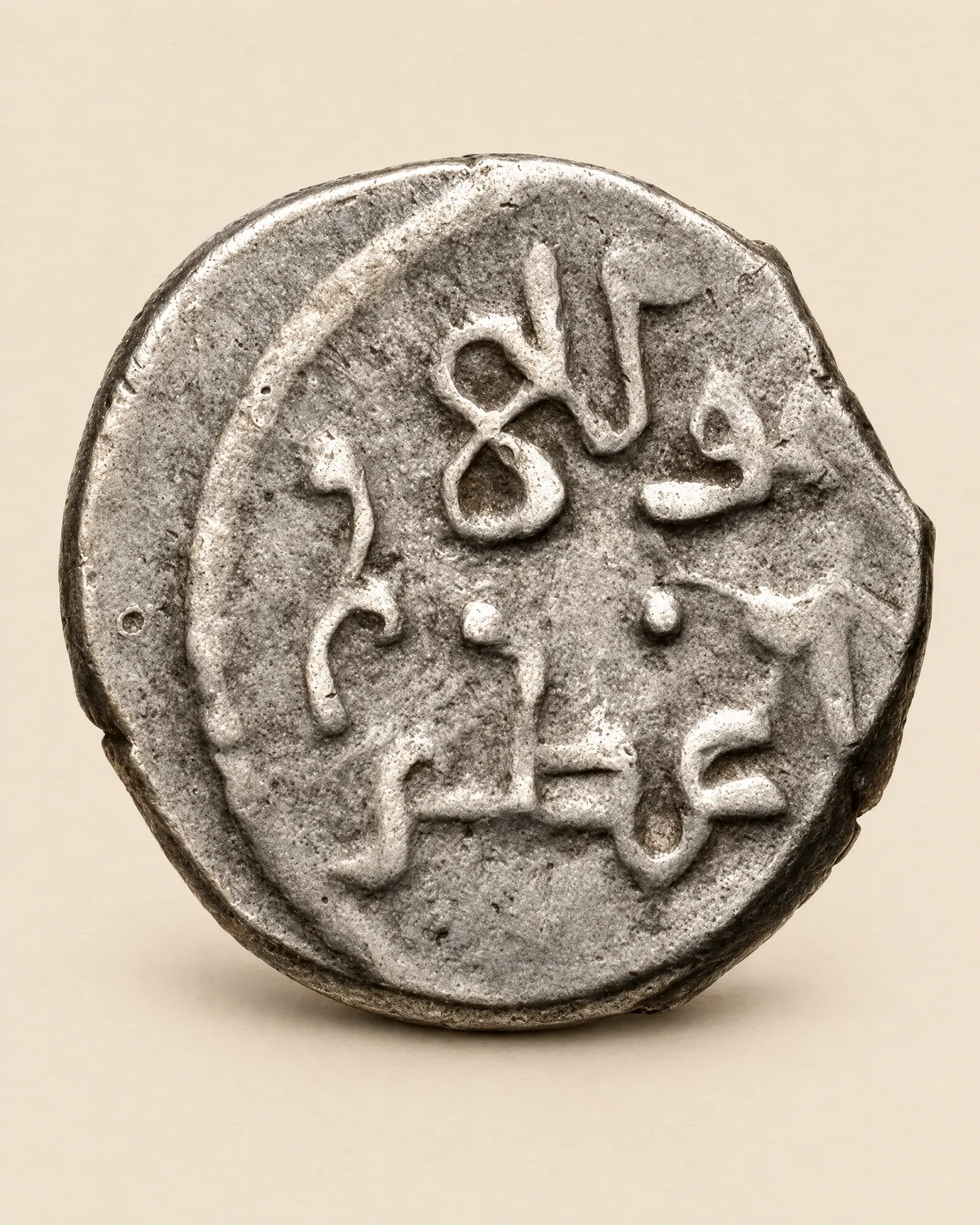
‘Ala’ al-Din Muhammad III (c. 1212–1255) was the seventh lord of Alamut and is counted by the Nizari Ismailis as their twenty-sixth Imam. He came to power as a nine-year-old in 1221 and ruled for thirty-four years. His reign covered the Mongol conquest of Central Asia and eastern Iran, the flight of scholars to Nizari territory, among them Nasir al-Din Tusi, and the formulation of the Nizari doctrine of satr, or concealment. It ended with his murder in December 1255, weeks before Hülegü’s army entered Iran.1
Accession as a child
His father, Jalal al-Din Hasan III, died in Ramadan 618 / November 1221. The vizier accused Hasan’s Sunni wives and his sister of poisoning him and had them executed. Muhammad, then nine, succeeded him, and the vizier governed as regent. His mother was a Gilani princess, the sister of Kayka’us b. Shahanshah of Kutum.2
The policy of satr
Daftary notes that Hasan III’s Sunni policies were never formally repudiated under Muhammad III, but they were gradually relaxed. The Nizaris returned to their own traditions, and the doctrine of satr was worked out to explain the changes since 1164.3
The Rawdat al-taslim, completed in 640/1243 and closely associated with Tusi, set out the doctrine. The Qiyama had been a temporary condition. Observing the shari’a was a form of taqiyya, and Hasan III’s Sunnism had been a return to taqiyya and satr. Every Imam was potentially an imam-qa’im. History alternated between eras of concealment and eras of manifestation, leading to a final Great Resurrection (qiyamat-i qiyamat). In times of satr the full truth was limited to the hujja.4
A refuge for scholars
The Mongol invasions made the Nizari territories, especially Quhistan, a refuge. Scholars and others fleeing the Mongols, Sunni ’ulama among them, came to the Nizari towns and castles. The muhtasham Shihab al-Din treated them so generously that there were complaints to Alamut. The geographer and historian Minhaj al-Din Juzjani visited Quhistan three times between 621/1224 and 623/1226.5
The most famous of these scholars was Tusi, who entered the service of the Quhistani muhtasham Nasir al-Din ’Abd al-Rahim around 624/1227. He wrote the Akhlaq-i Nasiri there in 633/1235 and later moved to Alamut. After 1256 Tusi and others claimed that they had been held against their will. Daftary finds no evidence that the scholars were detained or coerced, and considers it safe to say that Tusi had willingly embraced Ismailism.6
Khwarazmians and neighbours
The early years of the reign were taken up with the Khwarazmshah Jalal al-Din, who was rebuilding his power in western Iran. When the Khwarazmian vizier Sharaf al-Mulk, on Jalal al-Din’s orders, had five fida’is burned alive, Alamut demanded compensation of 10,000 dinars for each. Instead the tribute Alamut paid to the Khwarazmians was reduced by 10,000 dinars a year for five years.7
Around 619/1222 the Nizaris took Damghan and recovered forts in Qumis. In 625/1228 Alamut sheltered Özbeg’s son Malik Khamush and Jalal al-Din’s brother Ghiyath al-Din. Al-Nasawi, Jalal al-Din’s secretary, visited Alamut as envoy and met Muhammad III and his vizier ’Imad al-Din, who gave him lavish gifts.8
Muhammad III gave an annual grant of 500 gold dinars to the Sufi shaykh Jamal al-Din Gili of Qazwin (d. 651/1253) and kept peace with Qazwin. The execution of Hasan III’s Gilani wives caused tension with the Caspian rulers.9
Syria
In Syria the chief da’is of these decades are known mostly from inscriptions at Masyaf and Kahf. In 624/1227 envoys of the emperor Frederick II brought gifts worth some 80,000 dinars to the Syrian chief da’i Majd al-Din. The Syrian Nizaris paid tribute to the Hospitallers and Templars. In Safar 648 / May 1250 they exchanged envoys and gifts with Louis IX at Acre.10
Against the Mongols
Muhammad III tried diplomacy against the Mongols. In 1238 Nizari envoys travelled with those of the Abbasid caliph al-Mustansir to the kings of France and England to seek an alliance against the Mongols, without result. In 644/1246 a Nizari mission led by the Quhistani muhtashams Shihab al-Din and Shams al-Din attended the enthronement of the Great Khan Güyük and was dismissed with contempt.11 The Mongol commander Eljigidei was ordered to use two of every ten soldiers against rebels, beginning with the Ismailis.11
After Möngke became Great Khan in 1251 he received further complaints. Among them was one from Shams al-Din, a chief qadi of Qazwin. William of Rubruck, who was in Mongolia in 1254, heard that fida’is had been sent to kill Möngke. In 650/1252 Möngke put his brother Hülegü in charge of the campaign against the Nizaris and the Abbasids.12
The advance guard
An advance army of 12,000 under the Nestorian Christian Ket-Buqa set out in Jumada II 650 / August 1252 and crossed the Oxus in Muharram 651 / March 1253. It took castles in Quhistan. In Rabi’ I 651 / May 1253 Ket-Buqa laid siege to Girdkuh with about 5,000 men and built siege walls around it.13
In Shawwal 651 / December 1253 a night sortie from Girdkuh killed a hundred Mongols, among them the officer Buri. When cholera broke out among the defenders in the summer of 652/1254, Alamut sent reinforcements. Ket-Buqa had meanwhile pillaged and seized Tun and Turshiz in Quhistan, at least temporarily, in Jumada I 651 / July 1253.13
Isolation and murder
The Persian historians describe Muhammad III as suffering from melancholia and gradually withdrawing from the Nizari leaders, many of whom wanted to submit to the Mongols, while he himself continued to defy them. His relations with his eldest son, Rukn al-Din Khurshah, who had received the nass as a child, also deteriorated. According to these historians, some leaders planned to replace him with Khurshah so that negotiations could begin.14
Before the plan could be carried out Khurshah fell ill. On the last day of Shawwal 653 / 1 December 1255, Muhammad III, who had always liked shepherding, was found murdered in a hut beside his sheepfold at Shirkuh near Alamut. Several suspects were executed before the killer was found to be Hasan-i Mazandarani, the Imam’s favourite and constant companion, whom he had injured. Hasan’s wife, a former concubine of Muhammad III, revealed the secret to Khurshah, and Hasan and several others were put to death.15
Footnotes
-
Farhad Daftary, The Isma’ilis: Their History and Doctrines, 2nd ed. (Cambridge University Press, 2007), pp. 377–392; Farhad Daftary, Historical Dictionary of the Ismailis (Scarecrow Press, 2012), appendix “Nizari Imams”. ↩
-
Daftary, The Isma’ilis, pp. 375, 377. ↩
-
Daftary, The Isma’ilis, p. 378. ↩
-
Daftary, The Isma’ilis, pp. 380–382. ↩
-
Daftary, The Isma’ilis, pp. 378, 383. ↩
-
Daftary, The Isma’ilis, pp. 378–379. ↩
-
Daftary, The Isma’ilis, pp. 386–387. ↩
-
Daftary, The Isma’ilis, pp. 384, 386–387. ↩
-
Daftary, The Isma’ilis, pp. 387–388. ↩
-
Daftary, The Isma’ilis, pp. 389–390. ↩
-
Daftary, The Isma’ilis, p. 388. ↩
-
Daftary, The Isma’ilis, pp. 391–392. ↩
-
Daftary, The Isma’ilis, p. 392. ↩