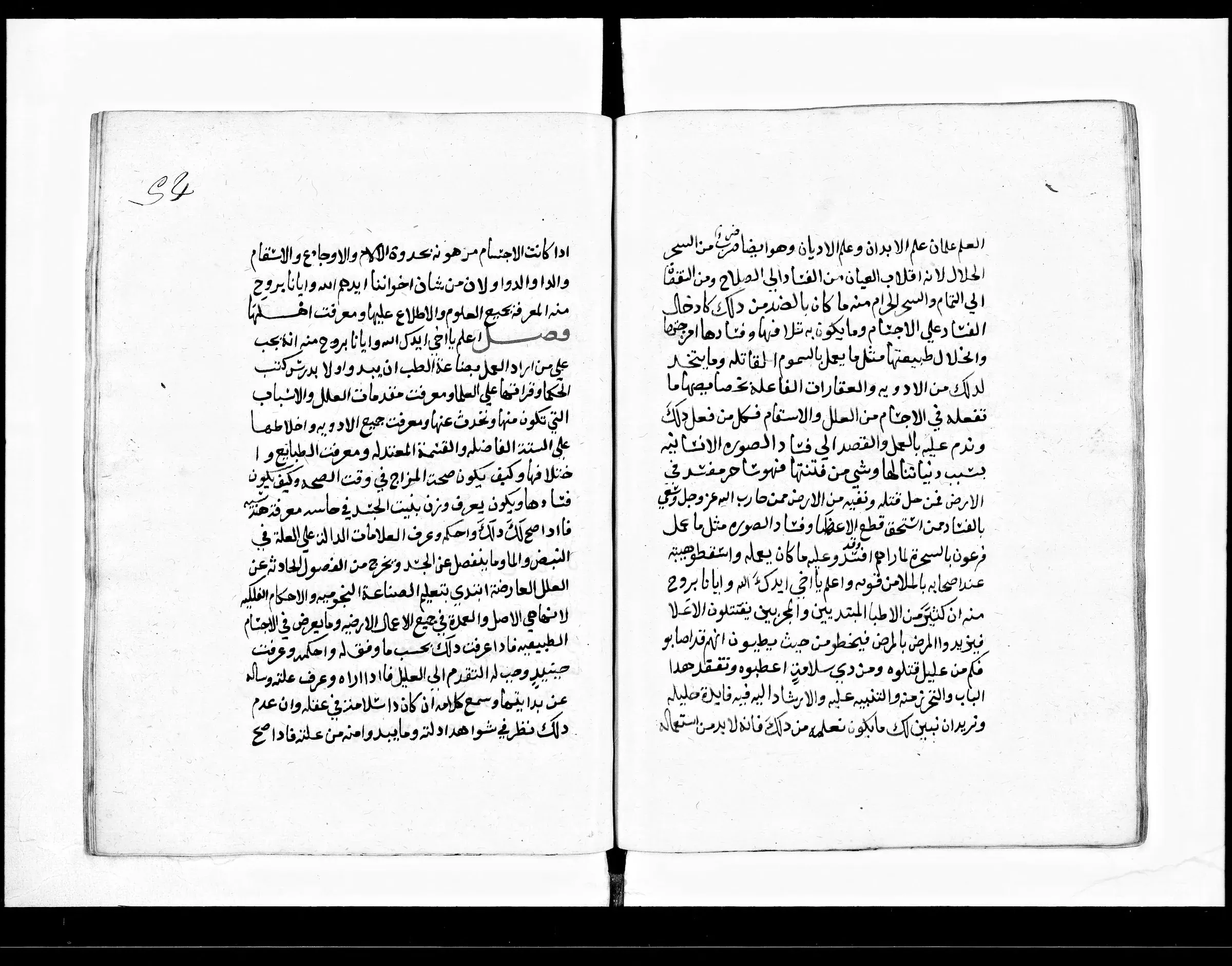
Ismaili history is unusually hard to reconstruct. For most of their history the Ismailis were a persecuted minority, and for long periods they kept their beliefs and books hidden. Much of what outsiders wrote about them for a thousand years came from their enemies. The modern field of Ismaili studies began only in the 1930s, when manuscripts preserved inside Ismaili communities became available to scholars. This page explains which sources survive, why they are uneven, and how Ismaili.com uses them.1
Why the record is uneven
The early Ismailis worked as a secret mission, the da’wa, against the Abbasid caliphate. Their Imams lived in hiding during the period of concealment before 909, and the movement’s members practised taqiyya, precautionary concealment of belief. As a result the pre-Fatimid phase, and the very beginning of Ismailism, remain obscure for lack of reliable information.2
Ismaili historical writing was also shaped by the structure of the da’wa itself. Ismaili authors were mostly da’is, scholars and officials who wrote doctrine, law and philosophy for initiates rather than chronicles for the public. Their books circulated in manuscript within the community and were often guarded as secret. Daftary writes of a general absence of an Ismaili historiographical tradition, with two exceptions: the Fatimid and Alamut periods, when the Ismailis had states and dynasties whose achievements needed recording.3
The fate of the major Ismaili libraries deepened the gaps. The Sunni Ayyubids who succeeded the Fatimids in 1171 systematically destroyed the Fatimid libraries, including the collections of the Dar al-Ilm in Cairo, and persecuted the Ismailis of Egypt. The chronicles kept in the libraries of Alamut and other Nizari castles perished in the Mongol invasions of the 1250s or soon after (see the Alamut library).4
Ismaili sources that survive
The oldest surviving Ismaili history is the Iftitah al-da’wa (“Commencement of the Mission”) of al-Qadi al-Nu’man, completed in 957 (346 AH). It covers the background to the establishment of the Fatimid state in North Africa. Fatimid authors also wrote biographies and memoirs of great historical value: the Kitab al-munazarat of the da’i Ibn al-Haytham, with unique details on the first year of Fatimid rule in Ifriqiya; the Sira of Ja’far ibn Ali, chamberlain to the first Fatimid caliph-Imam al-Mahdi; the Sira of Ustadh Jawdhar (d. 973), who served the first four Fatimid caliph-Imams; and the autobiography of al-Mu’ayyad al-Shirazi (d. 1078), chief da’i in Cairo for almost twenty years. The Istitar al-imam of the da’i al-Nisaburi relates the settlement of the early Imam Abd Allah al-Akbar in Salamiyya and the journey of Abd Allah al-Mahdi from Syria to North Africa, where he was installed as caliph in 909.5
Many histories of the Fatimid dynasty were written in its own time, especially after the seat of the state moved to Cairo in 973, by Ismaili and non-Ismaili authors such as Ibn Zulaq (d. 996), al-Musabbihi (d. 1029) and al-Quda’i (d. 1062). Apart from a few fragments, none survived the end of the dynasty.6
After the Nizari-Musta’li schism of 1094 the two branches preserved different parts of the heritage. The Tayyibi Musta’lians of Yemen, and later the Bohras of India, kept a large portion of Fatimid Arabic literature. The 19th Tayyibi da’i mutlaq in Yemen, Idris Imad al-Din (d. 1468), wrote the seven-volume Uyun al-akhbar, the only general history of Ismailism by a medieval Ismaili author, covering the period from the beginning to the mid-twelfth century. His Nuzhat al-afkar and Rawdat al-akhbar continue the history of the Tayyibi da’wa to 1465. Later Bohra histories include the Muntaza’ al-akhbar of Qutb al-Din Burhanpuri (d. 1826) and the Mawsim-i bahar of Muhammad Ali Rampuri (d. 1897).7
The Nizaris of the Alamut period kept their own chronicles: the Sargudhasht-i Sayyidna, a biography of Hasan-i Sabbah, and the Kitab-i Buzurg-Umid, a chronicle of his successors, along with works by Dihkhuda Abd al-Malik Fashandi and Ra’is Hasan Birjandi. None survives independently. They are known because three Persian historians of the Mongol era used them: Juvayni (d. 1283), Rashid al-Din Fadl Allah (d. 1318) and Abu’l-Qasim Kashani (d. c. 1335). Later Persian historians such as Hamd-Allah Mustawfi and Hafiz-i Abru (d. 1430) drew on the same material.8
From the post-Alamut centuries, the Persian Nizari tradition survives in works by authors such as Abu Ishaq Quhistani and Khayrkhwah-i Harati. The first general history written by a Nizari in modern times is the Hidayat al-mu’minin al-talibin of Muhammad ibn Zayn al-Abidin Fida’i Khurasani (d. 1923).9
In South Asia, the Nizari Khojas preserved a different kind of source: the ginans, devotional hymns attributed to the pirs and recorded mainly in the Khojki script. They are a central source for the Satpanth tradition, but most were written down long after their supposed composition and are hard to date. Historians use them with care, alongside the legal record of cases such as the Aga Khan Case of 1866.10
Hostile sources and the “black legend”
Most medieval Muslim writing about the Ismailis was polemical. In the first half of the tenth century a Sunni polemicist in Baghdad, Ibn Rizam, wrote a treatise against them. It was taken up by the Sharif Akhu Muhsin around 982 and survives in quotations by the later historians al-Nuwayri, Ibn al-Dawadari and al-Maqrizi. This tradition presented Ismailism as a conspiracy to destroy Islam and attributed it to a non-Alid founder.11
The polemicists also circulated forged texts. The best known is the Kitab al-siyasa (“Book of Policy”), which claims to set out a secret Ismaili initiation in seven stages leading to unbelief. Heresiographers, who wrote catalogues of “sects”, repeated these claims. By the tenth century, Daftary writes, a “black legend” of Ismailism had taken shape that was widely accepted in Sunni literature.12
The Nizaris of Persia attracted a second wave of polemic. The Saljuq vizier Nizam al-Mulk devoted a chapter of his Siyasat-nama to the Ismailis. The theologian al-Ghazali wrote the Fada’ih al-Batiniyya (“The Infamies of the Batinis”) at the request of the Abbasid caliph al-Mustazhir, attacking the Nizari doctrine of authoritative teaching (ta’lim).13
Crusader legends
In Syria the Nizaris came into contact with the Crusaders. Some Muslim sources applied to the Syrian Nizaris the abusive term hashishiyya. Daftary and other scholars read it as a term of contempt meaning “low-class rabble”, not as evidence that the Nizaris used hashish. Crusader writers turned the word into “Assassins”, and from the twelfth century European authors told stories about the Nizari leader in Syria, whom they called the “Old Man of the Mountain”.14
These stories grew in the hands of chroniclers such as Arnold of Lubeck (d. 1212) and James of Vitry (d. 1240). Marco Polo’s account of a secret garden of paradise in which a leader drugged and trained young men combined them into one narrative. Modern scholars treat these as legends formed outside the Nizari community from rumour and misunderstanding (see the Assassins legend).15
Orientalist scholarship
European study of the Ismailis began in the early nineteenth century, still based mainly on hostile Muslim and Crusader sources. The orientalists led by Antoine Isaac Silvestre de Sacy (1758-1838) correctly identified the Ismailis as a Shia Muslim community, but they had only hostile Sunni sources and Crusader tales to work from, and so lent their authority to the medieval myths. De Sacy’s memoir on the dynasty of the Assassins and the etymology of their name appeared in 1818. In 1818 Joseph von Hammer-Purgstall published Die Geschichte der Assassinen, translated into English in 1835. It repeated the medieval legends and remained the standard Western account until the 1930s.16
A few nineteenth-century scholars worked more critically. Charles Defremery published new research on the Syrian Ismailis in 1854-55, and Michael Jan de Goeje a study of the Qarmatis of Bahrayn and the Fatimids (2nd ed. 1886). Stanislas Guyard published fragments of Syrian Nizari manuscripts that had reached Paris. Paul Casanova linked the encyclopaedia of the Ikhwan al-Safa to the Ismailis. In 1922 Louis Massignon published his “Esquisse d’une bibliographie Qarmate”.17
The modern recovery of Ismaili texts
The breakthrough came with the recovery of genuine Ismaili texts on a large scale, manuscripts preserved in scattered private collections. Modern scholarship was initiated in the 1930s in India, where large collections are kept within the Tayyibi Bohra community. Its pioneers were Wladimir Ivanow (1886-1970) and a few Bohra scholars, notably Asaf A. A. Fyzee (1899-1981), Husayn F. al-Hamdani (1901-62) and Zahid Ali (1888-1958).18
Ivanow published his Guide to Ismaili Literature in 1933, the first detailed catalogue of Ismaili works. In 1946 he helped found the Ismaili Society in Bombay, which published texts and studies. By 1963, when he issued a revised edition of the catalogue, many more sources had been found and many texts were being critically edited. Henry Corbin published Persian Nizari texts in his Bibliotheque Iranienne series. In Egypt Muhammad Kamil Husayn (1901-61) edited Fatimid texts, and in Syria Arif Tamir (1921-98), of the small Muhammad-Shahi community, made Syrian Ismaili texts available to scholars.19
Marshall Hodgson’s The Order of Assassins (1955) applied the new sources to the Nizari state. Ismail K. Poonawala’s Biobibliography of Isma’ili Literature (1977) identified some 1,300 titles by more than 200 authors. The Institute of Ismaili Studies, founded in London in 1977, holds Arabic and other Ismaili manuscript collections described in published catalogues (1984, 2000).2021
How this site uses the sources
Ismaili.com relies first on modern academic syntheses built on the recovered Ismaili sources, especially the work of Farhad Daftary and the articles of the Encyclopaedia Iranica. Institutional statements by the Ismaili Imamat and its agencies are cited as such. Hostile medieval sources are cited as evidence of what opponents claimed, not of what Ismailis believed.22
Where sources disagree, the site says so and names the positions. Examples include the genealogy of the hidden Imams before 909, which scholars have reconstructed in several ways; the dates of Imams of the post-Alamut period, many of which are approximate; and the numbering of the Imams. In early Ismaili reckoning Ali was the first Imam; later Ali was treated as the asas and al-Hasan as the first Imam; the Nizaris count Ali as first and al-Husayn as second, treating al-Hasan as a trustee Imam. The site follows the Nizari numbering, in which Aga Khan III was the 48th Imam and Aga Khan IV the 49th (see the Imamat).23
Dates are given in the Common Era, with the hijri year where the source gives it. Names and terms follow a simplified transliteration without diacritics. The glossary defines technical terms, and every factual statement on the site is footnoted to a source a reader can check.24
Footnotes
-
Farhad Daftary, The Isma’ilis: Their History and Doctrines, 2nd ed. (Cambridge University Press, 2007), Introduction, pp. 1-4; Farhad Daftary, “Isma’ilism i. Isma’ili Studies”, Encyclopaedia Iranica (2007), https://www.iranicaonline.org/articles/ismailism-i-ismaili-studies/. ↩
-
Daftary, The Isma’ilis, p. 2; Daftary, “Isma’ilism ii. Isma’ili Historiography”, Encyclopaedia Iranica (2007), https://www.iranicaonline.org/articles/ismailism-ii-ismaili-historiography/. ↩
-
Daftary, “Isma’ili Historiography”, Encyclopaedia Iranica; Daftary, The Isma’ilis, Introduction, “Ismaili historiography”, pp. 4-7. ↩
-
Daftary, “Isma’ili Historiography”, Encyclopaedia Iranica, sections on the Fatimid and Alamut periods. ↩
-
Daftary, “Isma’ili Historiography”, Encyclopaedia Iranica, section on the Fatimid period. ↩
-
Daftary, “Isma’ili Historiography”, Encyclopaedia Iranica, section on the Fatimid period. ↩
-
Daftary, The Isma’ilis, p. 3; Daftary, “Isma’ili Historiography”, Encyclopaedia Iranica, section on Tayyibi historiography. ↩
-
Daftary, “Isma’ili Historiography”, Encyclopaedia Iranica, section on the Nizari Alamut period; Daftary, The Isma’ilis, ch. 6, “Alamut historiography”, pp. 303ff. ↩
-
Daftary, “Isma’ili Historiography”, Encyclopaedia Iranica, section on post-Alamut Nizari historiography. ↩
-
Daftary, The Isma’ilis, ch. 7, pp. 409, 442-447; Daftary, “Isma’ili Studies”, Encyclopaedia Iranica. ↩
-
Daftary, “Isma’ili Studies”, Encyclopaedia Iranica; Daftary, The Isma’ilis, Introduction, “Anti-Ismaili writings”, pp. 7-10. ↩
-
Daftary, “Isma’ili Studies”, Encyclopaedia Iranica; Daftary, The Isma’ilis, Introduction, pp. 7-10. ↩
-
Daftary, “Isma’ili Studies”, Encyclopaedia Iranica; Daftary, The Isma’ilis, Introduction, pp. 7-10. ↩
-
Daftary, The Isma’ilis, Introduction, pp. 10-12; Daftary, “Isma’ili Studies”, Encyclopaedia Iranica. ↩
-
Daftary, “Isma’ili Studies”, Encyclopaedia Iranica; Daftary, The Isma’ilis, Introduction, “Medieval European perceptions”, pp. 10-22. ↩
-
Daftary, The Isma’ilis, Introduction, “Orientalist studies”, pp. 22-30; Daftary, “Isma’ili Studies”, Encyclopaedia Iranica. ↩
-
Daftary, “Isma’ili Studies”, Encyclopaedia Iranica; Daftary, The Isma’ilis, Introduction, pp. 22-30. ↩
-
Daftary, “Isma’ili Studies”, Encyclopaedia Iranica; Daftary, The Isma’ilis, Introduction, “Modern progress”, pp. 30-33. ↩
-
Daftary, “Isma’ili Studies”, Encyclopaedia Iranica; Daftary, The Isma’ilis, p. 32. ↩
-
Daftary, “Isma’ili Studies”, Encyclopaedia Iranica, bibliography (A. Gacek, Catalogue of Arabic Manuscripts in the Library of The Institute of Ismaili Studies, 1984; D. Cortese, Ismaili and other Arabic Manuscripts, 2000); Daftary, The Isma’ilis, p. 503. ↩
-
Daftary, “Isma’ili Studies”, Encyclopaedia Iranica; Daftary, The Isma’ilis, pp. 32, 503. ↩
-
Daftary, The Isma’ilis, Introduction, pp. 1-33; Daftary, Historical Dictionary of the Ismailis (Scarecrow Press, 2012), Introduction. ↩
-
Daftary, The Isma’ilis, pp. 97-107 (hidden Imams), 507 (numbering), 509-510 (lists); Azim Nanji, “Isma’ilism xvii. The Imamate in Isma’ilism”, Encyclopaedia Iranica (2007), https://www.iranicaonline.org/articles/ismailism-xvii-the-imamate-in-ismailism/. ↩
-
Dual hijri and Common Era dating follows the practice of Daftary, The Isma’ilis, e.g. pp. 2-3; Daftary, Historical Dictionary of the Ismailis, Introduction. ↩