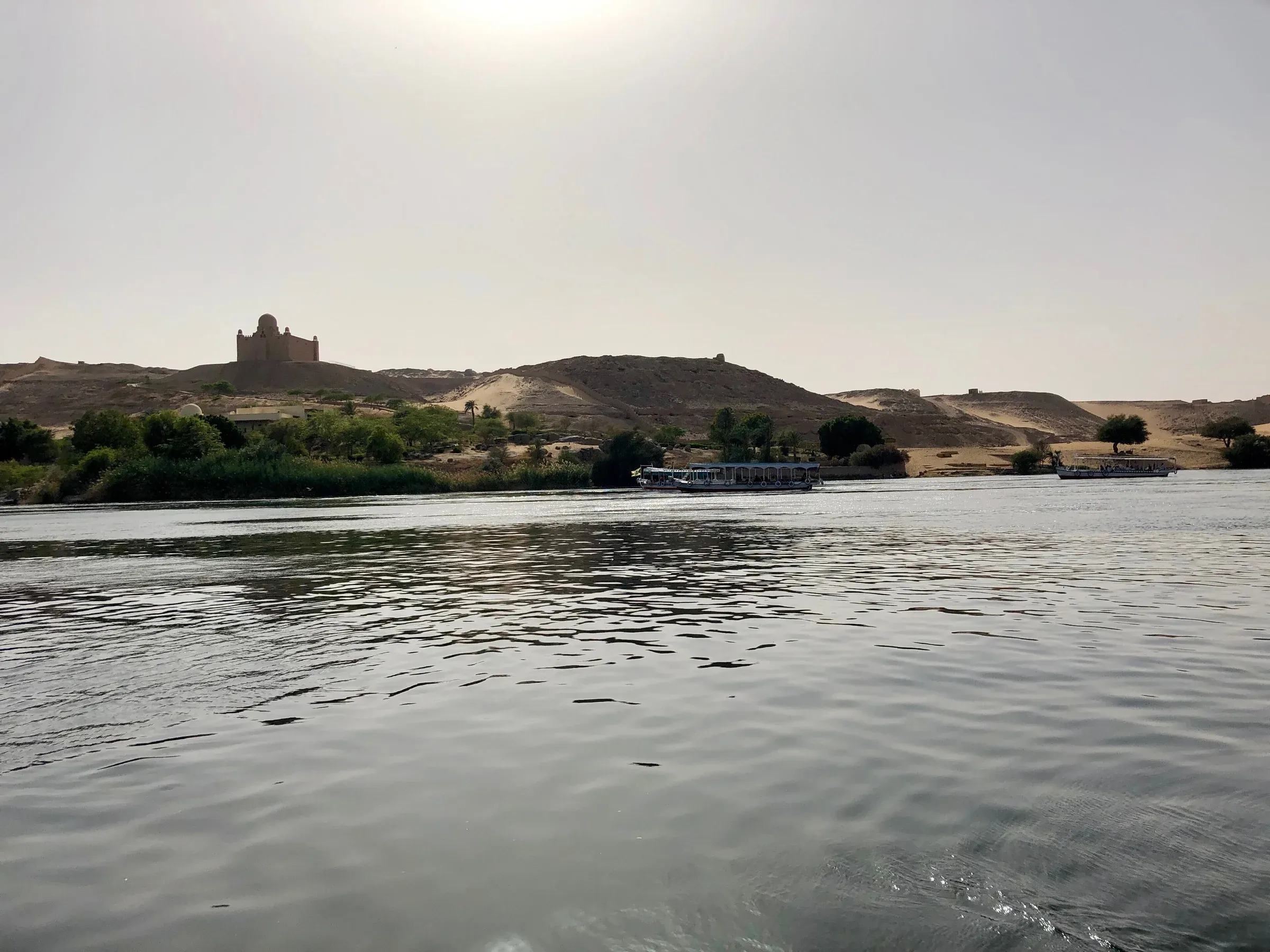
The Imamate is the central institution of Ismaili Islam. Like all major Shia groups, the Ismailis believe that the Imamate is divinely sanctioned and guided, and that it exists to complement prophethood: the Imam guides believers in the practice of their faith and in understanding both the outer and inner dimensions of the Quran. Ismaili history is in large part the history of disputes over who the rightful Imam was, and every major Ismaili branch is defined by the line of Imams it follows. The Nizari Ismailis use the term Imamat for the office and institution of their living Imam.1
Shia origins of the doctrine
The doctrine rests on the Shia belief that the Prophet Muhammad designated his cousin and son-in-law Ali ibn Abi Talib as his successor. Shia of all branches cite Quranic verses and hadiths, but their central evidence is the event of Ghadir Khumm. On 18 Dhu’l-Hijja 10 AH (16 March 632), returning from his Farewell Pilgrimage, the Prophet stopped at a site of that name between Mecca and Medina and, taking Ali by the hand, said: “He of whom I am the master (mawla), of him Ali is also the master.” For the Shia this was a designation, or nass, made by divine command.2
After Ali, the Imamate is held to pass by heredity through the descendants of Ali and the Prophet’s daughter Fatima, with each Imam designating his successor. Acceptance of the Imamate is linked to walaya, devotion to the Imams. Because succession depends on designation by the Imam of the time, disagreements over a designation could split the community, and they did so repeatedly.3
The doctrine in Ismaili thought
The most systematic legal statement of the doctrine is in the Da’a’im al-Islam of al-Qadi al-Nu’man (d. 974), the chief jurist of the Fatimid state. Al-Nu’man treats walaya as the foremost of the pillars of Islam. Citing Quran 49:14, he distinguishes islam (submission) from iman (faith): one may be a Muslim without being a mu’min, a believer, and true faith implies devotion to the rightful Imam. He argues that earlier prophets also designated legatees (wasi), so that the Imamate continues divine guidance after prophethood until the Day of Judgment.4
Fatimid philosophers gave the doctrine a philosophical form. Hamid al-Din al-Kirmani (d. c. 1021), a da’i under the caliph-Imam al-Hakim, described the Imam as the interpreter who gives each element of revelation its proper place, so that individuals and society reach equilibrium in material and spiritual matters. He identified justice (’adl) with that equilibrium.5
Persian Ismaili writers, notably Nasir-i Khusraw (d. after 1070) and Nasir al-Din Tusi (d. 1274), linked the Imamate to the attainment of knowledge. Knowledge in the full sense, they held, came through the teaching (ta’lim) of the Imam. It covered both the zahir, the outward practice of Islam, and the batin, the inner meaning or haqa’iq of revelation, reached through ta’wil, symbolic interpretation. In his autobiography Sayr wa suluk, Tusi argued that a seeker eventually recognises the need for an authoritative teacher, and that a truthful guide may express the truth or institute the law differently as the circumstances of the world change.6
Nanji describes a resulting Ismaili view of history in which periods of quiescence and concealment alternate with periods of open engagement with the world, and in which the Imam of the time adapts institutions to changing circumstances. This idea of the Imamate’s adaptability recurs in Ismaili writing from the Fatimid period to the modern constitutions of the Nizari community.7
Counting the Imams
The numbering of the Imams differs between traditions. In early Ismaili reckoning Ali was counted as the first Imam. Later, Ali was regarded as the asas, the “foundation” of the Imamate, standing above the Imams, and al-Hasan was counted first. The Nizaris count Ali as the first Imam and al-Husayn as the second, treating Ali’s elder son al-Hasan as a mustawda’, or trustee Imam, whose role was custodial until al-Husayn took up the Imamate. Ismaili.com follows the Nizari numbering.8
The early Imams, 632-765
After Ali’s death in 661, the Ismailis recognise his son al-Husayn as inheriting the full authority of the Imamate. After al-Husayn was killed at Karbala in 680, the Imamate passed to his son Ali Zayn al-Abidin, then to Muhammad al-Baqir and Ja’far al-Sadiq, who died in 765 (148 AH). None of these Imams held political power, but Nanji notes that it was around their Imamate that Shia identity within the Muslim community took shape (see Origins).9
The Ismailis emerged from the dispute over al-Sadiq’s succession. One group of his followers came to recognise his son Musa al-Kazim and became, in time, the Imami or Twelver Shia. Others recognised another son, Isma’il, and his descendants, beginning with his son Muhammad ibn Isma’il. The name “Ismaili” derives from this allegiance (see the succession of Isma’il).10
Concealment and the Fatimid caliph-Imams, 765-1094
The Imams between Muhammad ibn Isma’il and the first Fatimid caliph lived in hiding to escape Abbasid persecution, a period the Ismailis call the dawr al-satr, the “period of concealment”. One of them, Abd Allah al-Akbar, settled in Salamiyya in Syria, which became the secret headquarters of the da’wa. Their identities and genealogy are among the most debated questions in Ismaili history (see the Concealment and dawr al-satr).11
In 899 (286 AH) the leader at Salamiyya, the future caliph Abd Allah al-Mahdi, claimed the Imamate openly for himself and his ancestors. Part of the da’wa refused to accept the claim and continued to await the return of Muhammad ibn Isma’il as the Mahdi; these dissidents are known as the Qarmatis. The da’wa loyal to al-Mahdi became the Fatimid Ismailis.12
The Imamate became public with the proclamation of al-Mahdi as caliph in North Africa in 909 (297 AH). For the next 185 years the Ismaili Imams ruled as Fatimid caliphs, first in Ifriqiya and from 973 in Cairo. Nanji describes the period as one of intellectual, cultural and economic flowering, in which the Imams’ authority was acknowledged across much of the Muslim world and Ismaili communities spread from North Africa to Central and South Asia.13
The split of 1094 and the Musta’li line
The death of the eighth Fatimid caliph and 18th Imam, al-Mustansir, in 1094 (487 AH), produced the deepest division in Ismaili history. Al-Mustansir’s eldest son Nizar had been his designated heir, but the vizier al-Afdal installed a younger son, Ahmad, as al-Musta’li. Nizar rose in revolt and was defeated and killed in 1095. The Fatimid establishment in Cairo, and the communities dependent on it, recognised al-Musta’li; the Ismailis of Persia, followed by those of Syria, upheld Nizar’s Imamate (see the Nizari-Musta’li split).14
The Musta’li line continued with al-Musta’li’s son al-Amir (r. 1101-30). After al-Amir’s murder in 1130 the Musta’lis divided again. The Hafizis acknowledged the later Fatimid caliphs as their Imams and disappeared after the dynasty ended in 1171. The Tayyibis held that al-Amir’s infant son al-Tayyib was the rightful Imam and had gone into concealment, and that the Imamate continues in his line, hidden from view. In the Imam’s absence, authority among the Tayyibis rests with a vicegerent, the da’i mutlaq. Al-Tayyib is counted by the Tayyibis as their 21st Imam, and the Daudi Bohras recite the names of their twenty-one manifest Imams at the end of every prayer (see Musta’li-Tayyibi Bohras).15
The Nizari Imams at Alamut, 1094-1256
Nizar’s successors founded the Nizari Imamate, linked to a state in Persia and Syria centred on the fortress of Alamut. During the first decades the Imams were hidden and the community was led by the lords of Alamut, beginning with Hasan-i Sabbah, as their hujja or representatives (see Alamut).16
On 17 Ramadan 559 (August 1164) Hasan ala dhikrihi’l-salam, the fourth lord of Alamut, proclaimed the qiyama, or spiritual resurrection, at Alamut. Nizari tradition holds that Hasan was himself the Imam, and the Nizaris count him as the 23rd. His successors at Alamut ruled openly as Imams until the Mongols destroyed the Nizari state in 1256 (see the qiyama).17
After Alamut, 1256-1840s
After the fall of Alamut the Imamate continued in Persia. The Imams kept a discreet profile, often under taqiyya, and guided scattered communities in Persia, Syria, Central Asia and South Asia through representatives. On the death of the Imam Shams al-Din Muhammad around 1310, the Nizaris divided into the Qasim-Shahi and Muhammad-Shahi lines. The Syrian Nizaris adhered almost entirely to the Muhammad-Shahi Imams for several centuries; a small Muhammad-Shahi community still exists in Syria. The modern Nizari Imams, the Aga Khans, descend from the Qasim-Shahi line (see the Muhammad-Shahi/Qasim-Shahi split).18
The first two post-Alamut centuries are obscure: the Imams lived in hiding and the scattered communities developed under local leaders. By the middle of the fifteenth century the Qasim-Shahi Imams had emerged at Anjudan in central Persia, beginning the Anjudan revival in da’wa and literary activity, a period of some two centuries in which the Imams reasserted their central authority (see the Anjudan revival). By the eighteenth century the seat of the Imamate was at Kerman; in 1780 the 45th Imam, Shah Khalil Allah, moved it to Kahak near Mahallat, and later to Yazd.19
The modern Imamat
The modern period, from the mid-nineteenth century, is marked by the move of the Imamate from Persia to India and then to Europe. Shah Khalil Allah’s son, Hasan Ali Shah (1804-81), was the last Nizari Imam to live in Iran and the first to bear the title Aga Khan. After a conflict with the Qajar state he left Persia and arrived in Bombay in January 1846. He organised the community from Bombay, where he died in April 1881. He was succeeded by his eldest son, Aqa Ali Shah, Aga Khan II (see Persia to Bombay and the Aga Khan title).20
The Imam’s position among the Khojas of India was tested in court. In the Aga Khan Case, decided by the Bombay High Court in November 1866, Justice Arnould ruled that the Khojas were “Shia Imami Ismailis” and recognised the Aga Khan as their spiritual head.21
Sultan Muhammad Shah, Aga Khan III, born in Karachi in 1877, was Imam for more than seventy years until his death in Switzerland on 11 July 1957. He served a term as president of the League of Nations Assembly in 1937. The succession passed not to his eldest son, Aly Khan, but to Aly Khan’s son, Prince Karim, Aga Khan IV (b. 1936); the Nanji article, written in 2007, names him as the 49th Imam in direct descent from the Prophet through Ali and Fatima. Aga Khan IV died in Lisbon on 4 February 2025; by his will his eldest son, Rahim, succeeded him as Aga Khan V, the 50th Imam (see the Present).22
Under Aga Khan III and Aga Khan IV the Imamat built new institutions for the governance, social development and religious life of Nizari communities in some thirty countries. A constitution promulgated in 1986 established a uniform system of councils for Nizari jamats worldwide (see the Ismaili constitution). The Aga Khan Foundation was founded in 1967, and the agencies of the Aga Khan Development Network work in parts of Africa and Asia among populations regardless of origin, gender or religion. The Institute of Ismaili Studies was founded in London in 1977.23
One institution, several lines
The branches of Ismailism share the doctrine of the Imamate but give allegiance to different lines of Imams. For the Nizaris the Imam is present and living, the hazir imam. For the Tayyibi Musta’lis the Imam is hidden and his authority is exercised by a da’i. The Druze religion arose from a division among the Fatimid da’is late in the reign of the caliph-Imam al-Hakim (d. 1021); it introduced so many doctrinal innovations that Daftary treats it as falling outside Ismailism and Shia Islam (see the Druze and branches of Ismailism).24
Footnotes
-
Azim Nanji, “Isma’ilism xvii. The Imamate in Isma’ilism”, Encyclopaedia Iranica (2007), https://www.iranicaonline.org/articles/ismailism-xvii-the-imamate-in-ismailism/, introduction; Farhad Daftary, The Isma’ilis: Their History and Doctrines, 2nd ed. (Cambridge University Press, 2007), pp. 1-3. ↩
-
Daftary, The Isma’ilis, p. 39; Nanji, “The Imamate in Isma’ilism”, “The principle of the Imamate”. ↩
-
Nanji, “The Imamate in Isma’ilism”, “The principle of the Imamate”; Daftary, The Isma’ilis, pp. 1-3. ↩
-
Nanji, “The Imamate in Isma’ilism”, “The principle of the Imamate” (on al-Nu’man’s Da’a’im al-Islam). ↩
-
Nanji, “The Imamate in Isma’ilism”, “The principle of the Imamate” (on al-Kirmani’s Rahat al-’aql). ↩
-
Nanji, “The Imamate in Isma’ilism”, “The principle of the Imamate” (on Nasir-i Khusraw and Tusi, Sayr wa suluk). ↩
-
Nanji, “The Imamate in Isma’ilism”, “The principle of the Imamate” and “The modern period”. ↩
-
Daftary, The Isma’ilis, p. 507; Nanji, “The Imamate in Isma’ilism”, “The early Imams”. ↩
-
Nanji, “The Imamate in Isma’ilism”, “The early Imams”; Daftary, The Isma’ilis, pp. 1-2. ↩
-
Nanji, “The Imamate in Isma’ilism”, “The Fatimid Caliph-Imams”; Daftary, The Isma’ilis, pp. 1-2. ↩
-
Nanji, “The Imamate in Isma’ilism”, “The Fatimid Caliph-Imams”; Farhad Daftary, “Isma’ilism ii. Isma’ili Historiography”, Encyclopaedia Iranica (2007), https://www.iranicaonline.org/articles/ismailism-ii-ismaili-historiography/ (on Nisaburi’s Istitar al-imam); Daftary, The Isma’ilis, pp. 97-107. ↩
-
Daftary, The Isma’ilis, p. 2. ↩
-
Nanji, “The Imamate in Isma’ilism”, “The Fatimid Caliph-Imams”; Daftary, The Isma’ilis, p. 2. ↩
-
Daftary, The Isma’ilis, pp. 2-3, 324; Nanji, “The Imamate in Isma’ilism”, “The Imamate in Persia”. ↩
-
Daftary, The Isma’ilis, pp. 3, 294; Nanji, “The Imamate in Isma’ilism”, introduction and “The Imamate in Persia”. ↩
-
Nanji, “The Imamate in Isma’ilism”, “The Imamate in Persia”; Daftary, The Isma’ilis, pp. 3, 359. ↩
-
Daftary, The Isma’ilis, pp. 3, 358-359; Nanji, “The Imamate in Isma’ilism”, “The Imamate in Persia”. ↩
-
Nanji, “The Imamate in Isma’ilism”, “The Imamate in Persia”; Daftary, The Isma’ilis, pp. 32, 405-408, 413. ↩
-
Daftary, The Isma’ilis, p. 4; “Aqa Khan i. Aqa Khan I Mahallati”, Encyclopaedia Iranica, https://www.iranicaonline.org/articles/aqa-khan/aqa-khan-i-aqa-khan-i-ma%e1%b8%a5allati/; Daftary, The Isma’ilis, ch. 7, “Post-Alamut Nizari Ismailism”. ↩
-
Nanji, “The Imamate in Isma’ilism”, “The modern period”; “Aqa Khan i. Aqa Khan I Mahallati”, Encyclopaedia Iranica. ↩
-
Daftary, The Isma’ilis, p. 476. ↩
-
“Aqa Khan iii. Aqa Khan III”, Encyclopaedia Iranica (on 1877, 1937 and 1957); Nanji, “The Imamate in Isma’ilism”, introduction and “The modern period”; “Aqa Khan iii. Aqa Khan III”, Encyclopaedia Iranica, https://www.iranicaonline.org/articles/aqa-khan/aqa-khan-iii-aqa-khan-iii/. Encyclopaedia Britannica, “Aga Khan IV” and “Aga Khan V”, https://www.britannica.com/biography/Aga-Khan-IV, https://www.britannica.com/biography/Aga-Khan-V. ↩
-
Nanji, “The Imamate in Isma’ilism”, “The modern period”; Daftary, The Isma’ilis, pp. 500, 503. ↩
-
Nanji, “The Imamate in Isma’ilism”, introduction; Daftary, The Isma’ilis, pp. 2-3, 186. ↩